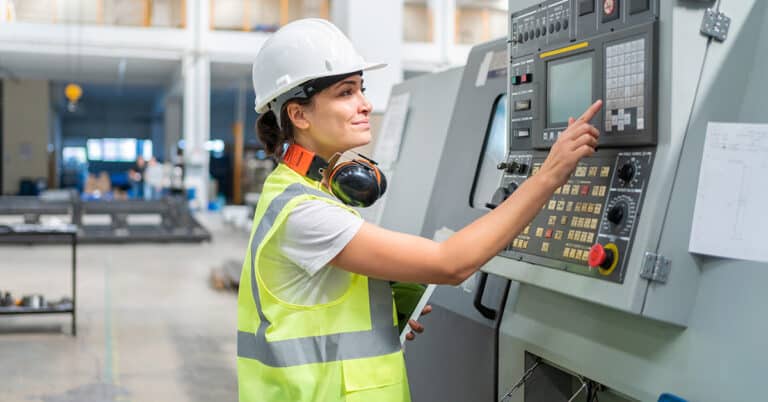
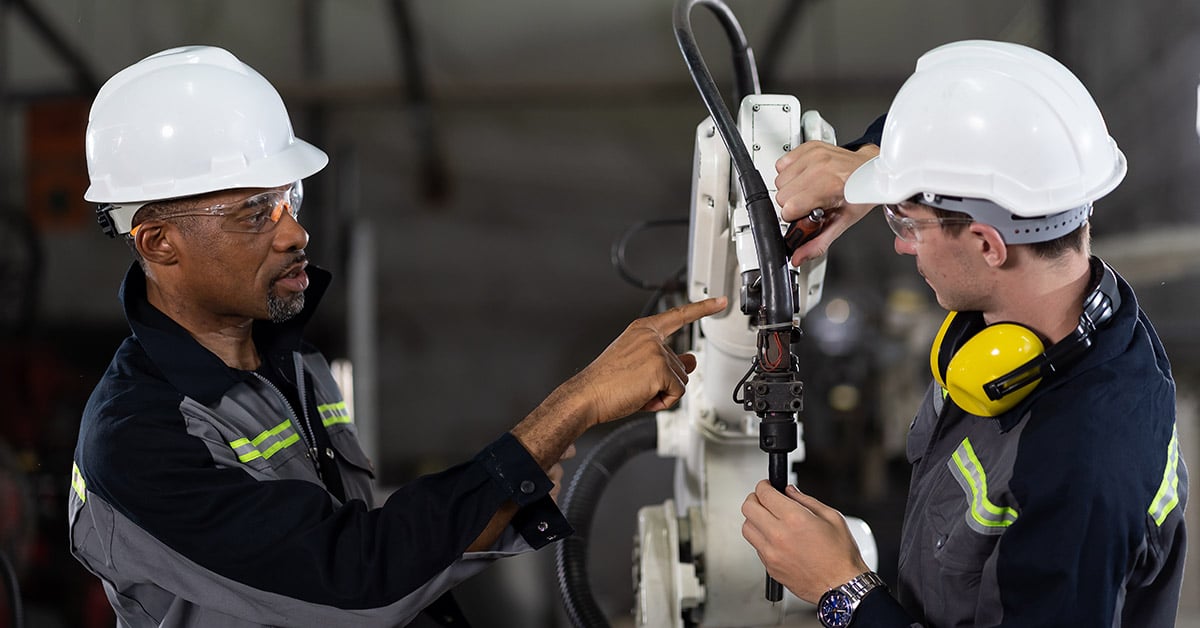




Nearly every industry—and almost every industrial manufacturing firm—has been affected by the technical skills gap. This involves the difficulty in recruiting and hiring experienced, technically skilled industrial maintenance technicians to fulfill the necessary tasks that keep a facility up and running.
This scarcity of machine maintenance technicians—and the workarounds that a firm might use to address the shortage—can lead to maintenance delays, maintenance errors, more frequent downtime, longer downtime, shorter machine life span, safety risks and more. Taken in aggregate, these shortfalls can lead to a decline in overall equipment effectiveness (OEE), a reduction in production efficiency, and a negative impact on the bottom line.
Manufacturers inevitably realize that these workarounds, delays and negative effects are unsustainable. Because of the continued industry challenges in finding technically skilled manufacturing maintenance technicians—many leading manufacturers are shifting to outsourcing their technical workforce of facilities maintenance technicians to an industrial maintenance and MRO services provider. With an embedded workforce solution available at all times, rather than reactive staffing that’s only done in response to an immediate need, manufacturers can ensure consistency and protect uptime.
By allowing the manufacturer to still retain ownership of their reliability strategy without the burden of recruiting, hiring and training maintenance techs, these best-in-class contract maintenance partners offer an alternative to traditional external staffing or internal recruiting initiatives by providing the highly technical workforce you need. This can eliminate lengthy hiring searches, training programs and supervision/management while also ensuring you have the skills on-hand to support reliability maturity throughout your organization.
What does an industrial maintenance technician do?
In the big-picture sense, a manufacturing maintenance technician’s job description can be considered to be the “glue” that keeps the facility operating as it should, in numerous ways:
- Safety-focused
- Reduced downtime
- Optimal productivity
- Improved operational efficiency
- Exceptional reliability
- Greater profitability
- Higher compliance
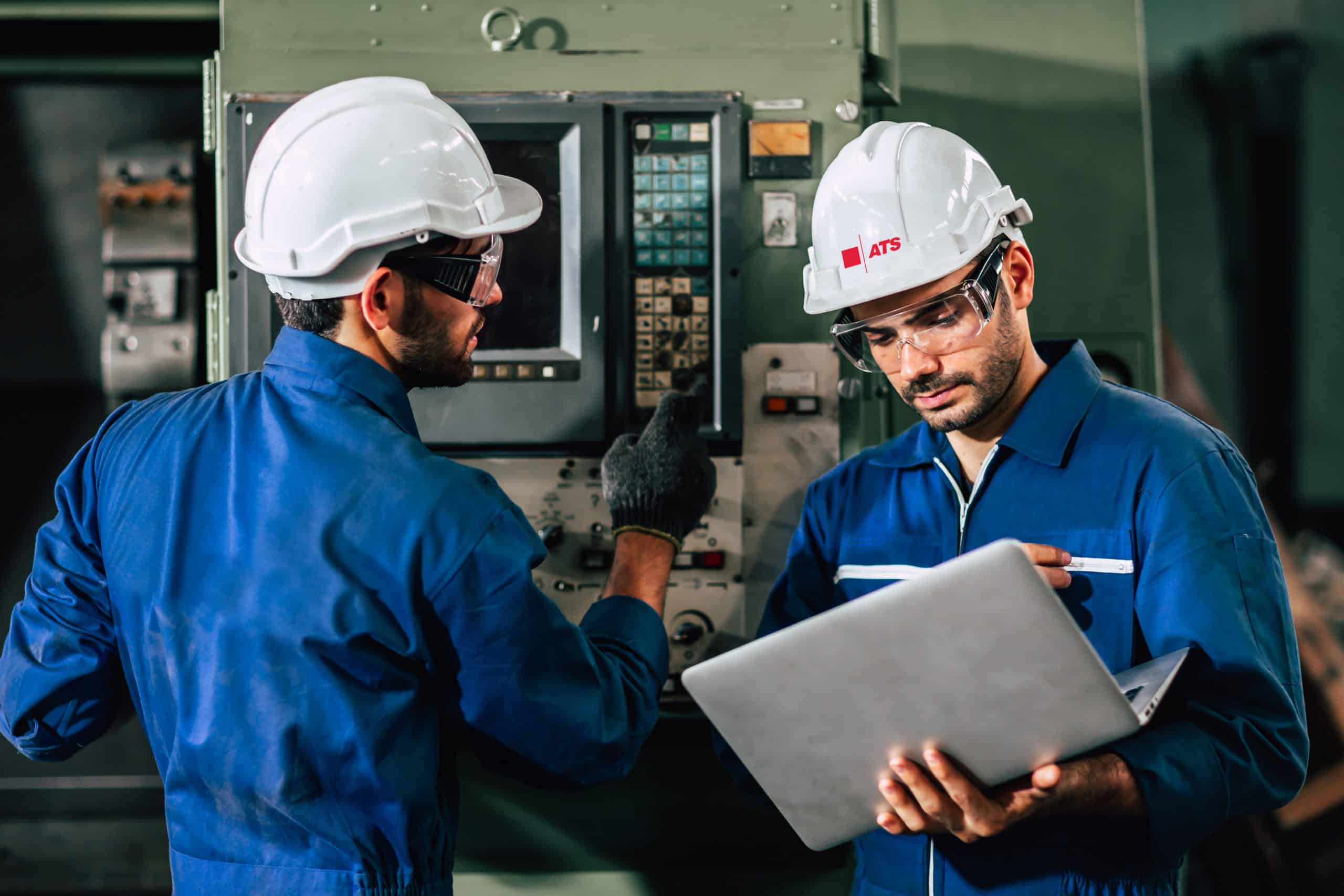
The above standards are critical to the success of your business. Machine maintenance technicians contribute to all of them in important ways. If there are gaps in your technical workforce, you will see shortfalls in many—and, likely, all—of these areas. This could have many short and long-term negative effects on your business.
In addition to the above areas, an effective maintenance strategy—which requires sufficient staffing and training—will impact areas including procurement, supply chain and storeroom management. These are important day-to-day maintenance tasks that go hand in hand with maintenance functions.
Highly skilled technicians will have the capability to perform a broad range of facility maintenance procedures. Depending on your specific industry and operation, an outsourced maintenance partner will be able to assign an experienced technician with the skills needed to perform preventive or predictive maintenance on your specific machines. These regular maintenance activities within the job description include:
- Equipment inspections
- Troubleshooting electrical/mechanical issues
- Replacing worn components
- Updating CMMS logs
- Working with PLCs/HMIs
- Adhering to OSHA safety standards
Depending on your maintenance strategy and needs, industrial maintenance mechanics will provide:
- Preventive maintenance: Dedicated maintenance workers are on hand to keep your industrial machinery operating properly. Preventive maintenance is a key part of this. Ensure that preventive maintenance is performed to OEM specs or your facility’s requirements.
- Predictive maintenance: With predictive maintenance infrastructure in place, verify that you have the top tier workforce to proactively monitor data and provide actionable insights.
- IIoT technologies: With the benefit of years of experience focused specifically on maintenance, a maintenance partner can help you upgrade and update your maintenance equipment, practices and systems if needed—including computerized maintenance management systems (CMMS), remote monitoring, sensors and more.
- Storeroom management and MRO Supply: Investing in a maintenance operations solution can help you realize efficiencies across the plant floor—including storeroom facility management, repairable parts management and supply chain. Maintenance partners that also specialize in MRO services can cover procurement, ordering, sourcing, part repairs, inventory management systems, vendor and warranty management and much more. All of these can make a major difference in your bottom line.
In addition, technicians must be equipped to support today’s tech-heavy manufacturing environments and Industry 4.0 facilities. Advanced manufacturing technology has introduced modern skill requirements such as:
- Interpreting vibration analysis data
- Working with AI-driven predictive platforms
- Performing root cause failure analysis (RCFA)
- Supporting OEE improvement initiatives
Technicians also need to bring a proactive mindset to maintenance management. A proactive maintenance mindset means familiarity with data-driven diagnostics, condition monitoring and root cause analysis.
Skills, qualifications and certifications of an effective maintenance technician
Naturally, an effective maintenance technician should have all the prerequisite technical skills such as proficiency in CMMS, mechanical aptitude and diagnostics experience. However, it’s also important that a technician has certain soft skills to be at his or her most effective. These include communication skills, a sense of accountability and a mindset of continuous improvement. In addition, industrial machinery mechanics should hold certifications including OSHA 10/30, NCCER, ISA and any OEM-specific training required for your equipment and meet any ongoing re-certification requirements that may be needed.
Some common requirements include:
- Robotics troubleshooting
- PLC programming fundamentals
- Hydraulic/pneumatic systems
- Electrical controls
- Blueprint/schematic reading
- Cross-functional collaboration skills
- Safety culture leadership expectations
- Tiered skill levels (Level I, II, III tech structure)
Who uses outsourced maintenance?
Manufacturers from a broad range of industries and sectors draw on the benefits of maintenance outsourcing partners, whether for full-service solutions or specific gaps in a maintenance program that need to be addressed. Top industries include, but are not limited to:
Benefits of outsourced maintenance technicians
With an outsourced maintenance partner and dedicated technical workforce, you are able to unlock the full power and potential of a good maintenance plan. When maintenance becomes a priority and not an obligation, you can gain numerous benefits such as the following:
- Productivity boost: When maintenance keeps to a schedule and addresses problems as early as possible, equipment runs more reliably, with less downtime, and more control over when repairs occur. Well-maintained equipment provides increased throughput, operates at greater efficiency, supports higher quality control, and keeps processes operating as planned. When industrial maintenance technicians are lacking, the tasks that produce these benefits are too often delayed or ignored.
- Access to state-of-the-art expertise: A proven maintenance partner provides you with technicians trained on the most effective maintenance practices and latest technologies. A maintenance partner guarantees that you remain up to date on the most advanced technology that applies to your processes and needs.
- Specialists across every aspect of maintenance: Truly effective maintenance may require technical expertise in CNC, PLC, hydraulics, robotics and more—not to mention safety-focused and a culture fit. Drawing on vetted, experienced industrial maintenance mechanics from a maintenance partner means that you get the right people for the job and that they will integrate seamlessly within your operation.
- More time to focus on core competencies: Outsourced maintenance services take the burden of recruitment, interviewing, hiring, training and management off your shoulders. You can then focus on the strategic business initiatives and goals related to innovation, product development and other areas that can grow your business.
- Less time spent on administrative and HR tasks: With a maintenance partner, you get the benefits of the most up-to-date maintenance expertise and specialization, without the administrative tasks that consume resources and budget dollars.
- Financial planning and forecasting: Outsourcing maintenance provides you with a predictable structure for maintenance costs thanks to the contract. You’ll also protect yourself from volatility in terms of overtime and the cost of turnover because those are absorbed by the service provider.
- Risk mitigation: Working with a maintenance partner helps reduce risk in a number of ways. For example, it can provide you with immediate support for unexpected shutdowns, as well as coverage for retirements and absences.
- Improved performance metrics: Having a dependable maintenance workforce partner means you can experience improvements across unplanned downtime reduction, MTTR, PM compliance rates and technician utilization rates.
- Better compliance: Working with an outsourced maintenance provider means gaining the specialized expertise of professionals with long histories of following regulations such as those set forth by OSHA and NFPA. With outsourced maintenance technicians working in your facility, you can expect consistent, standards-compliant safety practices. This not only reduces your regulatory exposure, but also means you don’t have to commit to extensive retraining when standards change.
Source maintenance technicians with ATS
Decades of experience in reliability-based maintenance ensures a Technical Workforce Solution from ATS will drive results for manufacturing organizations. Using your EAM/CMMS software, a skilled maintenance team staffed full-time at your site can cover all bases, such as preventive and predictive maintenance, condition monitoring, inspections, automation services, reliability engineering, and also equipment repairs, rebuilds, and overhauls.
Contact us to learn more about how we can help resolve your skilled workforce challenges.