
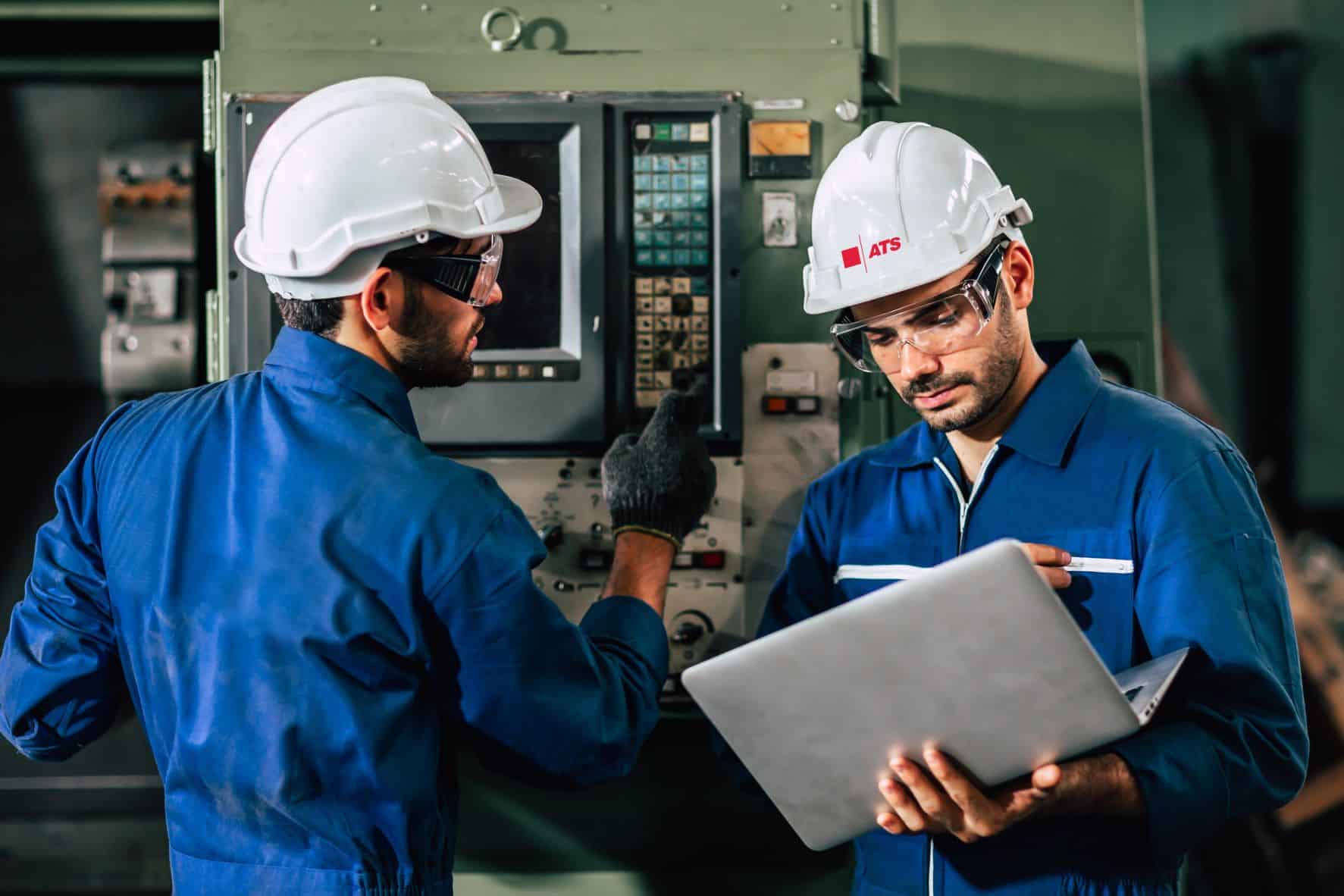




Maintenance is more important than ever in manufacturing as pressure rises to deliver products the instantaneous world we live in. In order to ensure machines are able to efficiently and rapidly produce products without hiccups, regular maintenance practices have expanded beyond standard preventive maintenance initiatives into more proactive and even predictive strategies, allowing organizations to achieve greater cost savings, efficiency improvements and overall equipment effectiveness (OEE) metrics than ever before. Manufacturers must decide whether to build internal maintenance capabilities or work with a contract maintenance service provider.
Contract maintenance services provide the expertise, personnel, and resource time to implement and operate the right equipment and strategies for these advanced, innovative maintenance tactics. This type of maintenance investment is designed to provide you the maximum return while you and your team get back to focusing on core operations. A maintenance service agreement is more than a staffing solution—contract maintenance services are a strategic advantage for manufacturing operations.
What is contract maintenance?
An industrial maintenance contractor can fulfill a range of maintenance-related tasks in your manufacturing facility, providing as much or as little coverage as you need to fill skills gaps or inefficient, allowing you to focus on core competencies. Contract facility maintenance can fill maintenance skills gaps across the manufacturing floor—providing experienced personnel to maintain (or help implement) robots, sensors, automation equipment and the other advanced technology necessary to stay competitive in today’s manufacturing landscape.
Typical services contract maintenance at manufacturing companies include:
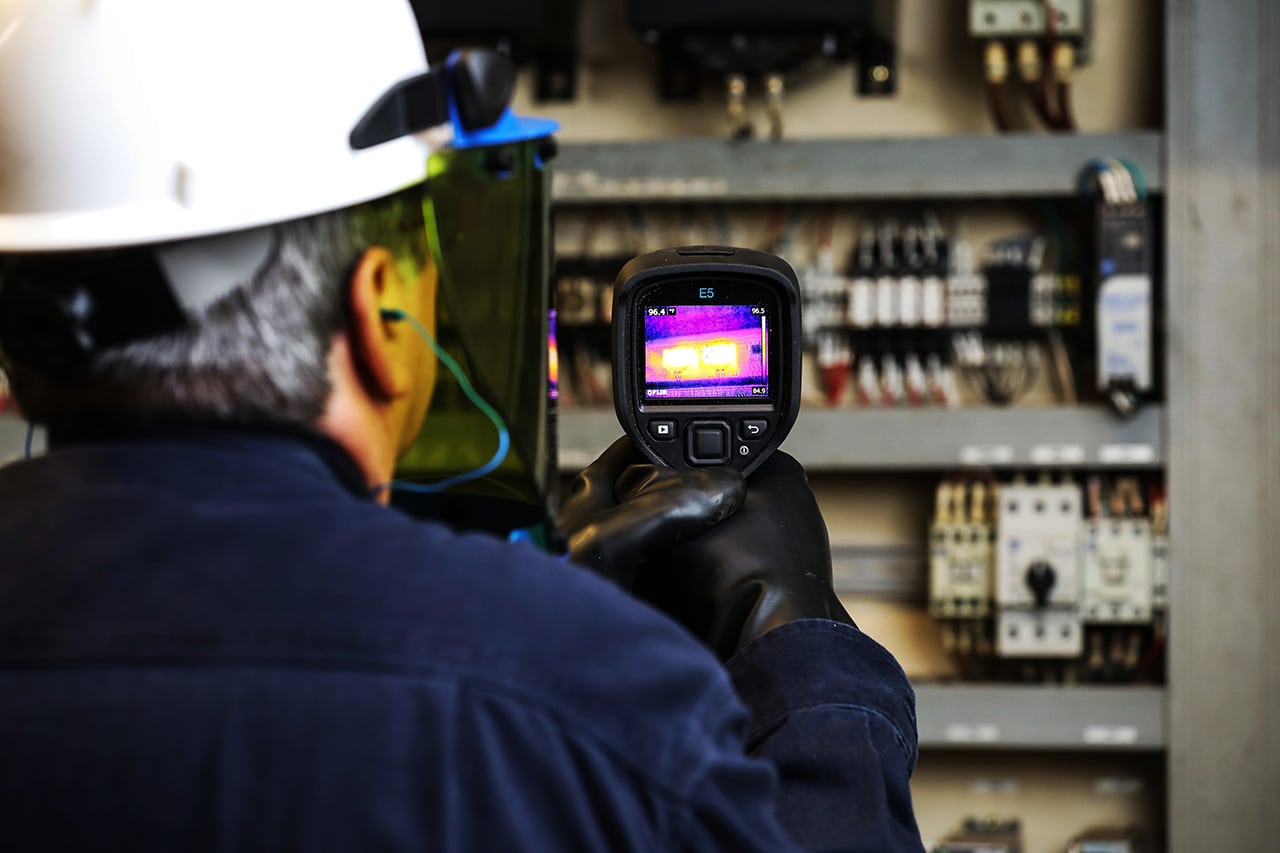
- Predictive maintenance program implementation: An industrial maintenance contractor can work with you to design, implement, staff, manage and maintain a predictive maintenance program that is designed to yield extensive uptime and productivity benefits by monitoring equipment performance and processes to anticipate potential problems and control downtime.
- Preventive maintenance management: Industrial maintenance contractors can provide the skilled personnel to help ensure that your standard preventive maintenance contract is fulfilled on schedule and to specifications.
- MRO management: With a maintenance agreement covering MRO (maintenance, repair and operations) parts, you will always have the resources and skills on hand to fulfill critical maintenance tasks, ensuring.
- Inventory management and storeroom functions: By contracting ordering, sourcing, supply chain, vendor management and fulfillment, you can free more time than ever for innovation and value add in core processes. A comprehensive maintenance contract can also include inventory system development and management.
Comparison of industrial maintenance contract models
Here is a brief rundown of the various models of maintenance contracts available to manufacturers to help assist with the decision-making process:
Feature | Fully outsourced (turnkey) | Hybrid (co-managed) | Project-based (discrete) |
Operational scope | Partner assumes total responsibility for all emergency and routine maintenance activities and KPIs. | Shared responsibility; partner augments internal teams for specific shifts or technical gaps. | Fixed-scope initiatives (e.g., machine moves, retrofits or annual shutdowns). |
Primary value | Total Risk Transference. Contractor owns the outcome (Uptime/OEE). | Scalability. Flexibility to add expert labor without increasing permanent headcount. | Specialization. Access to niche skills for one-time high-complexity tasks. |
Financial model | Predictable OpEx. Fixed monthly fee covers labor, management, and tech. | Variable OpEx; based on usage, specialized labor rates, or "as-needed" support. | CapEx-intensive. One-time project cost with defined start and end dates. |
Talent management | Partner handles all recruiting, training and knowledge capture from retiring workforce. | Internal team handles basics; partner provides specialists for advanced systems. | No long-term talent impact; focus is on short-term execution speed. |
Tech integration | Full deployment of partner's proprietary CMMS, IIoT and AI analytics. | Integration between internal legacy systems and partner’s diagnostic tools. | Use of specialized diagnostic tools (e.g., vibration analysis) only for the project duration. |
Best for | Manufacturers focusing on core competencies (production/innovation). | Growth-oriented plants with an existing, yet overburdened, internal team. | Stable facilities requiring an occasional "surge" in technical capacity. |
Strategic impact | Highest. Transforms maintenance from a cost center to a profit-driving asset. | Moderate. Improves efficiency but retains internal management overhead. | Tactical. Solves immediate bottlenecks without structural change. |
Looking to improve uptime and reduce maintenance inefficiencies?
The benefits of contract maintenance
- Seamless implementation and management of advanced technology: As manufacturing and maintenance technology continues to evolve and the Industrial Internet of Things (IIoT) and Industry 4.0 become more prominent in factories, skills gap issues can become more pronounced. Rather than losing competitive advantages due to a lack of access to skilled personnel that can maintain these machines, contractual maintenance agreements provide the expertise and tools necessary for predictive maintenance or automation technologies into your operations.
- Increased uptime: Contracted maintenance improves uptime and productivity metrics in several ways. A trusted industrial maintenance partner will always have resources on hand to quickly make critical repairs, ensuring your equipment gets back online as soon as possible following a downtime event.
- Skills gap resolution: The skills gap remains an issue in manufacturing, and staffing the maintenance function of any manufacturing operation is no exception. When you consult industrial maintenance support contractors, locating employees with the knowledge to operate and repair machinery will no longer fall on your plate. Your maintenance partner will assess your needs and provide the skilled talent your operation is looking for.
- Focus on core processes: Contract maintenance allows you to fill positions without the need to recruit, interview, hire and train personnel. This enables you to focus on maximizing innovation and productivity in your core manufacturing areas of expertise. In addition, a maintenance management partner handles payroll, human resources and other areas that would otherwise be your responsibility.

When to consider contract maintenance
A maintenance contract partnership can prove valuable in numerous scenarios. Determine if you’ve encountered any of the following situations recently. The modular nature of contract maintenance means that you may be able to see benefits from saying yes to even one or two of these situations:
- Is there newer technology that you would like to implement into your operations or maintenance practices, but cannot locate the expertise to do so?
- Have you experienced delays in critical repairs due to a lack of skilled personnel or resource availability?
- Would you like to increase equipment uptime and performance metrics such as overall equipment effectiveness (OEE)?
- Do you have difficulty filling positions due to a lack of available skilled workers?
- Do you need to keep pace with competitors that have added new technology or increased capacity?
- Are our inventory and storeroom processes disorganized, inconsistent or wasteful?
- Do you need to increase productivity to see a greater ROI on your equipment investment?
Who benefits from contract maintenance?
A maintenance partnership can benefit facilities across a broad range of industries. Some of these industries include:
Time and cost savings from contract maintenance
Contract maintenance services can yield numerous time and cost benefits. These include:
Time savings
- Less equipment downtime
- Faster return to service when maintenance is required, thanks to increased skilled resources
- No waiting for emergency repairs if the necessary skills are not available on site
- Inventory management means no more searching for spares or emergency ordering
- Onboarding is handled entirely by the maintenance partner, meaning that personnel are ready to work from day one
Cost savings
- Increased equipment efficiency means a greater ROI
- Less cost invested in hiring, training and HR
- Inventory management reduces ordering and emergency fulfillment costs
- Increased productivity through more precise and effective maintenance
- No need to pay a premium for specialized technical expertise
Take the next step toward optimizing your maintenance strategy
ATS is a pioneer and an expert in the field of contract maintenance, with services available to fill skills gaps and meet performance goals on any scale that you may require. Our personnel are continually trained in both maintenance expertise and safety and have access to a vast technician knowledge hub—meaning they are ready to meet nearly any application you may require. Let ATS assess your current maintenance performance and identify where external expertise can deliver the highest possible ROI. To learn more about how these approaches can be applied, contact us today.