
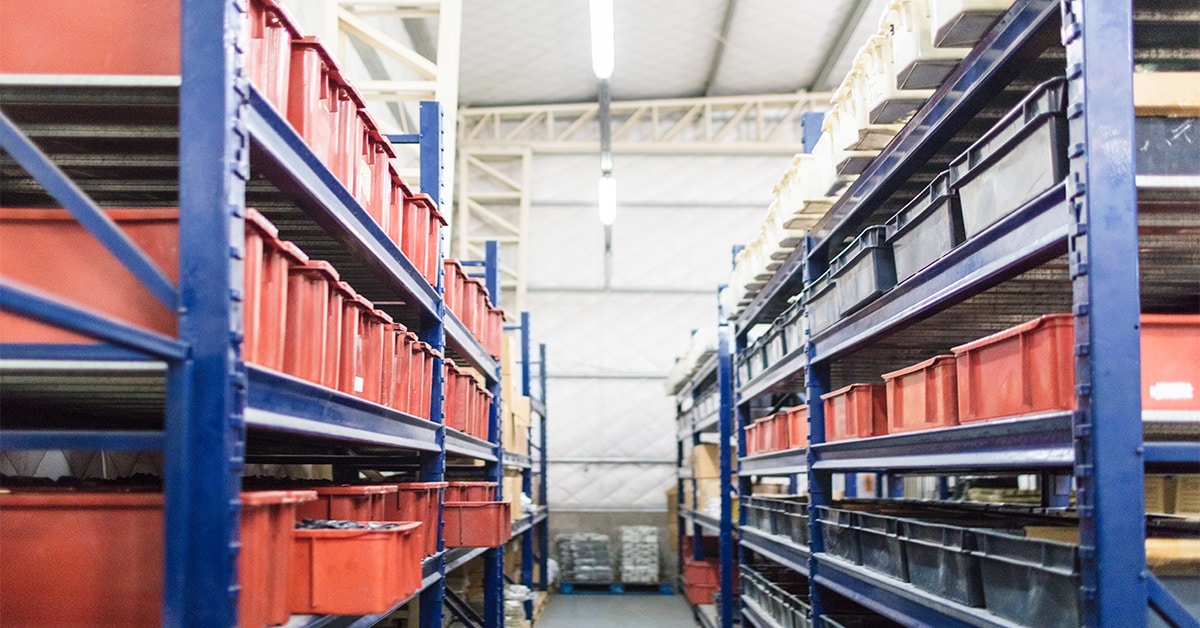




A well-managed Maintenance, Repair, and Operations (MRO) storeroom is the backbone of efficient maintenance and production operations. When stocked with the right MRO parts, organized effectively and monitored through reliable storeroom reports, a storeroom can help minimize downtime, optimize costs and improve overall asset reliability. However, many companies struggle with poor MRO inventory control, disorganized layouts and excess stock levels that can tie up millions in working capital.
To help, here are a few MRO storeroom management best practices, covering storeroom design, organization, inventory control and reporting. By implementing these strategies, businesses can create a more efficient and responsive maintenance storeroom that supports operational continuity while aligning with broader MRO industry trends.
MRO storeroom design
The layout and design of an MRO storeroom significantly impact efficiency. A well-thought-out space allows maintenance teams to retrieve spare parts quickly, reduces safety risks and maximizes storage capacity. It’s recommended to implement:
- Optimized floor plans & aisle widths: A storeroom should accommodate easy navigation for storeroom personnel, forklifts or carts. Placing frequently used parts near the entrance minimizes retrieval time while maintaining adequate aisle widths for smooth traffic flow. When technicians don’t have to walk as far, repairs can be finished faster.
- Vertical storage solutions: When floor space is limited, vertical storage systems such as shelving units, modular racks, high-density systems and automated dispensing carousels provide a way to store more inventory without expanding the footprint. This also provides a cost-effective alternative to expanding facilities.
- Ergonomics & safety considerations: Poorly arranged storerooms contribute to workplace hazards, risking OSHA compliance and lost-time injuries. Adequate lighting, clear signage and strategically placed shelving reduces injury risk and creates a more efficient workspace while also improving workplace morale.
- Environmental controls: Some MRO spare parts require special storage conditions. For example, electronic components might need to be temperature controlled, while lubricants and chemicals may require specific humidity levels to maintain integrity. Meeting these requirements helps prevent premature component failure and avoid unnecessary procurement costs.
MRO storeroom organization
An organized maintenance shop minimizes wasted time and prevents unnecessary spending on duplicate orders or lost parts. Businesses can improve accessibility and reduce downtime by:
- Categorizing & labeling: Clear bin labels, barcodes, standardized naming conventions, manufacturer cross-reference mapping and detailed part descriptions help employees quickly find what they need. Categorization based on usage, function or asset type further improves retrieval efficiency and prevents duplicate SKUs.
- Employing zoning strategies: Grouping parts based on their function or machine usage streamlines picking processes. For instance, all components for a specific production line can be stored together, minimizing the time needed for repairs. Aligning asset-based zoning with critical equipment helps maintain uptime.
- Following the 5S principles for organization: Implementing the 5S methodology (Sort, Set in Order, Shine, Standardize, Sustain) keeps storerooms tidy and functional. Regular audits and visual management boards prevent unnecessary clutter, maintain standard storage procedures, and support long-term parts room organization.
- Utilizing cycle counting & rotation: Routine inventory checks using ABC classification and risk-based counting frequency to prevent discrepancies and reduce obsolescence. Using a First-In, First-Out (FIFO) or First-Expired, First-Out (FEFO) approach helps prevent parts from becoming outdated. These strategies are key for improving inventory accuracy.
MRO inventory best practices
Managing inventory effectively is about striking the right balance—keeping enough critical parts on hand to avoid downtime while avoiding excessive stock that ties up capital. Companies focused on MRO in manufacturing need robust systems in place such as:
- Defining critical vs. non-critical parts: Not all parts require the same level of stock coverage or the same stocking policy. Identifying mission-critical components—those that could halt production if unavailable—allows businesses to prioritize inventory investments.
- Usage data & demand forecasting: Analyzing historical consumption data and consulting OEM recommendations through a CMMS helps establish accurate reorder points. Using predictive analysis to anticipate equipment failures helps minimize stockouts and reduce unnecessary overstock driven by reactive ordering.
- Consignment & vendor-managed inventory (VMI): Partnering with suppliers through consignment or MRO procurement services can help businesses maintain adequate stock levels without holding excessive inventory on-site. This lowers working capital expenditures and helps build long-term strategic partnerships.
- Eliminating excess & obsolete stock: Regularly reviewing inventory to identify slow-moving or obsolete parts frees up space and capital. Surplus items may be returned to vendors, repurposed or liquidated. Holding onto obsolete inventory can hide inefficiencies, which is why it’s important to understand inventory turnover ratios.
- Optimizing storage locations for accessibility: Strategically placing frequently used MRO parts in easily accessible locations speeds up retrieval times and improves technician efficiency. Using MRO inventory optimization techniques—such as zoning and labeling—makes it so that high-demand components are always within reach, minimizing delays in maintenance and repairs. Flow mapping helps teams understand how components move throughout the facility, making it easier to identify bottlenecks and inefficiencies.
MRO storeroom reports
Reliable reporting provides visibility into inventory performance, allowing businesses to optimize stock levels, reduce waste and improve financial accountability. These MRO storeroom management best practices drive efficiency in tracking and decision-making.
- Usage & consumption reports: Tracking part usage patterns helps refine inventory strategies by identifying trends in consumption. By analyzing which parts are used most frequently and which are rarely needed, businesses can adjust stock levels to match real demand. This reduces the risk of overstocking while preventing delays caused by unexpected stockouts.
- Stock level & reorder point reports: Monitoring your inventory level against established reorder thresholds provides real-time insights into stock fluctuations. These reports indicate when supplies are running low, preventing disruptions, while also flagging surplus inventory that may be tying up capital. By analyzing these reports regularly, companies can fine-tune reorder points based on historical usage and operational needs.
- Cycle count & accuracy reports: Comparing system records to actual physical inventory highlights discrepancies that can lead to inefficiencies, misplaced items or accounting errors. Regular cycle counts help businesses identify patterns of shrinkage, miscounts or data entry mistakes. Addressing these inconsistencies improves overall inventory accuracy, reducing wasted resources and unexpected shortages.
- Obsolescence & turnover reports: Unused or slow-moving parts can take up valuable space and capital. These reports help businesses identify items that have remained in inventory beyond their useful life, allowing them to determine whether to phase them out, redistribute them to other locations, or replace them with higher-demand components. By tracking turnover rates, companies can better plan purchases, avoiding unnecessary stockpiling and waste.
Integrating CMMS & technology solutions
Leveraging technology and MRO data management improves inventory storeroom performance. By creating a seamless system, companies can benefit from:
- Real-time MRO inventory management: Integrating a Computerized Maintenance Management System (CMMS) or Enterprise Resource Planning (ERP) system automates inventory tracking, automatically adjusting stock levels when parts are issued for work orders.
- Barcodes & RFID for tracking: Using barcode or RFID scanning reduces human error and accelerates inventory updates. These systems simplify cycle counting and improve stock accuracy.
- Analytics & dashboards: Modern MRO inventory optimization systems provide real-time dashboards displaying reorder alerts, usage trends and cost analysis, helping businesses make data-driven inventory decisions.
- Mobile access & cloud integration: Cloud-based CMMS platforms provide mobile access, allowing maintenance teams to update inventory, check part availability and approve orders from anywhere. This feature is especially useful for companies managing multiple sites, helping maintain MRO storeroom solutions across different locations.
The link between MRO optimization and downtime reduction
Optimizing an organization’s MRO storeroom can have tremendous impact on uptime because it can deliver:
- Reduced MTTR: Shorter repair times allow maintenance teams to complete more work while keeping equipment offline for less time.
- Faster part retrieval: Reducing travel and handling time helps technician’s complete repairs more efficiently.
- Reduced emergency procurement: Efficient MRO storerooms help teams avoid last‑minute part shortages and shipping delays.
- Predictive maintenance readiness: Organized storerooms support predictive maintenance by ensuring parts are available before failures occur.
- Improved asset availability: Optimized MRO storerooms help maintenance teams complete work faster, keeping assets available longer.
Take control of your MRO storeroom with ATS
An efficient MRO storeroom isn’t just about organization—it’s about keeping your business running without costly delays or wasted resources. When critical parts are easy to find, inventory is optimized, and reporting is seamless, your storeroom operation becomes more reliable, cost-effective and productive.
If your storeroom is cluttered, disorganized or full of obsolete inventory, it’s time to take action. Start with an inventory audit, reorganize stock for faster access, and implement data-driven reorder points to avoid shortages and excess. Integrating CMMS technology can also add another layer of operational efficiency, providing real-time insights into stock movement, demand trends and cost analysis.
That’s where ATS comes in. Our storeroom optimization solutions are designed to help businesses like yours reduce downtime, cut costs and improve overall MRO inventory control. From expert consulting to cutting-edge technology, ATS delivers scalable strategies that keep your operation moving.
Ready to transform your MRO storeroom into a well-oiled machine? Contact ATS today and discover how our tailored solutions can help you take control of your inventory and improve your bottom line.