
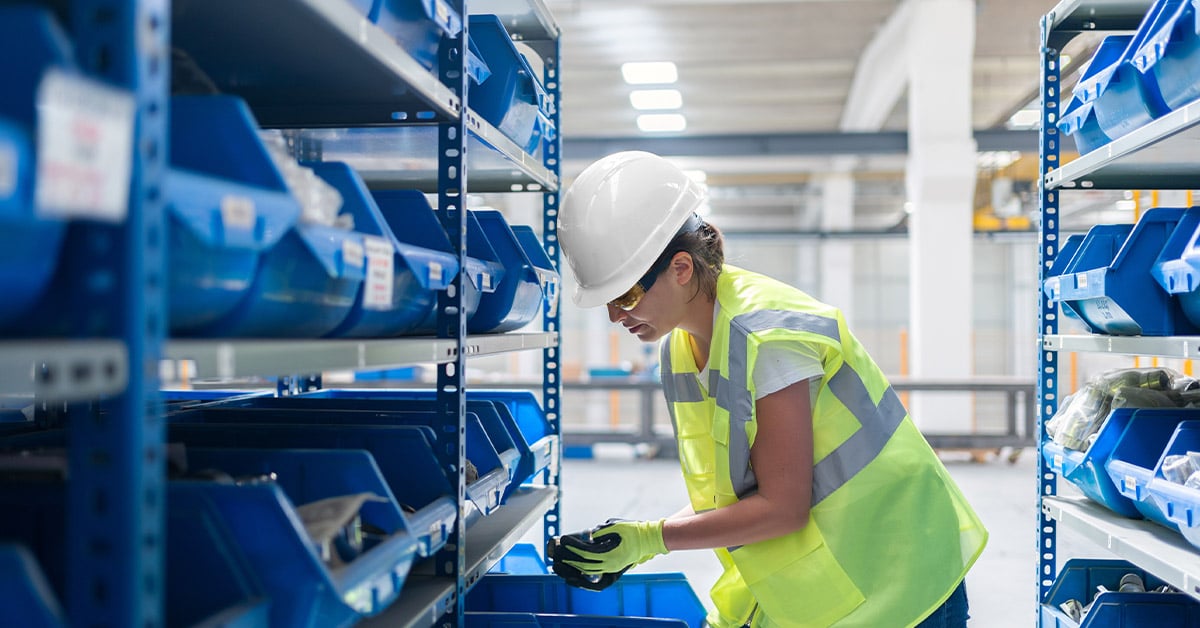




Manufacturing operations depend on equipment reliability, efficient maintenance processes and a well-planned strategy for managing assets throughout their lifecycle. Maintenance, Repair, and Operations (MRO) manufacturing plays a central role in helping facilities reduce downtime, improve equipment performance and control maintenance costs. Whether you’re supporting aging production assets, responding to OEM part shortages or implementing predictive maintenance technologies, an effective MRO strategy helps maintenance teams make informed decisions about repairs, inventory and long-term reliability.
Which options will work best at your organization depends on your facility’s equipment type, operating environment, production demands, and failure risk. The right MRO approach for a food processing plant may differ significantly from what is recommended for an automotive manufacturer or chemical facility.
This guide explains what MRO manufacturing is, when to use it, how to choose the right maintenance strategies and what works best for improving equipment reliability across industrial operations. Read on to learn MRO best practices from Advanced Technology Services (ATS) and see what is recommended for your facility.
MRO in manufacturing and industrial maintenance
Not every maintenance situation requires the same response. Choosing between repair, replacement or on-demand manufacturing depends on several operational factors. One common challenge is OEM part availability. Many manufacturers operate equipment that has been in service for decades, making replacement components difficult, or impossible, to source.
Long lead times or discontinued parts can quickly become major production risks. In these situations, MRO manufacturing can provide reverse engineering, refurbishment or on-demand replacement parts that restore equipment without waiting months for OEM inventory. Downtime costs should also influence maintenance decisions. When an hour of production loss costs significantly more than repairing or fabricating a replacement part, rapid-response MRO services often provide the greatest value. What works best depends on the criticality of the asset and the financial impact of an outage.
The MRO manufacturing advantage
A modern MRO inventory management program provides more than replacement parts. It supports the overall reliability strategy of an industrial facility.
Key advantages
- Rapid-response repair services that reduce production interruptions.
- On-demand manufacturing of replacement components for obsolete or hard-to-source equipment.
- Faster turnaround times than traditional OEM procurement in many situations.
- Equipment evaluation services that identify repair opportunities before failures occur.
- Warranty support on qualifying repairs and rebuilt components to help reduce maintenance risk.
What services provide the greatest value and benefits depend on your facility’s maintenance maturity, equipment age and production requirements.
Core MRO manufacturing services for industrial maintenance
Industrial MRO management programs often include several integrated services designed to improve equipment reliability.
Contract maintenance
Contract maintenance supplements internal maintenance teams with experienced technicians, planned maintenance execution and reliability expertise. This approach helps organizations address labor shortages while maintaining consistent preventive maintenance schedules.
Predictive maintenance
Predictive maintenance combines condition monitoring, vibration analysis, thermal imaging, oil analysis and machine diagnostics to identify developing equipment issues before failures occur. Rather than replacing components based solely on time intervals, predictive maintenance allows maintenance teams to schedule repairs based on actual equipment condition.
Parts repair and refurbishment
Repairing existing components can often extend equipment life while reducing replacement costs. Common repair services include pumps, motors, gearboxes, hydraulic components, servo equipment, and precision-machined replacement parts.
Calibration and asset management
Calibration services help ensure measurement accuracy while supporting quality requirements and regulatory compliance. Asset management programs centralize equipment records, maintenance history, and lifecycle planning, allowing maintenance teams to make more informed replacement decisions.
Organizations with limited internal maintenance resources may also benefit from partnering with experienced reliability specialists, such as ATS, to expand preventive maintenance and asset management programs.
What is MRO in manufacturing?
MRO includes all of the equipment, supplies, replacement parts, and maintenance activities required to keep manufacturing operations running efficiently without becoming part of the finished product.
For industrial maintenance teams, MRO includes:
- Equipment maintenance
- Spare parts management
- Lubrication
- Repair services
- Facility maintenance
- Maintenance tools
- Safety supplies
- Maintenance planning systems
An effective MRO management strategy supports reliability-centered maintenance by ensuring technicians have the right resources available when needed.
Types of MRO and use cases
Tooling and consumables
Production lines rely on cutting tools, lubricants, filters, seals, fasteners, cleaning supplies, and inspection equipment. A structured replenishment policy helps avoid shortages while preventing excess inventory. Which replenishment model works best depends on usage rates, supplier lead times and equipment criticality.
Production equipment maintenance
Critical production equipment requires scheduled inspections, lubrication, alignment, calibration, and component replacement to maintain reliability. Facilities operating legacy equipment often face challenges obtaining replacement parts. In these situations, on-demand manufacturing combined with predictive maintenance tools and equipment analytics helps reduce downtime while extending equipment life.
Material handling equipment maintenance
Conveyors, forklifts, automated guided vehicles and lifting systems require routine inspections to maintain safe operation.
Recommended maintenance activities include:
- Chain inspections
- Belt alignment
- Bearing lubrication
- Battery maintenance
- Hydraulic inspections
- Brake testing
- Safety verification
Inspection frequency should reflect equipment utilization, operating environment and failure risk.
Infrastructure and facility maintenance
Reliable facility systems are equally important to production uptime. Maintenance priorities typically include:
- HVAC systems
- Electrical distribution
- Compressed air systems
- Fire protection equipment
- Building automation systems
- Roofing and structural inspections
Safety-critical systems should follow documented inspection schedules that meet applicable regulations and manufacturer recommendations.
MRO inventory and parts strategy
Inventory management remains one of the largest opportunities for improving MRO performance. Rather than treating every spare part equally, facilities should categorize inventory according to equipment criticality, replacement lead time and failure consequences. Critical spare parts should receive higher stocking priority when equipment failures create significant production losses or safety concerns.
Vendor-managed inventory programs can reduce procurement effort while maintaining consistent stock levels for frequently used maintenance items. Consignment inventory is often recommended for mission-critical parts that are expensive but must remain immediately available.
On-demand manufacturing may be the better option when parts are rarely used, OEM inventory is obsolete, storage costs are high, and components can be manufactured quickly when needed. Which inventory strategy works best depends on equipment age, maintenance history, and supplier responsiveness.
Technology and machine health monitoring
Digital maintenance technologies provide greater visibility into equipment health while supporting predictive maintenance strategies.
CMMS and EAM integration
Centralizing maintenance activities within a Computerized Maintenance Management System (CMMS) or Enterprise Asset management (EAM) platform improves planning and reporting. This integration improves maintenance planning while reducing administrative effort.
Sensors and asset performance management
Machine health monitoring technologies continue to improve industrial maintenance performance.
Recommended monitoring technologies include:
- Vibration sensors
- Temperature sensors
- Current monitoring
- Oil condition analysis
- Ultrasonic inspection
Asset Performance Management (APM) software combines these inputs to support health-based maintenance decisions and prioritize repairs according to equipment condition.
Data and analytics
Predictive analytics uses equipment history, operating conditions and sensor data to forecast failures before they occur. Maintenance teams should establish consistent data collection intervals and automated alert thresholds for critical assets. What is recommended depends on the operating characteristics of each machine and the speed at which failures typically develop.
Implementing predictive and preventive maintenance
Successful maintenance programs combine preventive and predictive approaches.
A practical implementation process includes:
1. Identify critical production assets.
2. Map common failure modes.
3. Install condition monitoring technologies on priority equipment.
4. Establish automated alert thresholds.
5. Schedule recurring preventive maintenance activities.
6. Review maintenance results and continuously refine inspection intervals.
KPIs and performance metrics for MRO manufacturing
Measuring maintenance performance helps organizations identify improvement opportunities.
Recommended metrics include:
- Mean Time Between Failures (MTBF)
- Mean Time to Repair (MTTR)
- Overall Equipment Effectiveness (OEE)
- Planned maintenance compliance
- Spare-part stockout frequency
- Emergency work percentage
- Maintenance cost per asset
Implementation roadmap for ATS clients
Organizations beginning a reliability improvement initiative can follow a phased implementation approach.
- Start by auditing current maintenance processes, asset performance, and inventory management practices.
- Next, identify pilot production lines where predictive maintenance technologies are likely to produce measurable improvements.
- Finally deploy condition monitoring, collect equipment data ,and evaluate maintenance results before expanding the program across additional facilities.
This phased approach minimizes implementation risk while building organizational support through measurable results. See what’s MRO best practices are recommended for your facility by evaluating your current maintenance maturity, equipment reliability and production goals.
Regulatory compliance and safety
Maintenance activities should align with applicable industry regulations and internal safety standards. Facilities should maintain documentation for:
- Calibration records
- Inspection reports
- Preventive maintenance completion
- Equipment certifications
- Safety inspections
- Maintenance procedures
Firms that want to improve MRO inventory management can partner with ATS. We provide comprehensive solutions. We offer predictive maintenance and condition monitoring along with workforce support and technical expertise. Our maintenance programs will minimize downtime at your facility in reliable way.
Frequently asked questions
What is MRO in manufacturing?
MRO includes the maintenance activities, equipment, spare parts and supplies required to keep manufacturing facilities operating efficiently.
How do I choose between repairing and replacing equipment?
Which option works best depends on your facility’s equipment condition, repair cost, replacement lead time, production impact, and long-term reliability. Critical assets often benefit from a structured repair-versus-replace analysis.
What is recommended for managing MRO inventory?
Most facilities benefit from classifying spare parts by equipment criticality and failure risk while combining vendor-managed inventory, consignment stocking and on-demand manufacturing where appropriate.
How does predictive maintenance improve MRO?
Predictive maintenance identifies equipment problems before failures occur, allowing maintenance teams to schedule repairs during planned downtime instead of responding to unexpected breakdowns.