
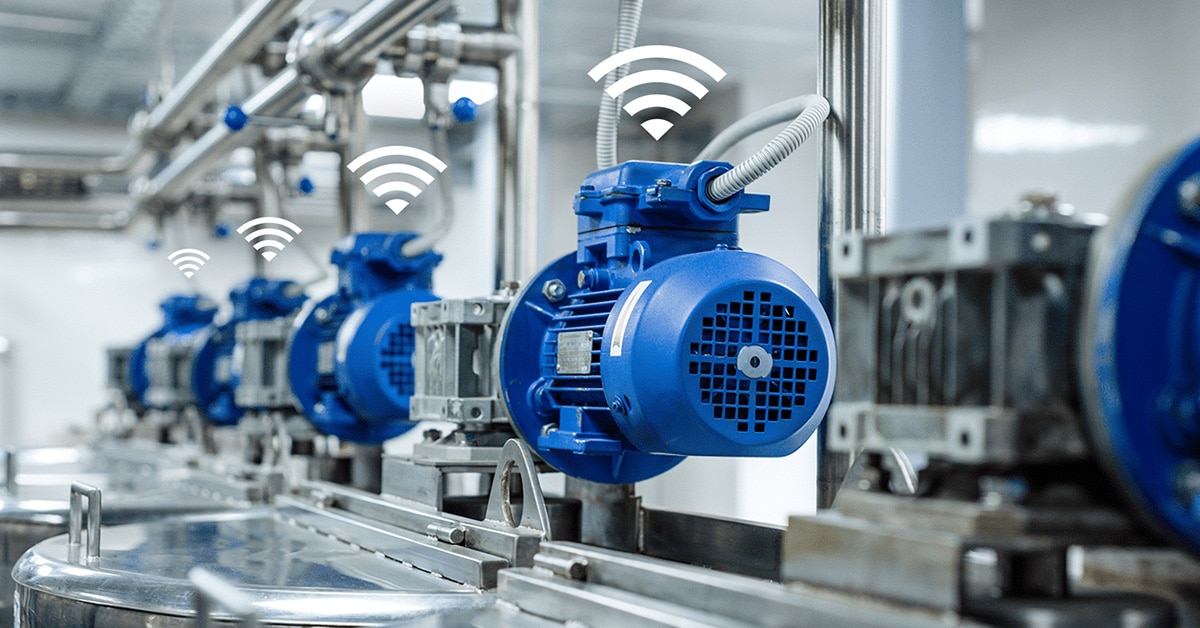




Manufacturers are always looking for ways to improve their uptime and protect their productivity. One of the most powerful tools at their disposal from recent years is machine health monitoring, which can provide them with a wealth of detailed information and insights showing them how well their assets are functioning and how soon they may need attention. Adopting this technology can help prevent equipment failures and enhance the overall operational efficiency of the facility. However, implementing it calls for a careful and thoughtful approach.
Machine health monitoring is most valuable when it connects equipment data to maintenance action. This is easier said than done, of course, and manufacturers who want to make the most of it have to consider how they will implement it. We’ve prepared this guide to help manufacturers make the most critical decisions about which assets should be monitored first, which workflows need to be put in place and whether machine health monitoring even makes sense for their processes.
What is machine health monitoring?
At the highest level, machine health monitoring is an approach that uses connected sensors and analytics platforms to keep watch over an asset’s condition. These industrial IoT sensors typically measure environmental conditions such as temperature, pressure and vibration. They also can provide data concerning usage such as current draw, rotational speed and overall runtime.
Machine condition monitoring serves an important role in both predictive maintenance and preventive maintenance approaches. It informs both by delivering key metrics that can help maintenance teams plan their work to be as effective and efficient as possible. This is especially true of predictive maintenance, which depends on equipment health data to schedule maintenance tasks to prevent downtime caused by wear and tear.
When machine health monitoring is a good fit
Manufacturing facilities may benefit from a machine condition monitoring system if they have any of the following:
- Frequent unplanned downtime
- Recurring failures on critical assets
- High repair costs
- Production bottlenecks
- Limited internal reliability resources
- Aging equipment
- Hard-to-diagnose machine issues
- High MRO or emergency parts costs
- Quality problems linked to equipment condition
- Multiple facilities needing standardized visibility
Typically, a machine health monitoring system is recommended in cases where equipment failure would be expensive, disruptive, recurring or otherwise difficult to diagnose.
Need help identifying which assets should be monitored first? Talk to ATS about prioritizing machine health monitoring use cases.
Machine health monitoring readiness checklist
Before determining whether machine health monitoring should be implemented in their facilities, manufacturers should run through this checklist:
- Critical assets are identified and ranked
- Failure history is documented
- Downtime cost is understood
- Work orders are tracked consistently
- Preventive maintenance schedules are documented
- MRO parts data is available
- Spare parts for critical equipment are reviewed
- Internal maintenance capacity is understood
- Production bottlenecks are known
- Teams know who responds to alerts
- Leadership has defined reliability goals
- KPIs are in place to measure success
The number of items checked should help manufacturers determine whether to implement a machine monitoring system:
- 9–12 checked: Strong candidate for machine health monitoring
- 5–8 checked: Good candidate, but address readiness gaps first
- 0–4 checked: Start with foundational maintenance improvements before scaling monitoring
How machine health monitoring supports maintenance teams
By providing them with real-time insights into asset condition, machine health monitoring helps maintenance teams prioritize work. This can be especially helpful for teams that are running lean or may be stretched beyond their capacity. It can reduce the need for some routine inspections by giving technicians greater visibility into the condition of connected assets. This approach also helps less-experienced techs by giving them more context before they start troubleshooting. Far from replacing human technicians, machine health monitoring instead helps them make more informed maintenance decisions.
How ATS helps facilities with machine health monitoring
ATS brings reliability expertise to manufacturers’ operations. We do more than simply supply the sensors used in machine health monitoring—we connect these to our Reliability 360® Technology Center. This delivers cloud-based monitoring, analytics, expert review, and maintenance expertise that helps transform machine data into corrective actions. We understand that the true challenge in machine monitoring is figuring out what to do with the data it provides. We can help manufacturers interpret data and use it to apply the maintenance actions that drive better results.
ATS provides support for evaluation and implementation for:
- Asset review and consultation
- Sensor strategy
- Installation support
- 24/7 condition monitoring
- Real-time alerts
- Expert analysis
- Prescriptive actions
- Optional maintenance and parts support
- Measurable results
- Enterprise scalability
Ready to find out if machine health monitoring is right for your facility? Talk to ATS about evaluating your assets, risks and ROI potential.
