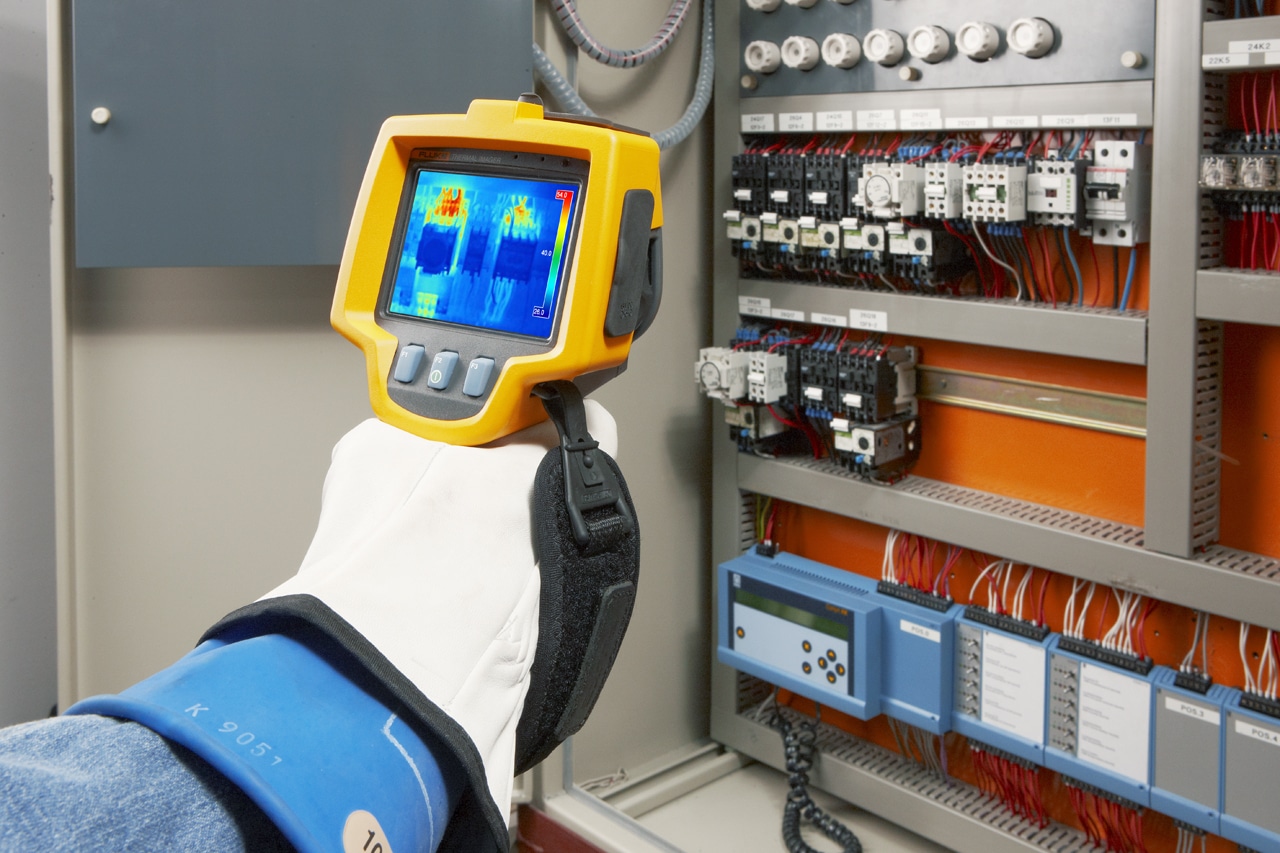




Thermographic testing uses infrared detection and mapping to identify temperature differences in operations, heat patterns in equipment, and temperature comparisons for various components and areas. Infrared thermographic testing detects thermal waves that are invisible to the naked eye. It can aid in predictive maintenance by using data about temperature variations to identify potential maintenance issues that might lead to equipment failure and shutdown. This makes this non-invasive and non-destructive testing process an important tool in preventing unplanned downtime.
Applications of thermography in maintenance
Thermographic inspection has many uses and can be implemented in numerous applications in a manufacturing facility. Four primary applications are:
Bearing monitoring
Bearings play a critical role in moving equipment, and their temperatures can rise for several reasons. The primary reason is friction due to insufficient lubrication, where the moving element comes into direct contact with the bearing race, creating friction and premature wear. Overlubricating can also cause a temperature increase due to the energy generated by shear in the lubricant, which can itself pose performance issues for the bearing.
Bearing failure could result in equipment shutdown and potential damage to other components, and is one of the leading causes of unplanned downtime. Thermal imaging and trend monitoring can identify the factors that indicate bearing failure and allow technicians to fix the issue with corrective actions before the fault interrupts operations.
Electrical cabinet monitoring and insulation monitoring
Infrared testing of electrical equipment is a fast, reliable, and accurate way to ensure that equipment is functioning as intended and can continue to operate reliably. As electrical equipment begins to degrade, electrical resistance increases, generating more heat. Although these devices give off heat as part of their normal operation, excessively high levels of heat indicate a problem. Eventually, if a component completely fails, the system must be shut down so that it can be replaced.
Thermography in electrical maintenance allows for more control and predictability over these scenarios, so that shutdowns can be carefully planned for minimal impact. Thermographic testing can also identify thermal anomalies that indicate degradation of electrical insulation, showing areas where heat is escaping and where insulation must be replaced to remain safe to prevent the risk of fires and arc flashes.
Leak detection
Leaks of air, fluids or coolants in equipment can result in several condition changes, a primary one of which is temperature. The infrared technology used in thermographic testing can quickly alert personnel to the presence of a leak, which can then be repaired well before it leads to an unplanned shutdown.
Process temperature analysis
Many thermography testing applications rely on a comparison against defined acceptable temperature ranges for optimal product quality. This technology can also be used to compare current temperature conditions against historical data, allowing staff to flag scenarios when the temperature is much higher or lower than normal.
Thermographic testing is a complex technology that relies on carefully calibrated equipment, intricate processes, and advanced data analytics. Expertise and experience are critical in getting the most out of infrared thermography for continuous improvement efforts, and ATS is ready to offer these services as part of a comprehensive factory maintenance plan.
Benefits of thermographic testing
Thermographic testing offers a host of advantages for manufacturers, especially as part of a comprehensive maintenance plan.
These benefits include:
- Maintenance cost reduction: By detecting problems early—well before they affect production—and scheduling repairs for times when productivity will be minimally impacted, thermographic testing can reduce costly unplanned downtime and make an impact on the operational bottom line.
- Fast detection of temperature conditions: Other condition tests, such as vibration testing, can take several minutes and often must be carried out individually. Thermographic testing can occur much more quickly and can present an overall thermal image of a particular machine at one time, allowing for faster action.
- Increased equipment service life: Excess heat is one of the leading causes of premature equipment wear, damage, and failure, eventually resulting in refurbishment or replacement. By identifying temperature increases, thermographic testing can help manufacturers reduce or prevent heat damage, extending the service life of equipment and lengthening the time between repairs and equipment purchases.
- Improved safety: High temperatures are not only indicators of potential safety issues, but they are also safety risks themselves. Tracking temperature conditions and fluctuations can result in a safer facility.
When to use thermographic testing
The strengths of thermographic testing make it especially well-suited for several scenarios and needs. Use a thermography scan when you need to:
- When condition diagnostics must be obtained quickly for machines with moving or rotating parts
- When a comparative picture of temperature conditions in each area of the facility is helpful
- When early detection of potential maintenance issues is desirable, with the potential to reduce overall maintenance costs
- To help implement a predictive vs. reactive maintenance strategy
- To optimize efficiency of electrical systems
- To extend equipment service lifespan
- To improve facility safety
Outsourced maintenance services increase savings
Working with a third-party calibration services provider gives manufacturers access to expertise and knowledge in addition to:
Time savings:
- Obtain results more quickly than for other condition monitoring tests, such as vibration tests.
- Reduce downtime to the bare minimum with increased foresight and planning.
- Reduce or eliminate time spent investigating safety incidents.
- Obtain the necessary tools and spare parts in advance, creating a more efficient process.
- Spend less time on major repairs for catastrophic failures, focusing more on targeted correction and calibration to prevent a shutdown.
Cost savings:
- Reduce costly unplanned downtime by acting on the underpinnings of potential maintenance issues.
- Reduce or eliminate expensive emergency repair calls and spare parts orders.
- Extend equipment service life and reduce the need to purchase new equipment.
Helping manufacturers around the world
With the right calibration support by their sides, manufacturers can ensure higher levels of machine uptime, product quality and operational efficiency. Backed by more than four decades of industrial maintenance expertise, ATS offers predictive maintenance utilizing advanced technology and data to provide a reliability-focused maintenance strategy. Thermographic testing is one of our predictive technologies that provides the benefits described above, executed by skilled maintenance technicians. To learn more, contact us today.