



After an eventful several years, smart manufacturing technology remains at the forefront of manufacturing industry trends for 2026 as facilities continue to explore innovative ways to improve production processes and efficiencies while being prepared for disruptions and unpredictable scenarios. As the industry continues to struggle with labor shortages, inflation and ongoing supply chain volatility, 2026 brings a host of new smart manufacturing trends and technology applications that you will want to understand. As technologies such as edge computing, autonomous quality systems, smart factories driven by sustainability and AI copilots continue to assert themselves in the global smart manufacturing market, it’s critical to understand what impact these will have on how you serve your customers. Here, we will examine those trends and how they can help optimize your operations and contribute to the health and resiliency of your business.
Smart manufacturing trends for 2026
Smart factory trends for 2026 are focused on recovery and the “new normal,” to be sure, but they are also building on recent developments and advances in technology that have long been in the works—independent of what may have been going on in the world at large. These smart manufacturing trends include:
1. Expanded remote and off-site operations
Safety, flexibility, convenience—the reasons for this trend are numerous and ever-increasing. Facilities are retaining remote work options and continuing to investigate ways to build even greater remote access into their operations—including cloud-based technology, storage and analysis. With the vast amounts of data used in smart manufacturing—coupled with opportunities for off-site operations—adopting cloud-based solutions is no longer a luxury, but a necessity in manufacturing. From sensor monitoring to virtual maintenance and troubleshooting via Industrial Internet of Things and digital twin technology, the industrial world has proven that effective operations are possible even when personnel are not in person at the facility. This trend will only continue to grow as communication technology improves and is expected to bring with it an increased focus on cybersecurity measures.
2. An increased focus on the partnership between manufacturer and customer
Throughout 2025, manufacturers faced growing demand for sustainability data, digital traceability and ESG reporting. This calls for communication and relationship-building beyond merely transactional, commodified business—regardless of the product. Manufacturers are increasingly expected to act as a true service-providing partner, not simply a means of production. Moreover, the expectations for exemplary quality and error-free production are higher than ever as customers suffer the same bottom-line squeeze as manufacturers, making the need for automation and accuracy mission-critical. It’s also expected that smart manufacturing technology will drive greater customization and personalized service as AI is deployed to adjust the manufacturing process on the fly.
3. Machine health and condition monitoring with sensors
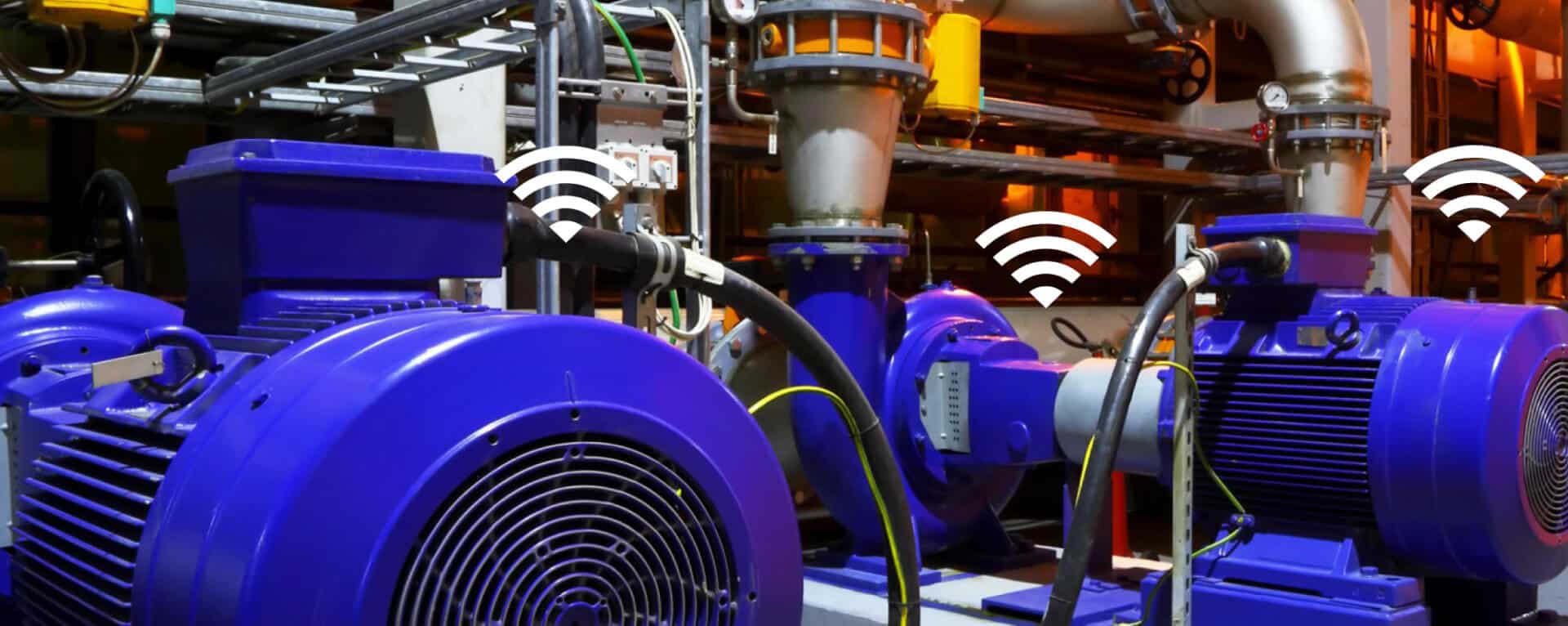
Condition Monitoring has been on the rise in manufacturing for years. The coming year is poised for a critical mass breakthrough, with sensors achieving more widespread adoption at an ever-more accessible price point. The ROI for sensors will become more pronounced as more facilities use them to enable constant, real-time machine health and condition monitoring—yielding more effective maintenance, longer equipment life span and higher-quality output. In 2026, the manufacturing industry also could see technologies such as self-powered or energy-harvesting sensors become more commonplace, enhancing their versatility. In addition, AI-enhanced signal interpretation and anomaly detection could make these systems even more accurate.
4. Safeguarding profit margins through increased proactivity and operational efficiency
Sensors also enable tactics such as predictive maintenance, where machine performance data is analyzed to detect minor fluctuations in areas such as vibration, which can indicate the beginnings of more significant problems down the line—allowing the facility to address these problems at a convenient time. This proactive approach reduces or eliminates unplanned downtime, allowing facilities to reap maximum productivity through equipment operation. With artificial intelligence algorithms helping identify patterns, experts are predicting better decision-making capabilities, as well.
5. A more predictive approach—beyond the maintenance function
In light of a global catastrophe, a predictive approach to operations will be widely sought after at the macro level. Manufacturing businesses are understandably keen to get ahead of the next global disruption, whenever and whatever it may be. Technology such as AI early warning systems and big data mining will be increasingly drawn upon to run global scenarios that may help predict and prepare for these events. This level of predictive supply chain visibility can help manufacturers explore customer behavior and market trends to help them get a better handle on what they should be doing.
6. AI and VR exploration and adoption
The role of AI in manufacturing is expected to take center stage in the coming year as well, ready to make good on the promise of years of incremental adoption, along with related technology such as machine learning. In the race for a return to profits, AI technology can be used for more accurate forecasting and planning of maintenance, production capacity, inventory, sales, and more. For example, AI copilots can be embedded in technician devices to provide them with guided workflows. In addition, the rise of virtual reality has led to the development of virtual twins. These simulations of factory environments are updated in real-time based on data collected from Industrial IoT devices, and enable technicians to visualize layouts and workflows. This in turn allows them to optimize performance even from a distance. There also is a lot of potential in using VR and AR as part of the employee training process, giving them the opportunity to learn in a simulated environment. Generative AI can serve an important role in simulating these environments.
7. Evolving workforce roles and learning
The growth in AI technology will require capable people to implement, manage and make sense of it—a far cry from the fear that AI will replace humans. The impending AI boom represents a great opportunity for manufacturing employees to learn and advance their careers. Manufacturing personnel operations may also change as organizations increasingly turn to resources such as workforce partners to maximize the value and effectiveness of those functions. Expect to see a lot more investment in employee development throughout 2026 as manufacturers seek to create learning cultures within their organizations.
8. Cobots continue rapid growth
Similarly, human workers remain a critical part of hands-on manufacturing tasks themselves, although the technology to make those tasks easier is increasingly prevalent. Cobots (collaborative robots) are one such example—versatile automation machines with smart technology and safety features that enable them to work side by side with human workers, fulfilling repetitive, dangerous or otherwise undesirable tasks so that employees can focus on higher-value functions. Advancements in AI should lead to wider acceptance of these cobots across various areas of the smart manufacturing market, including material handling, quality testing and inspections.
9. Industry 5.0
In addition to the impact of cobots on smart manufacturing, examples of tech driving change can be found in other areas. The term “Industry 5.0” is being used to describe the intersection between human labor and advanced technologies such as big data and the Internet of Things. Rather than seeking to replace human workers, these advancements are focused on enhancing employees’ ability to do their jobs. This focus on employee well-being and ergonomic solutions should continue through 2026, along with an increased emphasis on the ethical considerations of technology deployment throughout the industry.
10. Technology-driven supply chain transparency and accountability
Smart manufacturing technology will impact the supply chain as well, as interest in reliability, transparency and flexibility is at an all-time high following the disruptions of the past few years. Technology such as AI, vendor management software and blockchain will all play a role in the face of the supply chain—no longer an intractable monolithic function, but one that allows for more accountability and freedom of choice. The rise of collaborative supply chain platforms should help streamline the production process even further in 2026 as manufacturers and suppliers gain new ways to work together.
11. A new take on scenario planning
With smart manufacturing solutions such as AI and big data providing more insight into potential future disruptions to manufacturing, it is still incumbent upon managers and personnel to plan responses to these scenarios. Data visualization, for example, gives manufacturers a more in-depth view of the conditions in their plants as well as industry trends. This gives them a deeper understanding of what they need to do to succeed. Digital twins also can be employed for plant-wide simulations and emergency response design.
Typically, these scenarios would be limited to short-term disaster response, etc.; however, ongoing supply chain disruptions and changing market conditions have shown that more long-term problems must also be addressed. Thus, these planning exercises will go beyond immediate response planning to factor in agility, flexibility, resiliency, employee relations and long-term recovery.
12. Sustainability and environmental responsibility
Manufacturers continued to find new ways to satisfy the need for environmentally responsible business practices in 2025. Consumers and regulators have placed increasing pressure on the industry to lessen its impact on the environment and become more sustainable. Smart manufacturing offers a number of ways they can accomplish this, reducing waste in some areas and finding more-efficient ways to achieve goals. Regulations are expected to become tighter around the world in 2026, so it is crucial for manufacturing companies to embrace sustainability in every way they can.
13. Cybersecurity in manufacturing
As the industry leans into smart technology, one of the biggest questions is how the manufacturing sector will protect and secure the vast amounts of data smart factories collect. Cyberattacks on connected manufacturing execution systems are on the rise, and having a robust cybersecurity protocol will be essential for manufacturers in 2026. This should include sophisticated solutions such as AI-powered threat detection as well as methods like employee awareness training. Cybersecurity standards and regulations will continue to drive the industry going forward, so it cannot be ignored as part of any smart manufacturing solution.
Smart manufacturing trends to watch in 2026
Here are a few examples of transformative technologies manufacturers can expect to see a lot more of in the coming year:
- Autonomous factories — Self-driven robots can perform routine inspections and deliveries through AI-driven scheduling and self-adjusting production workflows.
- Hybrid digital workforces — In addition to AI copilots embedded in every workstation, manufacturers can provide workers with wearables that monitor safety, ergonomics and productivity.
- Hyper–personalized smart manufacturing — Technology and additive manufacturing enable production lines that adjust dynamically in real time to customer data, with AI-driven micro-batch production at scale.
- Zero–downtime manufacturing — As predictive maintenance evolves into prescriptive and autonomous repair suggestions, manufacturers can keep equipment online longer and switch over systems in real-time in response to asset needs.
- Energy–intelligent manufacturing — With AI modeling that determines the most efficient time to run demanding equipment, facilities can adjust their energy load automatically to lower costs and meet their carbon goals.
Of course, no one can reliably predict the future, as we’ve seen many times during the last few years. Though by looking at short-term as well as long-term trends and focusing on big-picture themes (such as flexibility, reliability, remote access, maintenance partnerships, equipment monitoring and data-driven functions) advanced manufacturing businesses can use these trend forecasts to remain well-positioned and advantageous in the competitive landscape. To discuss your options for smart manufacturing initiatives, contact ATS today.