




Kaizen is the process of continuous improvement in all aspects of life. This Japanese term was first introduced to the Western world in the 1980s by Masaaki Imai in his book, “Kaizen: The Key to Japan’s Competitive Success.”
Today, Kaizen is a critical part of lean manufacturing, which focuses on minimizing waste and maximizing productivity.
While Kaizen covers the entire manufacturing process, a Kaizen event targets a specific challenge through structured, rapid improvement workshops. The goal of these workshops is to identify measurable improvements in quality, productivity, machine uptime and worker experience, and then implement strategies to achieve these outcomes.
Regularly conducted, well-structured Kaizen events can help drive momentum in long-term operational excellence initiatives. Here’s how.
What happens during a Kaizen event?
Kaizen events—also called rapid improvement events—are intensive workshops divided into three phases: preperation, implementation and follow-up.
Events typically include 1-5 days of focused work that result in immediately implemented changes.
Who participates in a Kaizen event?
Successful Kaizen events require cross-functional collaboration. Maintenance, operations, safety and leadership teams all play a role—each bringing unique insights that help identify root causes and implement sustainable improvements.
Failing to include any of these teams can lead to less-effective Kaizen events. For example, maintenance teams can offer detailed analysis into KPIs such as mean time between failures (MTBF) and mean time to repair (MTTR), which help pinpoint potential problem areas. Without this insight, changes made may address symptoms rather than root causes.
What are the steps of Kaizen event?
Seven steps are common in Kaizen events:
1. Define problems and outcomes
2. Collect baseline data
3. Conduct root cause analysis
4. Brainstorm and prioritize improvements
5. Implement changes immediately
6. Validate change results with KPIs
7. Document and standardize processes
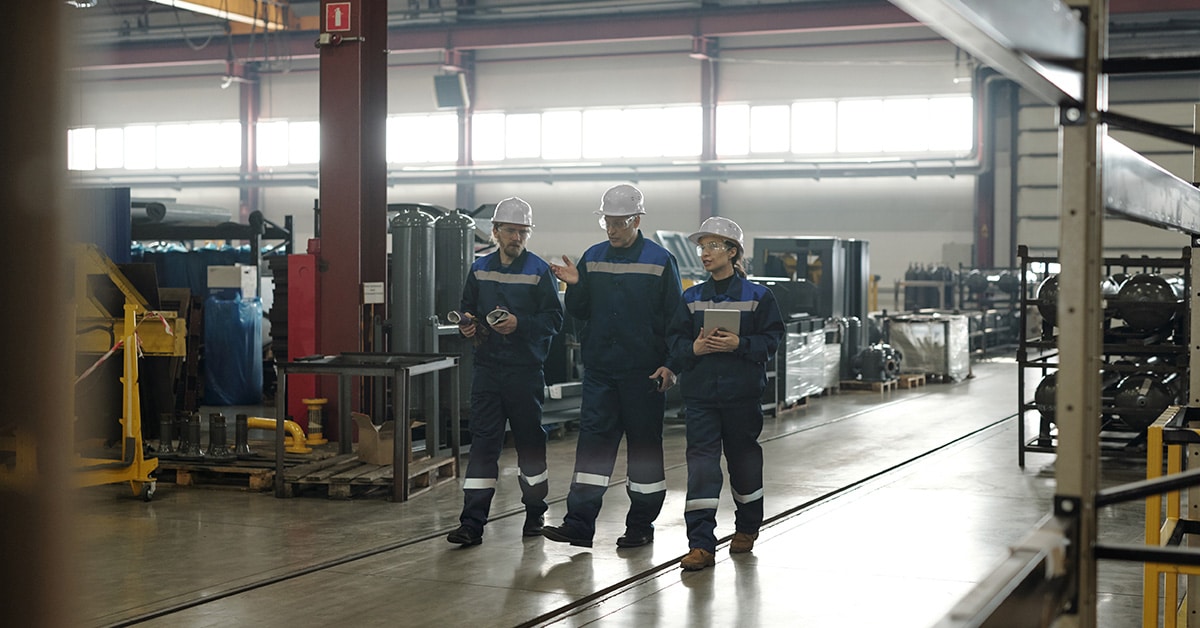
Worth noting? Kaizen events are hands-on. Unlike strategy-only meetings, the Kaizen approach always includes “going to the Gemba,” which means bringing Kaizen event team members to the shop floor and observing work in progress. By seeing operations in person, teams are better prepared to implement changes that deliver meaningful improvements.
Key targets of a Kaizen event in manufacturing & maintenance
Kaizen events can drive improvements across operations, maintenance and safety, such as:
- Equipment changeover speed (SMED): SMED stands for single-minute exchange of dies. It originally referred to the swapping out of press dies but is now used to describe changeover speed reductions for any type of machinery. The goal of SMED is to streamline the switch of a production line from one part or product to another. Although the term refers to a “single minute”, companies should focus on single-digit changeovers, that is, anything under 10 minutes.
- Preventative maintenance efficiency: Kaizen events may also target preventative maintenance. While preventative maintenance is a great way to reduce unexpected failures, it is only effective when applied to components with high failure risk or those that experience significant wear. Kaizen events help pinpoint ideal maintenance areas.
- Material flow and logistics: Material flows and logistics directly impact production performance. By seeing these processes in action during a Gemba walk, Kaizen event teams can identify bottlenecks or other concerns.
- Defect and scrap reduction: More defects mean more time spent on rework. Inefficient processes, meanwhile, can lead to excess scrap. Kaizen events can target the root causes of both to reduce time and money spent.
- Downtime reduction and OEE improvements: Overall equipment efficiency is a combination of availability, performance and quality. OEE is also related to downtime; improved OEE means reduced downtime and improved performance. Kaizen events can investigate the source of availability, performance and quality issues to enhance OEE.
- Safety hazard elimination: Safety hazards can injure employees and negatively impact productivity. Kaizen events are a great way to brainstorm new safety protocols that eliminate high-risk hazards.
- Standard workflow implementation: In some cases, inefficient processes are tied to inconsistent manufacturing documentation. If multiple equipment operations each have their own approach to production, the result may fluctuate throughput and output levels. A Kaizen event for workflows can identify, compile and communicate standard workflows.
Here’s a quick example of Kaizen in practice. Andy’s Automotive notices that equipment downtimes are increasing, so the company creates a Kaizen event. Multi-team investigations reveal that downtime is linked to maintenance delays, which are caused by tool access issues and spare parts availability. To solve the problem, Andy’s reconfigures shop floors to improve tool access and increases the amount of on-hand spare parts.
The role of maintenance & reliability in Kaizen success
As noted above, maintenance teams play a key role in the success of both Kaizen methodology and Kaizen events. In part, this is because Kaizen events focus on reliability fundamentals, such as autonomous maintenance practices and streamlined troubleshooting workflows, both of which fall under the purview of maintenance.
When it comes to Kaizen events, maintenance experts offer key contributions. First is the ability to identify mechanical causes of waste. These may include physical wastes such as excess materials used in assembly, or electrical wastes such as excess power consumption. Maintenance teams also help improve asset care routines and identify early warning signs that prompt proactive repairs.
In addition, maintenance teams bring the benefit of computerized maintenance management systems (CMMS) expertise, which enables asset visibility and action tracking across the organization.
Ultimately, bringing in maintenance teams helps build a preventative mindset: If you can maintain machinery efficiently, you can improve it sustainably.
Benefits of a Kaizen event
There is no set output for a Kaizen event. This is because events are tailored to specific processes, machinery and operations. There are, however, common benefits of Kaizen events across three categories: operational, cultural and financial.
Operational
- Increased uptime and throughput
- Reduced cycle time
- Less process variability
- Fewer rework loops
- Measurable OEE gains
Cultural
- Employees are empowered to solve problems they regularly experience
- Cross-functional collaboration improves communication
- Unified processes build momentum for continuous improvement
- Staff have an increased sense of ownership over key processes
Financial
- Waste reduction boosts margins without capital investments
- Improved maintenance processes limit spending on in-stock spare parts
- Fewer equipment failures mean less money spent on emergency repairs and lost to downtime
Common Kaizen tools and techniques
Multiple lean tools support Kaizen improvements and events. They include:
- Value stream mapping (VSM): Value stream mapping is the creation of a diagram that shows all the actions required for raw materials to be sourced, processed, assembled and shipped to customers.
- 5S workplace organization: The 5S method is a workplace organization system that consists of five steps: sort, set in order, shine, standardize and sustain.
- Root cause analysis: Root cause analysis looks to identify the source of failures or errors. It encompasses machinery issues, human errors and other external factors. Some common techniques used in root cause analysis include 5 Whys and fishbone diagrams. 5 Whys is the process of asking “why” an event happened 5 times (or more) to help identify the source—each answer informs the next. Fishbone diagrams, meanwhile, are drawn using a central “backbone” that identifies the problem. Each potential cause is connected to another bone in the spine. Also of use in Kaizen events is root cause failure analysis, which focuses on discovering mechanical faults.
- SMED for changeovers: As noted above, SMED for changeovers prioritizes process or production switches that occur in under 10 minutes.
- Visual management: Visual management includes the use of signs, diagrams and Andon signals (green/yellow/red) to standardize and streamline processes.
- Standardized work documentation: Standardized documentation provides a single source of truth for operators and ensures that key processes such as startup, shutdown and maintenance are always conducted the same way.
- Error-proofing: Also known as poka-yoke in Japanese, error-proofing looks to remove specific sources of error. For example, companies might add a warning alarm to machines that indicates improper parts alignment, in turn eliminating the risk of specific defect errors.
Successful application of these tools removes process ambiguity and eliminates failure points that lead to breakdowns.
Measuring success: Kaizen event KPIs
Carrying out a Kaizen event is the first step in creating continuous improvement solutions. Measurement comes next. Here, key performance indicators (KPIs) are critical to validate the impact of new workflows and training. Each KPI should be measured before and after the Kaizen event to determine the change.
KPIs to consider
- OEE
- Downtime causes and duration
- Setup time
- Throughput
- Scrap/defect rates
While the Kaizen event itself should drive short-term benefits, companies also need to consider sustainable gains beyond the event. As a result, it’s worth carrying out follow-up audit milestones 30, 60 and 90 days after your Kaizen event.
Kaizen event implementation best practices
Kaizen events are only successful if they identify issues, address concerns and deliver sustainable benefits. If companies can’t identify root causes or slip back into old habits after a few weeks or months, they may need a new approach.
Best bet? Start strong and stay on track with best practices that support long-term gains.
First are clear scopes and measurable goals. Put simply, don’t bite off more than you can chew. Identify specific processes, desired outputs and targeted KPIs. Next, ensure a combination of leadership support and frontline ownership. While it’s important to designate a C suite advocate for Kaizen events, frontline staff should own process-making and implementation.
With goals and leaders in place, organizations are equipped to make quick decisions and test these decisions in real-time. Documentation helps measure success. If changes are effective, work instructions should be immediately updated.
Last but not least? Take time to celebrate your successes. Give credit where credit is due for Kaizen teams and reinforce the adoption of new or modified processes with participation rewards that keep staff engaged.
Considering a Kaizen event? Set the stage for success with outsourced preventive maintenance services from ATS. Let’s talk.
References
Kaizen Institute. (n.d.). What is a KAIZEN™ event and how does it foster a culture of continuous improvement. https://kaizen.com/insights/kaizen-event/