
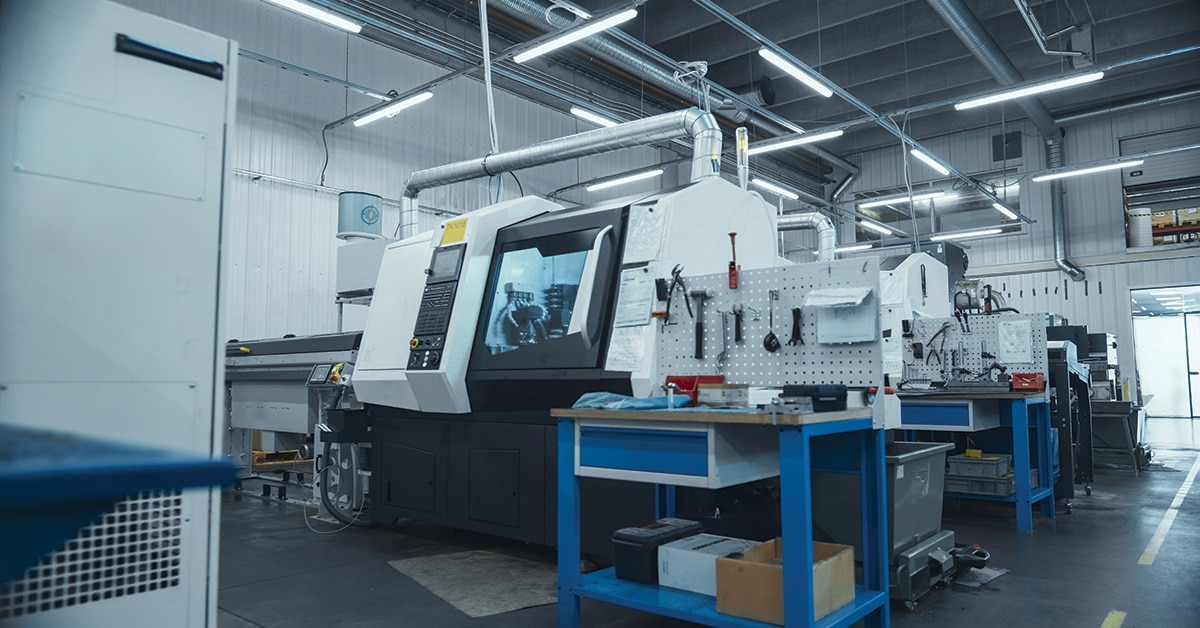




Downtime is a fact of life for manufacturers. According to a recent report by German technology company Siemens, an average large plant experiences 27 hours of unplanned downtime per month, costing $253 million a year.
Frequency and duration matter, but the asset involved often determines the true impact—how quickly teams can respond in the short term and how costly or complex it is to prevent repeat failures over the long term.
Critical assets are the equipment and systems you can’t afford to lose—because failure can halt production, compromise safety and compliance, and impact the bottom line. When a critical asset goes offline, the impact can include lost throughput, quality escapes, safety exposure, and unplanned shutdowns.
Read on to learn more about the importance of critical assets, the process of identifying these assets and the role of effective maintenance strategies in reducing asset risk.
Why critical assets matter in manufacturing
Critical assets are central to manufacturing performance and competitiveness. Even minor drops in reliability or productivity can ripple across operations, affecting uptime, output and cost.
Despite the risk, many manufacturers lack clear visibility into where critical assets are located, how they’re operating and how they’re documented. When these assets aren’t managed effectively, it creates several downstream challenges, including:
- Reduced uptime, throughput and overall equipment effectiveness (OEE)
- Increased risk of unplanned downtime
- Higher maintenance costs due to reactive maintenance
- Greater safety and regulatory exposure
- Expanded delivery and reputation risks
Characteristics of a critical asset
What makes an asset “critical” can change over time as production goals and processes evolve. As a result, equipment should be regularly evaluated to determine if it meets critical criteria. Companies should consider characteristics such as:
- Single point of failure within a process
- Lack of backup or redundancy
- High repair time or effort required
- Significant downtime cost
- Safety or environmental risk exposure
- Downstream operational or product quality impact
- Dependence on specialized parts or skills
Examples of critical assets in manufacturing
So, what does a critical asset look like in practice? Common examples include:
- Bottleneck production equipment
- Specialized or custom machinery
- Utilities and critical infrastructure
- Robotics and automation cells
- Control systems and programmable logic controllers (PLCs)
- Material handling systems
- Equipment that supports regulated or safety-critical processes
How to identify critical assets
While a high-level review of production processes may provide an initial criticality analysis, the embedded and interconnected nature of manufacturing processes means that not all essential equipment is obvious. As a result, organizations must develop identification workflows to help pinpoint these potential failure points.
This starts with an asset criticality analysis (ACA), which leverages a scoring or ranking system to prioritize assets. There’s no “right” way to carry out an ACA—manufacturers can use a 1-10 scale, letter grades or design a risk matrix for asset classification—but five steps can help streamline the process.
- Step 1: Evaluate consequences: What happens if an asset fails? What are the impacts on production times, worker safety and operational costs?
- Step 2: Calculate likelihood: How likely is an asset to fail and how often? Data such as mean time between failure (MTBF), along with maintenance records, help inform this value.
- Step 3: Evaluate repair time and spare parts availability: Here, metrics such as mean time to repair (MTTR) and mean time to detect (MTTD) help teams conduct bottleneck analysis in repair and replacement processes.
- Step 4: Identify redundancies and workarounds: Redundant assets and processes that offer workarounds come with lower total risk. For example, if a production line packing machine has an identical backup, this offers some breathing room for repair teams.
- Step 5: Collect input from multiple teams: Input from maintenance, operations, safety and engineering teams helps identify common failure points and explore the real-world impacts of asset downtime.
Critical assets and maintenance strategy
Maintenance plays a key role in keeping critical assets up and running.
Consider reactive maintenance, which begins after failures happen. This puts manufacturers at a disadvantage; before they can even start solving issues, they need to identify the source, determine the cause and ensure they have the right parts on hand.
Moving to preventive and predictive models, meanwhile, reduces the risk of unexpected failures and reactive efforts.
Making this move starts with higher inspection and monitoring frequencies. The more data staff collect and input into enterprise asset management (EAM) systems and computerized maintenance management systems (CMMS), the more consistent your machine uptime.
Next is the deployment of a connected sensor to monitor and report asset health data in real time. By taking a continual machine health monitoring approach, manufacturers are better equipped to spot and solve problems early.
It’s also important to create a spare parts strategy for critical assets by identifying common failure points and ensuring necessary parts are available. This goes hand-in-hand with more detailed maintenance procedures and documentation, which ensure issues are properly tracked, recorded and addressed.
Finally, companies need to consider the impact of failure modes and root causes. By prioritizing root cause failure analysis (RCFA), organizations can identify the source of asset issues, rather than simply solving for symptoms.
The role of critical assets in reliability and Industry 4.0
As manufacturers move toward digital-first operations and maintenance, critical asset management must evolve in tandem. This requires the development of new asset strategies that leverage real-time data to deliver actionable insight.
Effective approaches include:
- Prioritizing sensor development on critical assets
- Feeding asset data into CMMS and EAM systems automatically
- Supporting predictive maintenance with AI analytics
- Enabling remote monitoring and diagnostics
- Improving decision-making with real-time asset health data
- Supporting long-term reliability-centered maintenance efforts
Manage critical assets with confidence
Critical assets drive production performance, and even small amounts of unplanned downtime come with costly and time-consuming consequences.
The result? Manufacturers need critical asset management strategies that anticipate rather than react to potential asset issues, in turn improving industrial reliability and providing end-to-end operational insight.
For over 40 years, ATS has been helping companies run smarter, more efficient factories that improve production throughput, boost quality and reduce unexpected downtime. Our teams have expertise in asset criticality and reliability assessment, predictive maintenance and condition monitoring solutions, CMMS and EAM optimization, and spare parts and MRO strategy alignment.
Ready to prioritize critical assets and reduce the risk of unplanned downtime? Partner with ATS to support uptime, safety and long-term asset performance strategies. Let’s talk.
References
Siemens. (2024). The true costs of downtime 2024 [White paper]. https://assets.new.siemens.com/siemens/assets/api/uuid:1b43afb5-2d07-47f7-9eb7-893fe7d0bc59/TCOD-2024_original.pdf
