



Technology is changing the way business is done in virtually every industry, including manufacturing. Advancements in digital technology guided by Industry 4.0 initiatives are enabling manufacturers to streamline production processes, innovate at a faster pace, reduce costs and deliver higher quality products to meet customer demand. Because of its versatility and ease of use, there are a number of areas within manufacturing where technology is being harnessed.
Examples of technology in the manufacturing industry
For example, additive manufacturing—more commonly known as 3D printing—has a variety of applications. As it has become more affordable, manufacturers are using it during the production cycle to produce high quality components while keeping costs down. It represents a promising opportunity for the creation of custom goods and other parts. Artificial intelligence (AI) can help technicians determine how well a machine is functioning. AI is also able to predict when a piece of equipment may malfunction or break down. This kind of IoT, or Internet of Things, technology is the future trend of predictive maintenance. Digital twins also harness IoT technology and are another way that manufacturers can optimize performance and reduce their costs.
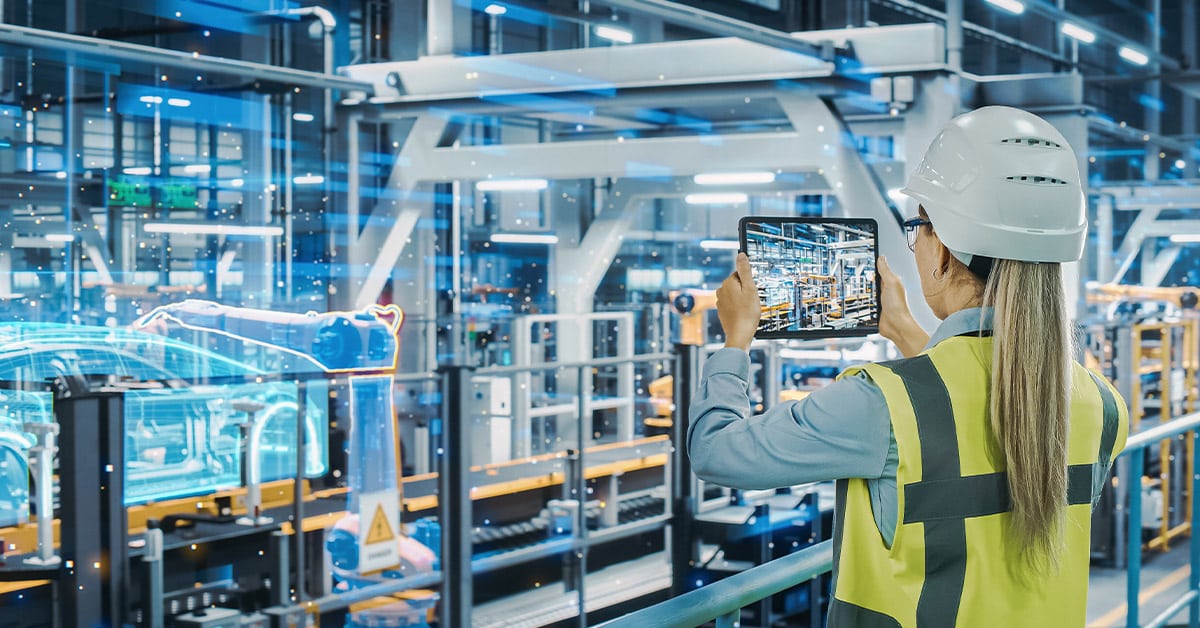
A digital twin, as the name implies, is a virtual representation of an actual object that receives data in real-time from the object. This data allows you to virtually monitor a piece of manufacturing equipment or an entire production line. Digital twins are being used increasingly to predict maintenance schedules and possible repairs as well as to experiment with changes to a line and review what the impact may be. Remote performance monitoring sensors that can track manufacturing cycles and sense possible maintenance issues are also growing in popularity.
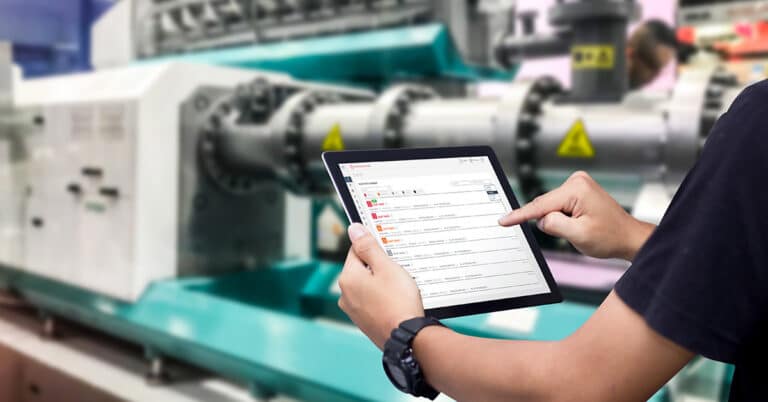
Remote performance monitoring sensors can be used in a number of different ways to reduce costs and improve efficiency in the manufacturing process. For example, they can predict when a part or machine may fail, which lets manufacturers implement predictive maintenance schedules that reduce the risk of a breakdown and related downtime. These sensors can also help keep a production line running at capacity, and if a repair is needed, enable the manufacturer to contact a service team immediately to help ensure speedy service and repairs.
The impact of technology in the manufacturing industry
Some of the most common examples of technology in production include:
- Automation and robotics: Using robots to perform repetitive, dangerous or complex tasks increases production speed, enables 24/7 operation and cuts down on the risk of human error and injuries.
- Data analytics and AI: Leveraging the power of advanced AI algorithms for analyzing data helps technicians predict maintenance needs, optimize processes and improve efficiency overall.
- IoT and smart manufacturing: By connecting machines through the Internet of Things, operators can gain real-time monitoring, data collection and automated decision-making to improve resource allocation and production scheduling.
Challenges and solutions
While many manufacturers are increasing the role of technology in production, success depends on their ability to address several critical challenges. Among the most common obstacles associated with digital transformation include:
- Cybersecurity risks: As connectivity increases across assets in the modern smart factory, exposure to cybersecurity risks also grows. This means robust cybersecurity must be part of any advanced manufacturing strategy, including segmentation, encryption, monitoring, and ensuring secure remote access. Training employees on the importance of data hygiene is also critical to protecting systems and operations.
- Workforce upskilling: To fully realize the value of investments in manufacturing innovation, employees must have the skills to effectively apply new technologies. Today’s workforce needs strong capabilities in data fluency, CMMS usage, sensor data interpretation, and robotics troubleshooting to ensure technology delivers reliable, measurable results.
- Capital investment and budgeting: Balancing the initial costs of new manufacturing technology is an ongoing challenge. Manufacturers can offset these investments by pairing them with predictive maintenance practices, energy optimization and automation upgrades. With new technologies can deliver long-term efficiency gains and ROI, thoughtful implementation—such as phased rollouts—helps manage costs and reduce financial risk early on.
The future of technology in manufacturing
Looking ahead, it’s easy to see that the evolution of manufacturing will continue to be driven by advanced technology in the years to come. Some of the most exciting concepts anticipated include Industry 5.0, which builds on the integration of smart machines, AI and data analytics to drive further improvements in efficiency and sustainability. As automation becomes more sophisticated, it can enable “lights-out” manufacturing where robotic systems can be left to their own devices and achieve 24/7 production without human intervention. AI also has the potential to make predictive maintenance even more effective.
Other technological advances include advances in automation, such as robots that perform assembly and material handling as well as dangerous or repetitive tasks and computerized maintenance management systems, which help reduce the need for on-site personnel. ATS is an industry leader in manufacturing and maintenance technology. We draw on our extensive expertise to help you implement a smart technology plan that’s right for you.
For more information, contact us today.