



Pharmaceutical manufacturing comes with unique challenges not present in standard industrial environments. Chief among them are strict regulatory frameworks. For example, pharma manufacturers must meet guidelines such as Current Good Manufacturing Practice (cGMP) defined by the U.S. Food and Drug Administration (FDA), which help reduce the risk of cross-contamination and ensure product consistency.
Consistent production line uptime is a key component in meeting these standards. Equipment that experiences sudden failures can lead to inconsistent batch quality, in turn leading to wasted time and materials.
Predictive maintenance (PdM) helps the pharmaceutical industry improve asset management and reliability, reduce unplanned downtime and maintain product quality. Here’s how.
Why equipment reliability matters in pharma manufacturing
All manufacturers have strict standards for quality. For example, food and beverage manufacturers must ensure that equipment is regularly cleaned and sterilized and must implement practices to reduce the risk of product cross-contamination.
Pharmaceutical manufacturers are held to even higher standards, with many drugs and compounds requiring the use of fully sterile environments and cleanroom conditions to guarantee batch integrity. In addition, high-value assets such as mixers, aseptic filters, HVAC/cleanroom systems, centrifuges and packing lines must run within strict tolerances.
For pharma manufacturers, even a single point of failure can lead to:
- Lost batches: If batch quality doesn’t match expectations, companies could lose millions of products that cannot be sold. And since pharmaceutical production is typically process manufacturing—finished goods can’t be broken down into their component parts—companies cannot recover used materials.
- Sterility failures: Cleanrooms and sterile surfaces are critical to compliant pharma manufacturing. When a high-pressure production machine leaks during batch processing, it can quickly compromise the sterile environment.
- Production delays: Sudden failures create production delays, which can cause serious downstream issues if manufacturers are obligated to meet supply chain commitments.
- Compliance violations: Along with FDA requirements, global organizations must also comply with international rules established by, for example, the UK’s Medicines and Healthcare products Regulatory Agency (MHRA) and/or the European Medicines Agency (EMA). As a result, even small failures can lead to multiple regulatory compliance violations.
Predictive maintenance tools help spot potential problems before they occur, with the goal of ensuring consistent operational efficiency.
Key technologies enabling predictive maintenance strategies in pharmaceutical facilities
Predictive pharmaceutical manufacturing maintenance is powered by technology. In part, this is tied to the rapid advancement of detection and monitoring tools, which enable real-time data capture and processing. Technology also reduces the need for human-driven data collection, which can potentially compromise sterile environments.
Key technologies enabling predictive maintenance include:
- IIoT sensors
- Cleanroom environmental monitoring sensors
- Wireless vibration and motor condition monitoring sensors
- Edge analytics and machine learning that underpin AI-driven predictive maintenance
- Cloud and on-premises data platforms
- CMMS and EAS solutions
These technologies are often deployed across systems such as:
- HVAC and air-handling systems
- Compressor and vacuum systems
- Sterilization and autoclave equipment
- Pumps and mixers
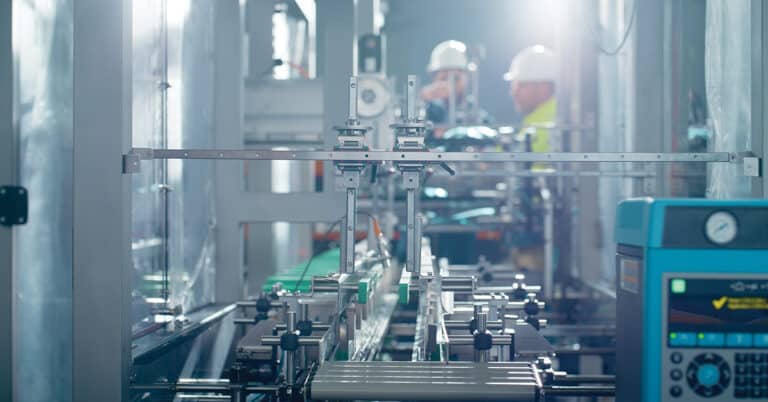
- Conveyor and packaging equipment
- Chillers and utility systems
Common predictive maintenance use cases in pharma manufacturing
While predictive maintenance in the pharmaceutical industry applies to almost any process, several common use cases help deliver the highest value to pharmaceutical manufacturers.
First is vibration analysis. Tools such as pumps, agitators, motors and centrifuges require precise calibration to produce outputs that meet exacting quality standards. Even small variations in vibration speed or intensity can lead to wasted materials and lost batches. In-depth analysis using environmental sensors and edge computing systems helps reduce the risk of vibration variance.
Another common use case is thermal monitoring for sterilization equipment, fill/finish lines and packaging systems. High temperatures are required to sterilize critical equipment and kill any potential contaminants but can put products at risk if increased rates are not strictly controlled. Thermal monitoring helps detect increases or decreases that are out of spec.
Other use cases include monitoring utility operations such as compressed air, water purification, and vacuum systems, as well as tracking lubrication and bearing wear to prevent contamination. Predictive environmental monitoring can also be used in cleanrooms to track key metrics such as temperature, relative humidity and differential pressure.
How predictive maintenance solutions support compliance and quality
Predictive maintenance processes can both improve compliance and support quality assurance. Key benefits include:
- Documented evidence for audit trails and CAPA investigations
- Reduced risk of batch contamination and equipment drift
- Improved adherence to cGMP by ensuring equipment operates within validated parameters
- Minimized human error associated with manual inspections
- Consistent environmental maintenance conditions critical for sterile manufacturing
- Supported reliability-centered maintenance schedules and programs aligned with FDA expectations
- Reduced overall maintenance costs
Challenges in PdM for pharmaceutical manufacturing
While PdM implementation offers significant operational and compliance advantages for manufacturers, it also comes with potential challenges.
First up are complex validation requirements. For companies to meet cGMP obligations, they must ensure that both processes themselves and the tools used to measure these processes are validated. This can lead to issues with reporting, auditing and documentation accuracy.
Integration is next. This is especially problematic for companies that rely on legacy tools or networks as part of their manufacturing process. For example, legacy solutions may not support using sensors in pharmaceutical manufacturing, and may not be configured to report real-time data.
Other challenges include cross-department alignment, the need for new skills development and cultural resistance to new operations. Consider communications between IT, quality assurance, engineering and maintenance teams. If PdM data isn’t shared consistently, or if each department runs its own predictive maintenance analytics, companies may struggle with redundant efforts and duplicated data that lead to inaccurate reporting.
Staff skill development and workforce training, meanwhile, are often required to ensure employees have the knowledge and expertise necessary to make the best use of sensors and other technologies. In addition, the move to new processes may prompt resistance to change that limits adoption.
Finally, pharmaceutical companies must consider both data governance and cybersecurity concerns. If intellectual property data is accidentally shared or deliberately stolen, manufacturers could face significant legal and regulatory repercussions.
Streamlining PdM support with trusted partners
Trusted service partners offer a way to streamline PdM. With ATS, pharmaceutical manufacturers can access:
- Decades of experience in maintenance optimization and reliability engineering
- Ability to deploy IIoT sensor networks and condition monitoring solutions
- Expertise in predictive maintenance modeling and standardized maintenance-data procedures
By combining the right technologies with a trusted partner like ATS, pharma companies can move from reactive maintenance to data-driven, predictive models that enhance compliance, reduce downtime and improve equipment performance.
Time to prioritize PdM? Start with ATS. Let’s talk.