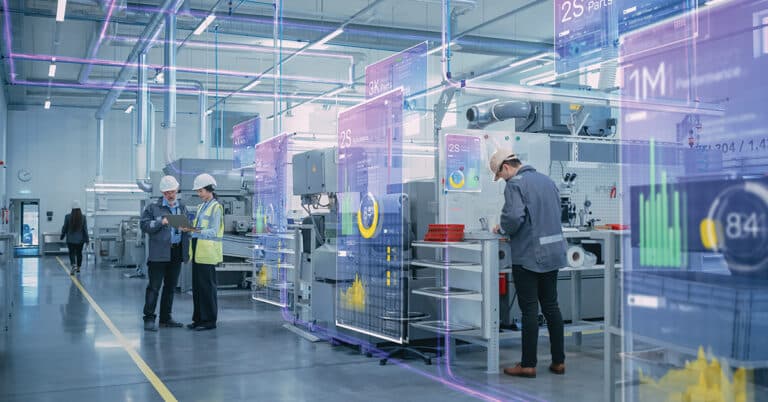
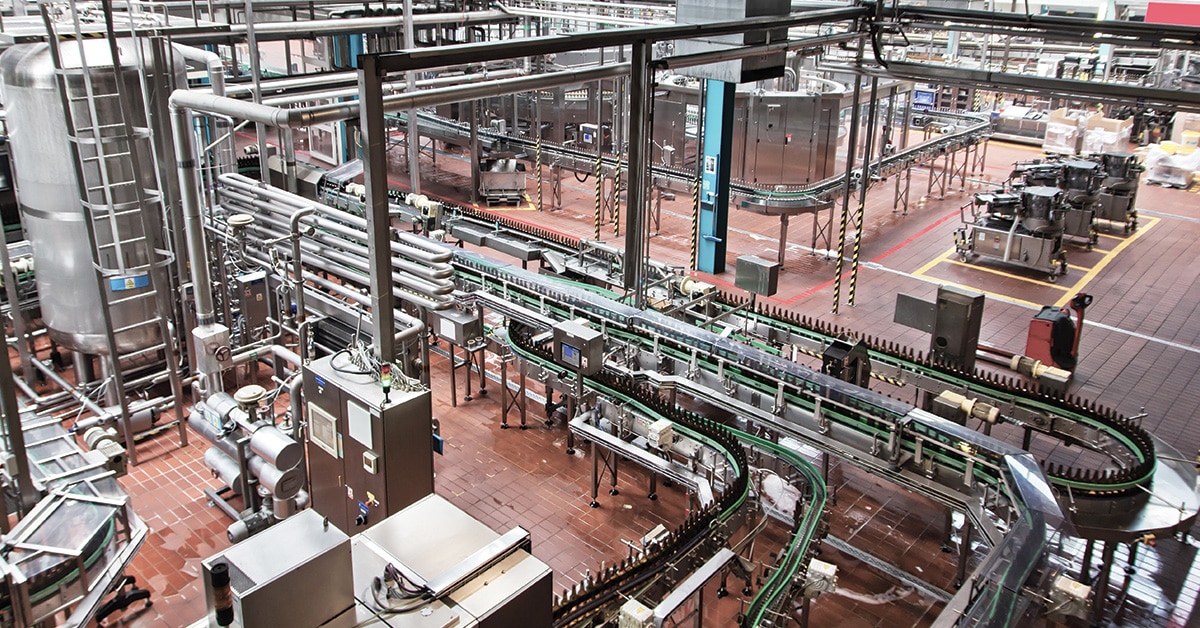




Machine-to-machine (M2M) communication is the automated exchange of data between two (or more) machines without the need for human action or intervention.
As manufacturing systems become more complex, this automated exchange of information is essential. Interconnected, interoperable systems require real-time data to ensure optimal performance and reduce the risk of unplanned downtime.
M2M communication also underpins the rapid growth of the Industrial Internet of Things (IIoT) and Industry 4.0, both of which rely on continual communication to detect potential problems and trigger action quickly.
According to recent market research, M2M growth is accelerating. This year, the market is expected to reach $43 billion. By 2030, spending grows to $57 billion, and in 2035, predictions put the market at more than $81 billion.
For manufacturers, now is the time to review current M2M usage, identify areas for improvement and ensure infrastructure is up to the challenge.
What is machine-to-machine (M2M) communication?
M2M communication directly connects two or more machines, enabling them to directly exchange information and act on this information.
In a manufacturing environment, these machines may include production line equipment, connected sensors, programmable logic controllers (PLCs) or ERP software solutions. Communication is typically enabled through cellular or low-power wide-area networks (LPWANs). Companies may also choose wired solutions for smaller-scale applications and those where real-time data reporting is essential.
For simple data transfer, low-cost cellular standards such as 2G or 3G are often sufficient. For more complex data reporting, manufacturers may use 4G or 5G solutions. LPWANs, meanwhile, offer the benefit of low power consumption and long range. Manufacturers that operate large-scale facilities or use a campus-based approach to production often benefit from LPWANs.
M2M vs. IIoT: What’s the difference?
M2M manufacturing and the Industrial Internet of Things (IIoT) share a similar function: capturing big data in manufacturing, such as information about machine operations or output. As a result, they are often used interchangeably in discussions around digital transformation and the adoption of Industry 4.0.
In practice, however, there are three key differences.
- Data path: M2M is direct, machine-level communication. Machine 1 communicates with machine 2, which sends data to machine 3. IIoT often takes a more circuitous route. Data is sent from machine 1 to a central processing location, either on-site or in the cloud, then funneled back to other machines.
- Data usage: M2M data is used to automate processes and streamline communication. For example, connected pieces of production line equipment can share data and automatically optimize performance based on this data. IIoT networks, meanwhile, layer on additional functions such as analytics, cloud storage and human-machine interfaces (HMI).
- Data location: M2M systems share data internally, while IIoT frameworks often rely on external resources such as cloud computing providers to enable the large-scale analysis of data.
Key use cases for M2M communication in manufacturing
In manufacturing, M2M communication has several common use cases, including:
- Machine status and performance monitoring
- Automated line balancing and coordination
- Quality monitoring and defect detection
- Automated adjustments based on process conditions
- Improve coordination between connected assets
M2M communication in maintenance operations
Effective maintenance strategies help manufacturers ensure consistent production line performance and reduce the risk of unplanned downtime.
M2M supports these strategies by establishing a framework for proactive rather than reactive maintenance. For example, connected devices using predictive maintenance sensors can automatically alert maintenance systems of abnormal conditions, which trigger action from maintenance teams.
Using M2M technology also reduces reliance on manual inspections. Since data is reported automatically, teams don’t need to interrupt production processes for physical evaluations. This automatic reporting also improves response times to emerging issues, which streamlines both maintenance planning and scheduling.
Consider an assembly line device with a small leak in pressurized fluid lines. Without M2M, the issue may go unnoticed until performance begins to suffer or teams take the machine offline for monthly or yearly maintenance. If the issue has been ongoing for weeks or months, what could have been a small fix may require a complete system overhaul or the costly replacement of key parts.
Using M2M, meanwhile, attached sensors can be programmed to relay any change in pressure directly to computerized maintenance management systems (CMMS), which in turn alert maintenance staff so they can respond quickly.
Benefits of M2M communication for manufacturing performance
Even small deviations in production line performance can lead to increased cycle times or cause companies to miss on-time delivery (OTD) targets. Implementing M2M communication offers multiple benefits for manufacturing processes, such as:
- Reduced risk of unplanned downtime
- Faster issue detection and resolution
- Improved equipment utilization
- More consistent production output
- Better coordination between assets and processes
Benefits of M2M communication for maintenance performance
Effective maintenance strategies offer both immediate and long-term benefits. In the moment, proactive strategies keep machines up and running and help companies avoid costly repairs. Over time, solid strategies extend asset lifecycles and improve capital investment planning.
Creating reliable M2M connections helps deliver long-term value with:
- Earlier fault detection and intervention
- Reduced maintenance variability
- Improved asset lifecycle management
- Lower total cost of ownership
- Stronger reliability programs
Data and connectivity requirements for M2M
Both M2M applications and IIoT networks come with infrastructure requirements and potential challenges.
On the requirements side, manufacturers need a combination of wired and wireless sensors, PLCs, controllers and gateways. They also require reliable networks with sufficient bandwidth to handle real-time M2M data reporting and low enough latency to ensure data is delivered in near real-time.
When it comes to challenges, meanwhile, organizations must consider data standardization and interoperability. For example, if equipment sensors record and report data in different formats, alerts may not trigger properly, putting companies at risk of unplanned downtime.
Cybersecurity is also a concern. While M2M networks are typically internal, this doesn’t make them immune to potential attacks. If malicious actors gain access to company networks, they may be able to move laterally into M2M connections. From there, they could modify or falsify data or simply prevent equipment from communicating. If the attack isn’t detected, the first sign of trouble may be when production equipment unexpectedly fails.
As a result, planning is a key component of effective M2M deployment. This starts with an analysis of current production line processes and where they could benefit from automated connections and reporting. Next, companies need to assess their current network bandwidth and scale up as needed to support M2M architecture. Finally, M2M must be considered in the broader context of network security: Companies should consider access controls, data encryption and the use of AI-enabled security solutions to detect possible compromise.
How M2M supports Industry 4.0 and smart factories
M2M communication forms the foundation of modern production lines, which now leverage machine learning (ML) algorithms to improve assembly line and supply chain performance, along with digital twins to enhance product analysis.
Consider the rise of manufacturing robots—according to research from the International Federation of Robotics, industrial robot demand has more than doubled in the last decade, with companies now installing more than 500,000 robots each year. For these robots to be effective, however, they need reliable, real-time communication with other production line machinery—communication that is only possible with M2M.
Other advantages of M2M for connected production lines include:
- Real-time visibility and automation
- AI-driven analytics and optimization
- Improved system responsiveness and adaptability
- Connected and intelligent production environments
Getting started with M2M communication
For manufacturers considering M2M or looking to improve their current M2M infrastructure, four steps can help streamline the process.
Step 1: Target high-value assets or processes
Essential equipment and primary production processes should be first in line for M2M deployment. By allowing these assets to communicate, manufacturers are better equipped to track potential problems and ensure they’re getting the full benefits of a CMMS deployment.
Step 2: Create clear business objectives
M2M implementation requires time and resources. Sensors must be purchased and installed, protocols must be established and network infrastructure must be evaluated. To improve ROI, start with clear business objectives. These may include extending asset life, reducing maintenance costs or tracking machine performance over time. Clear objectives help inform investments.
Step 3: Standardize data and communication protocols
M2M won’t deliver results without standardized machine data collection and communication protocols. By taking the time to identify preferred data formats, reporting frequencies and network architectures before implementing M2M, manufacturers can capture more value quicker.
Step 4: Build cross-functional collaboration between IT, OT and maintenance teams
Ideally, M2M frameworks should report operational, technology and maintenance data. Making the most of this data requires cross functional collaboration among IT, OT and maintenance teams. For example, M2M maintenance reports may help identify the root cause of OT issues or inform the deployment of new IT solutions.
M2M communication is an enabler of operational efficiency, reliability and insight, and lays the groundwork for data-driven manufacturing. In combination with IIoT systems and comprehensive maintenance strategies, M2M data handling and industrial automation help drive long-term manufacturing value.
Make the most of your M2M deployment with targeted maintenance solutions and workforce training from ATS. Let’s talk.
References
International Federation of Robotics. (2025, September 25). Global robot demand in factories doubles over 10 years. https://ifr.org/ifr-press-releases/news/global-robot-demand-in-factories-doubles-over-10-years
Precedence Research. (2026, January 1). Machine-to-machine connections market. https://www.precedenceresearch.com/machine-to-machine-connections-market