
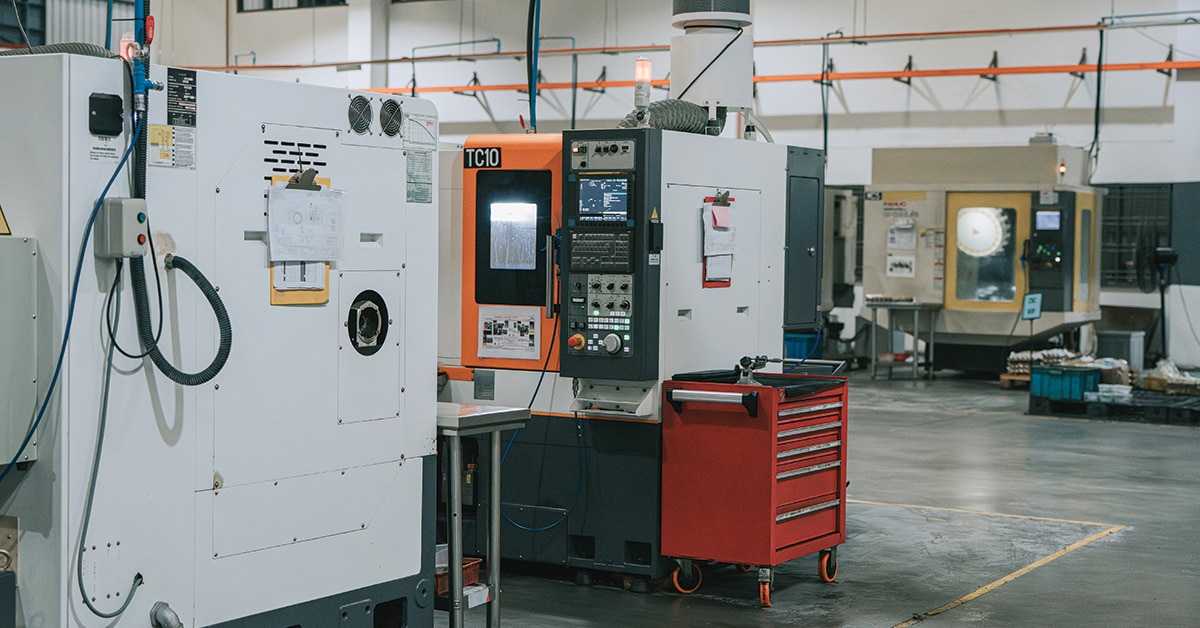




Computer Numerical Control (CNC) machinery is core to the modern automated manufacturing environment. Grinders, lathes and other CNC machines help factories produce precision parts more consistently by following programmed instructions. Although CNC machines follow programmed instructions, skilled people still set up the equipment, verify the program, monitor production and respond when quality, tooling or machine condition change.
Two of the most important roles in this workflow are CNC machinists and CNC programmers. The work they do is indispensable and deeply connected, but they each perform their own distinct functions within the manufacturing sector. CNC machinists can also support preventive and predictive maintenance programs aimed at maximizing uptime and productivity. At ATS, we understand just how critical this level of expertise is in ensuring the reliability of manufacturing operations. Read on to learn more about the roles and responsibilities of CNC machinists and programmers, what makes them different from CNC operators, and how CNC machinists work to preserve reliability within factories.
What is a CNC machinist?
The primary role of a CNC machinist is to set up the machine before each use and calibrate it to ensure proper functionality. Although a CNC machine operator performs some of the same functions, a machinist’s skills for calibration, maintenance and repair make these professionals more valuable and sought-after by manufacturers. In addition to confirming the blueprints for a product are correct and loading up the materials, a machinist also tracks the production to make sure each phase of the CNC machining process proceeds as smoothly as possible.
What is a CNC programmer?
CNC programmers are also critical to the CNC machining process, although their roles are a step removed from the factory floor. These professionals are tasked with using CAD or CAM platforms to examine the blueprints from engineers to determine how to use CNC equipment to realize the designs. This may involve selecting the cutting tools to be used, determining the proper speed for the equipment, and generating the G-code or other files needed for CNC programming.
CNC machinists vs. CNC programmers vs. CNC machine operators
It may seem as though CNC machinists, programmers and machine operators have roughly the same jobs, at first glance. However, there are some important differences between their roles and responsibilities that make them distinct. See the chart below for some of the most critical distinctions between each job description:
CNC machine operator | CNC machinist | CNC programmer | |
Primary role | Loading materials, preparing test runs, reading blueprints and inspecting finished products | Same as machine operators, but also including calibration, maintenance and repair capabilities | Interpreting engineering drawings, determining proper cutting tools and their speeds, and generating files |
Work environment | On the production floor | On the production floor | In an office |
Skill sets | Understanding of material characteristics, mechanical aptitude and adherence to safety protocols | Same as machine operators, with the addition of troubleshooting skills and expert-level knowledge of machine capabilities | Aptitude with CAD/CAM software, mathematics expertise and spatial visualization |
Educational requirements | High school and above | High school and above, with additional certifications as required by the employer | Specialized technical training or apprenticeship, with many employers also requiring an Associates Degree or higher |
How CNC machinists support proactive maintenance practices
Preventive and predictive maintenance programs rely on accurate information from the plant floor. CNC machinists work with equipment every day, giving them firsthand visibility into issues such as unusual vibration, tooling wear, quality defects, and machine performance changes. When shared with maintenance and reliability teams, those observations can help identify developing problems before they lead to unplanned downtime.
Because machinists have the requisite experience working with CNC machinery as well as the ability to perform maintenance and repair work, they can be a highly valuable resource for predictive and preventive maintenance programs. Machinists can work with maintenance teams to understand the needs of various pieces of CNC technology, giving them the ability to head off major problems by addressing the minor issues that can build up to them. They can recommend the most appropriate KPIs to monitor so manufacturers can understand how their efforts impact downtime and boost reliability. Their knowledge also gives them the ability to optimize CNC machines, so they perform as maximum efficiency, which helps prevent many of the most common scenarios that lead to premature wear and tear.
Machinists also serve an important role in helping maintenance teams interpret the data they receive from IIoT sensors and machine health monitoring systems. Although these platforms can provide detailed information about machine conditions, the amount of data they provide can be overwhelming and may lead to misinterpretations without the know-how to put it in the proper context. A CNC machinist brings machine-level knowledge of the equipment that helps place these insights in the right framework.
Let ATS provide your operations with the right expertise
ATS supports manufacturers with industrial maintenance services that connect skilled technicians, maintenance processes and equipment data. For teams operating CNC milling machines and other production equipment, that support can help identify reliability risks, prioritize maintenance work and keep production needs visible.
If you want to learn more about how our CNC machinists can bring added value to your manufacturing operations, reach out and speak with one of our experts today to discuss your needs.
