

For consumer packaged goods (CPG) manufacturers, uptime is inseparable from the promises made to customers and consumers. A line that stops unexpectedly can interrupt quality checks, complicate sanitation, delay retailer orders, and create overtime.
That is why reliability belongs in business conversations, not only maintenance conversations. In May 2026, ATS surveyed 100 respondents working in or adjacent to the CPG sector about equipment uptime, maintenance practices, predictive tools, and reliability investment. The findings point to an industry that recognizes the value of uptime and is making progress but still has opportunities to improve planning, measurement and proactive maintenance.
Across the results, a consistent theme emerges: Reliability improvement depends on more than equipment or technology alone. It requires disciplined maintenance processes, useful performance information and people who can turn that information into timely action.
A broad view of reliability across CPG
Food and beverage companies represented 43% of the survey sample, with the balance spanning personal care, household, health and wellness, and other packaged goods.
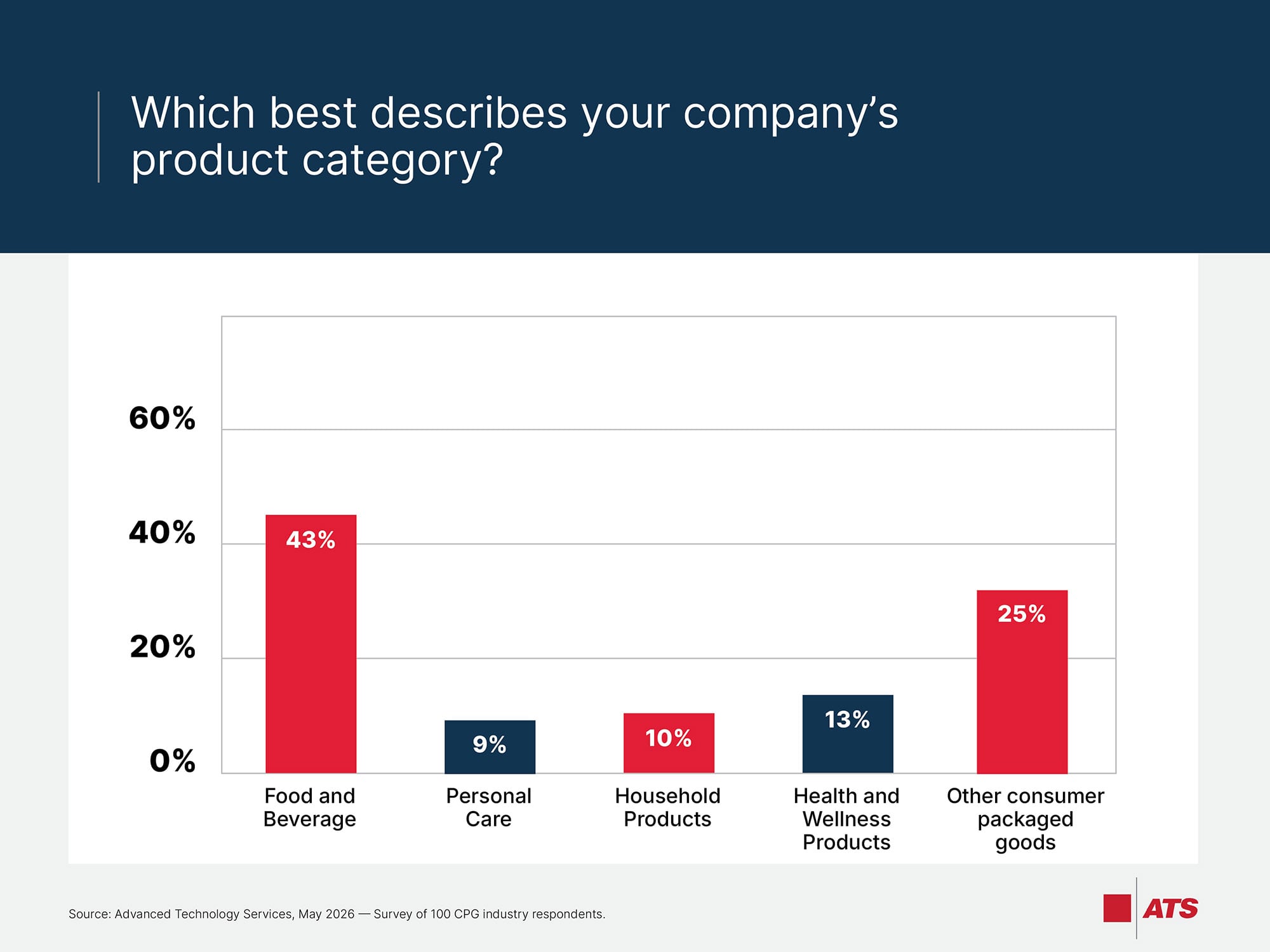
This food-and-beverage concentration is broadly consistent with the wider CPG market. It also helps explain the survey’s emphasis on uptime. Food and beverage operations are especially sensitive to interruptions that affect sanitation, quality, spoilage, delivery windows, and safety.
CPG operations often share high-speed processes, narrow production windows and little tolerance for variation. A problem at a filler, conveyor, mixer, oven, or packaging asset can quickly become a production, quality or delivery problem.
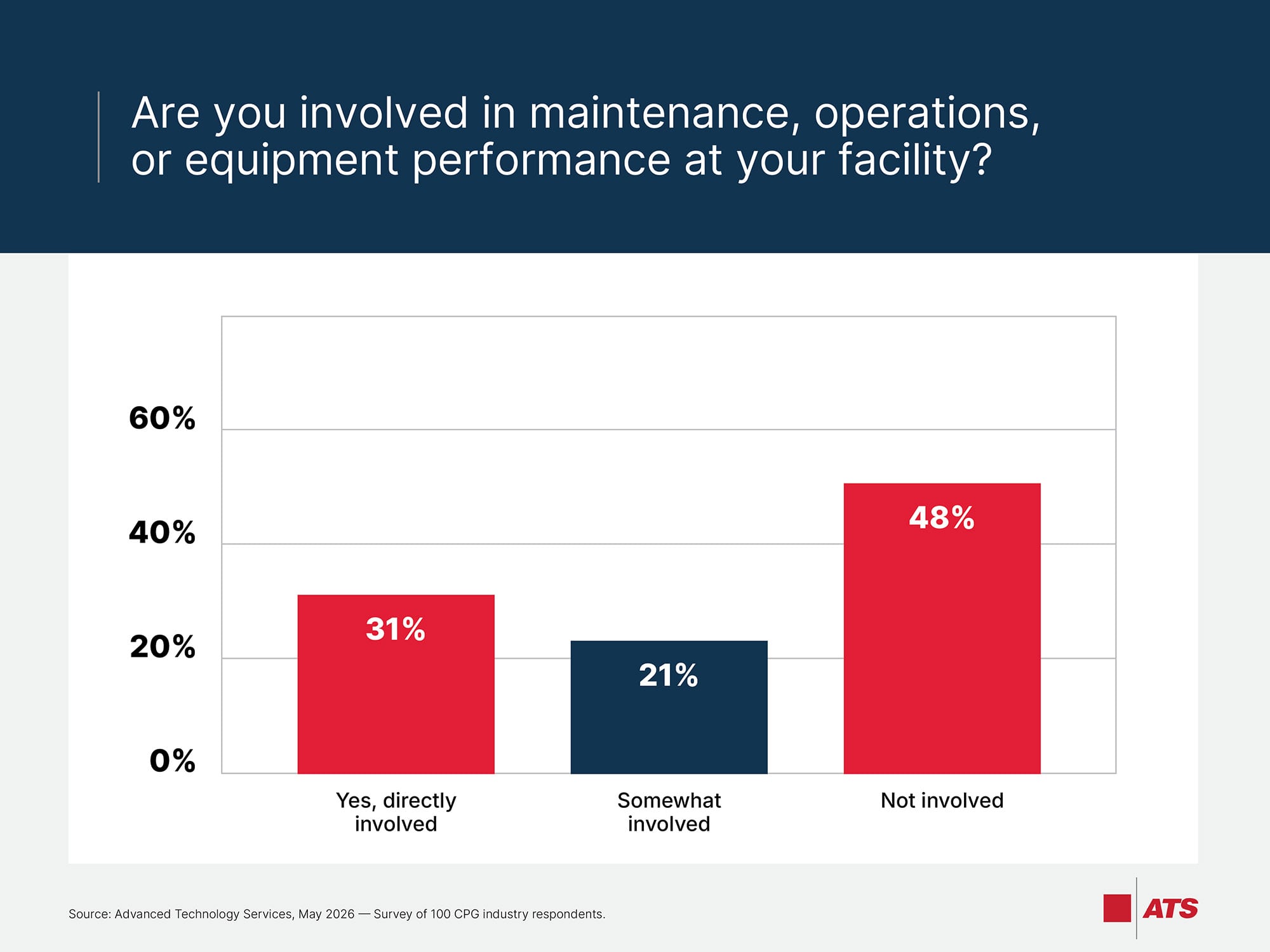
Survey respondents reported varying levels of involvement in maintenance, operations or equipment performance. Some were directly or somewhat involved in these areas, while nearly half were not. This distinction matters because people who work directly with equipment and maintenance processes may have different visibility into asset condition, work execution and downtime causes than those who primarily experience the effects on production schedules, output, staffing, or other business priorities.
Unlike CPG manufacturing research that often draws primarily from operations, engineering, maintenance, plant management, production, quality, and leadership roles, the ATS survey included a less operationally concentrated audience.
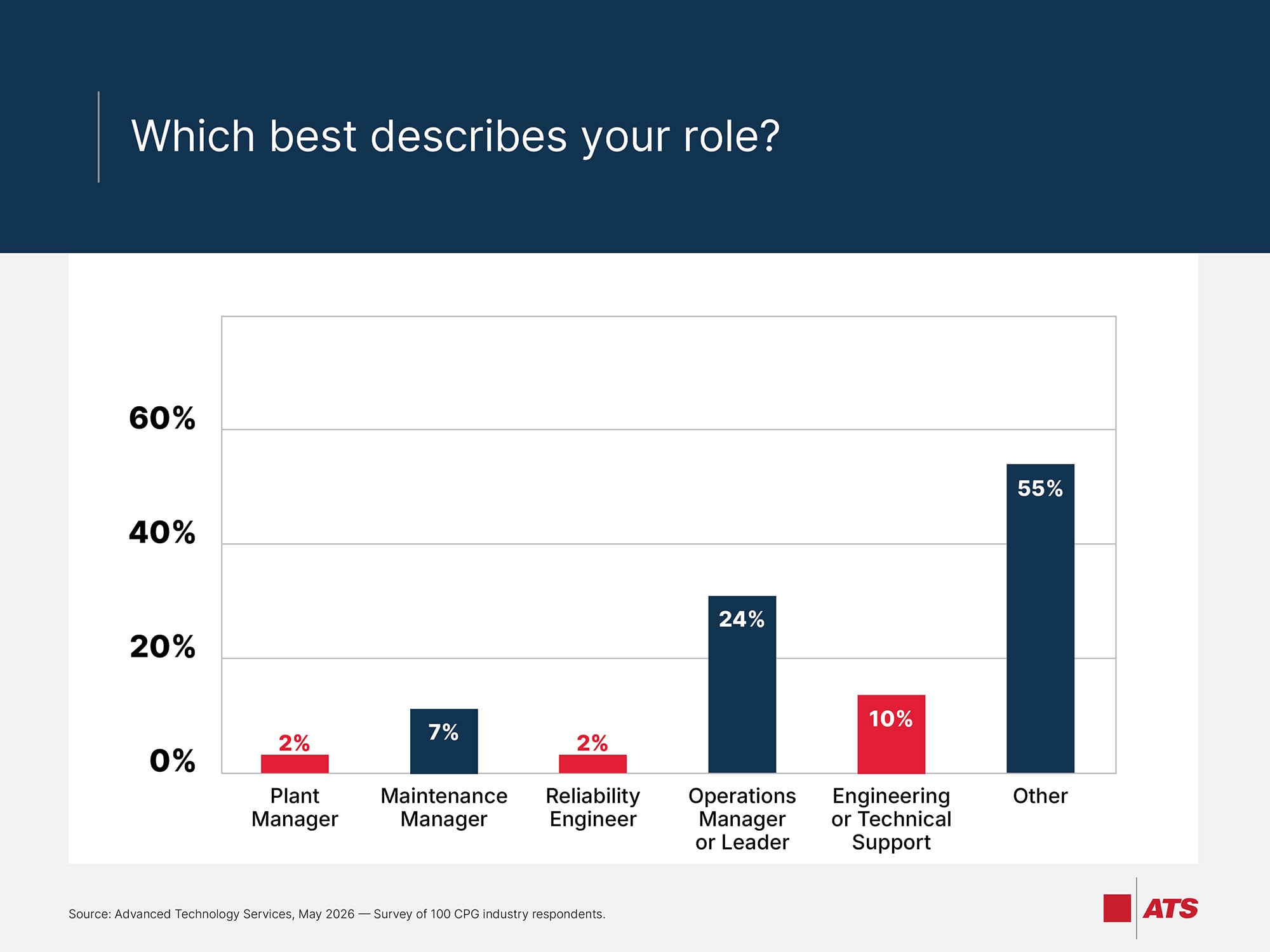
The ATS survey reached a wider cross-section of the CPG workforce. Respondents included operations leaders, engineering and technical support professionals, maintenance managers, plant managers, and reliability engineers. Other reported roles ranged from machine operators, production associates and packers to people in finance, administration and customer service.
That breadth provides a view of how reliability is perceived across an organization, not only within technical functions. The results should therefore be treated as directional perspectives from a broad CPG audience rather than nationally representative benchmarks or the findings of a maintenance-leader-only study.
Acceptable uptime can still hide exposure
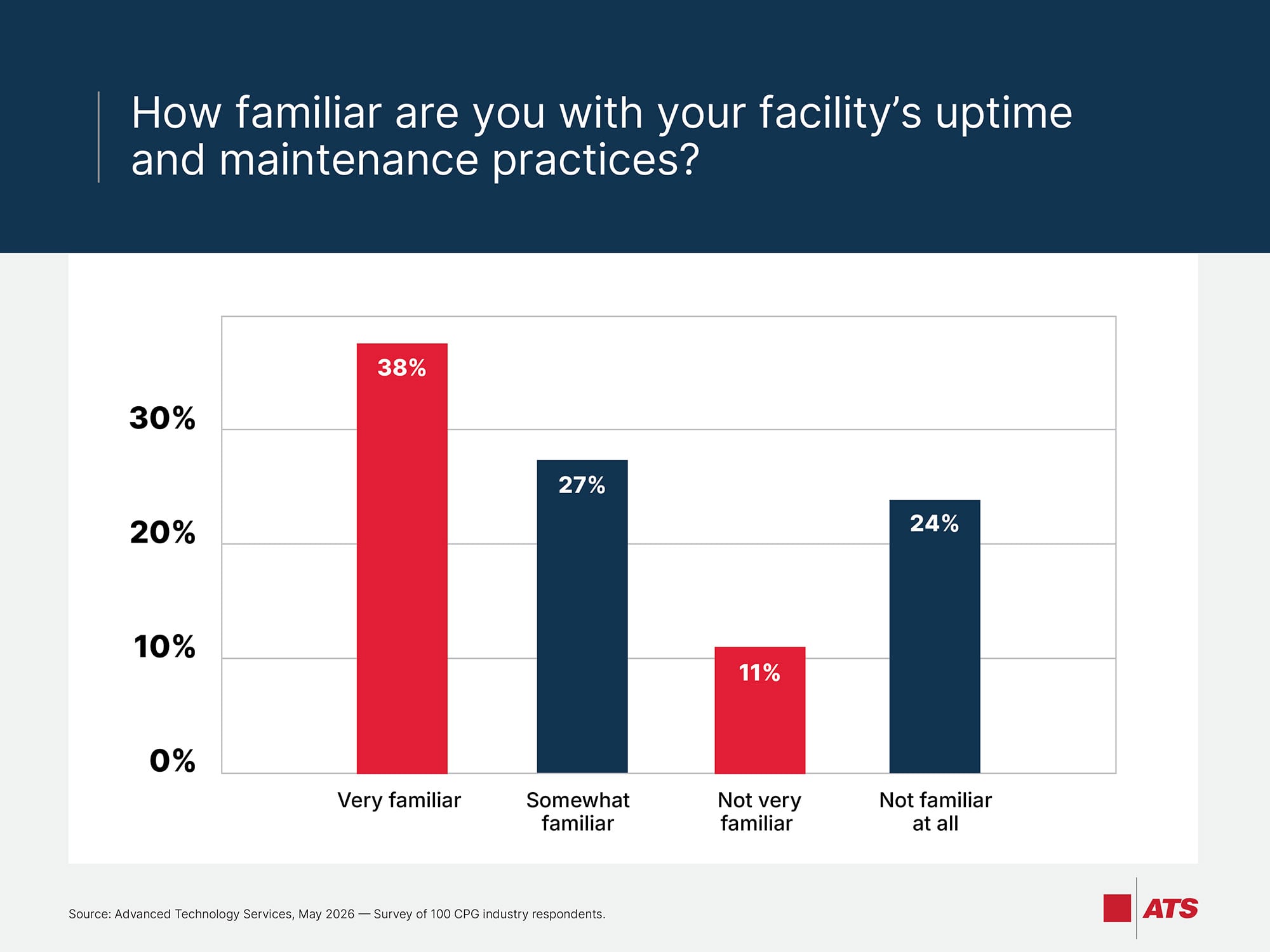
A majority of respondents were at least somewhat familiar with their facility’s uptime and maintenance practices, although a sizable portion reported limited familiarity. The results combine direct operational insight with perceptions from those who primarily experience downtime’s downstream effects.
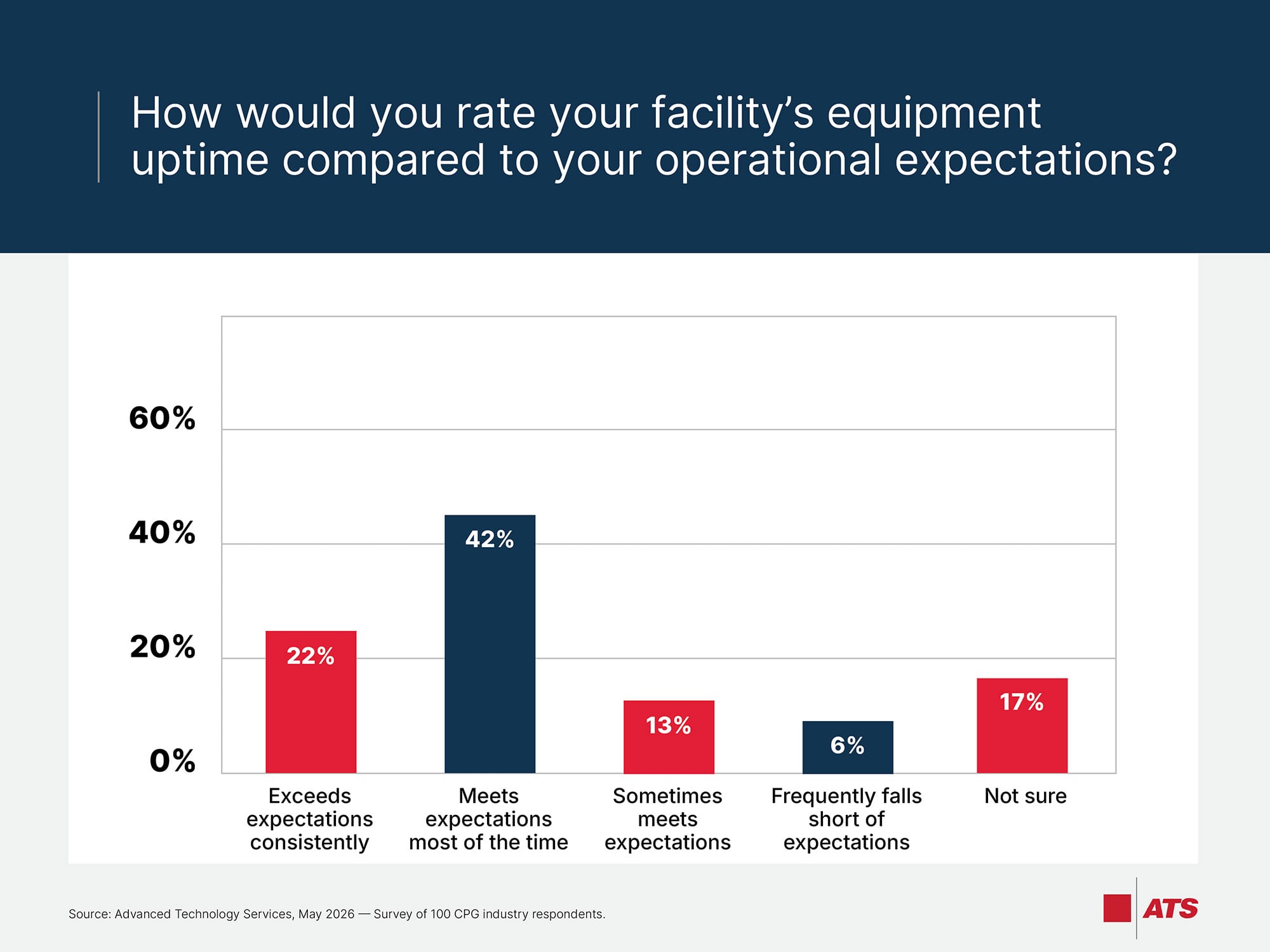
At first glance, the survey presents a positive view of performance. Most respondents said their facility’s uptime meets or exceeds operational expectations. However, expectations can be shaped by past results and what teams have learned to accept as normal. A facility can meet its target and still lose meaningful capacity to recurring minor stops, extended changeovers, repeat failures, or maintenance delays.
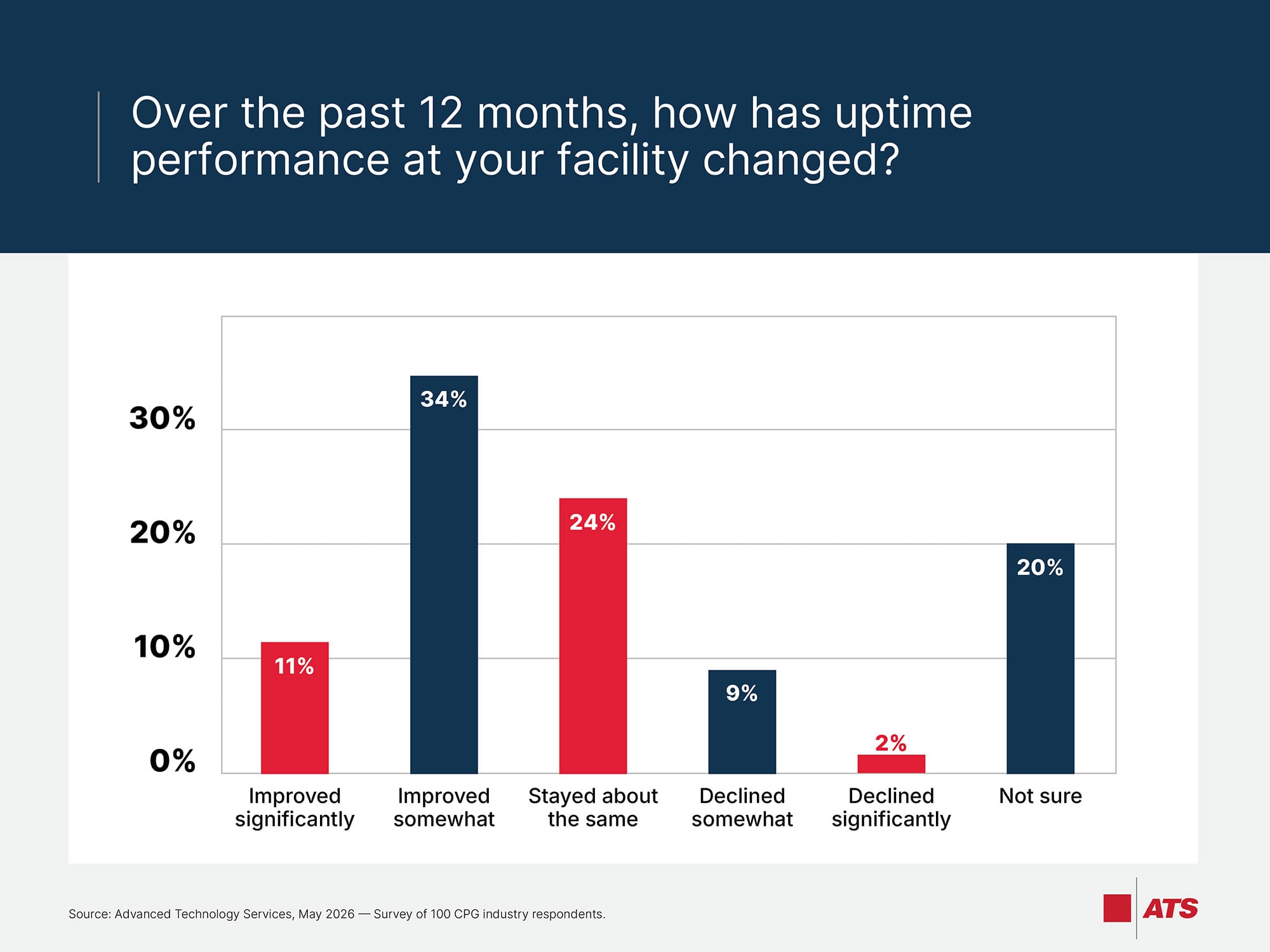
More respondents reported that uptime improved than declined during the previous 12 months. The next step is to identify what produced those gains—such as better planning, equipment upgrades or monitoring—and make those practices repeatable.
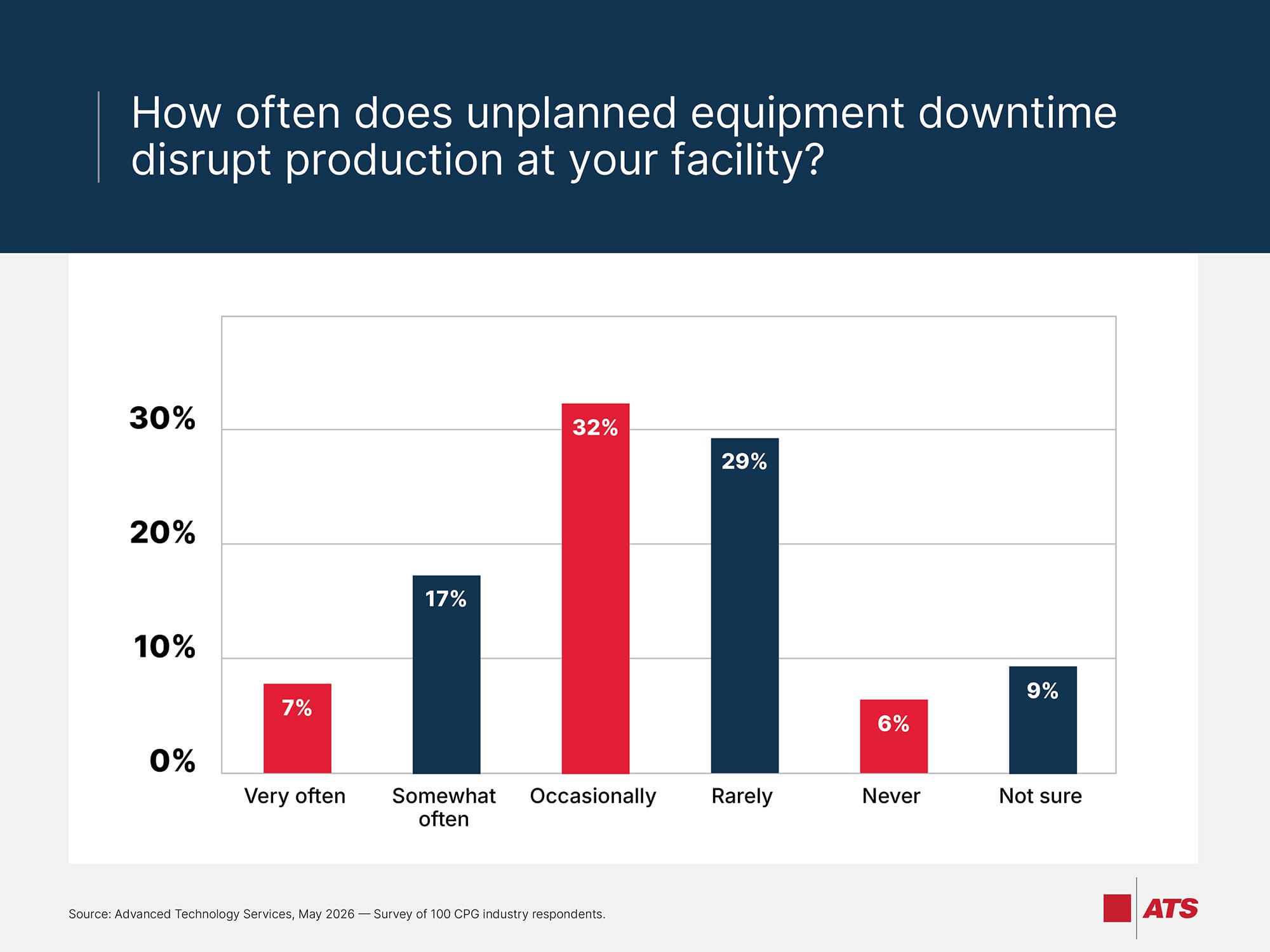
The frequency of production disruptions adds an important counterpoint. More than half of respondents said unplanned downtime disrupts production at least occasionally, including nearly one-quarter who experience it very or somewhat often.
These findings are somewhat more positive than broader industry benchmarks, yet CPG facilities face the same underlying challenge: Unplanned interruptions consume capacity and create costs even when overall uptime is acceptable. A single failure can disrupt sanitation, create product loss, delay orders or require overtime.
The practical question is not simply whether uptime feels acceptable. It is whether a facility can identify where production time is being lost, understand the business impact and reduce the losses that matter most.
Planning and scheduling are the reliability foundation
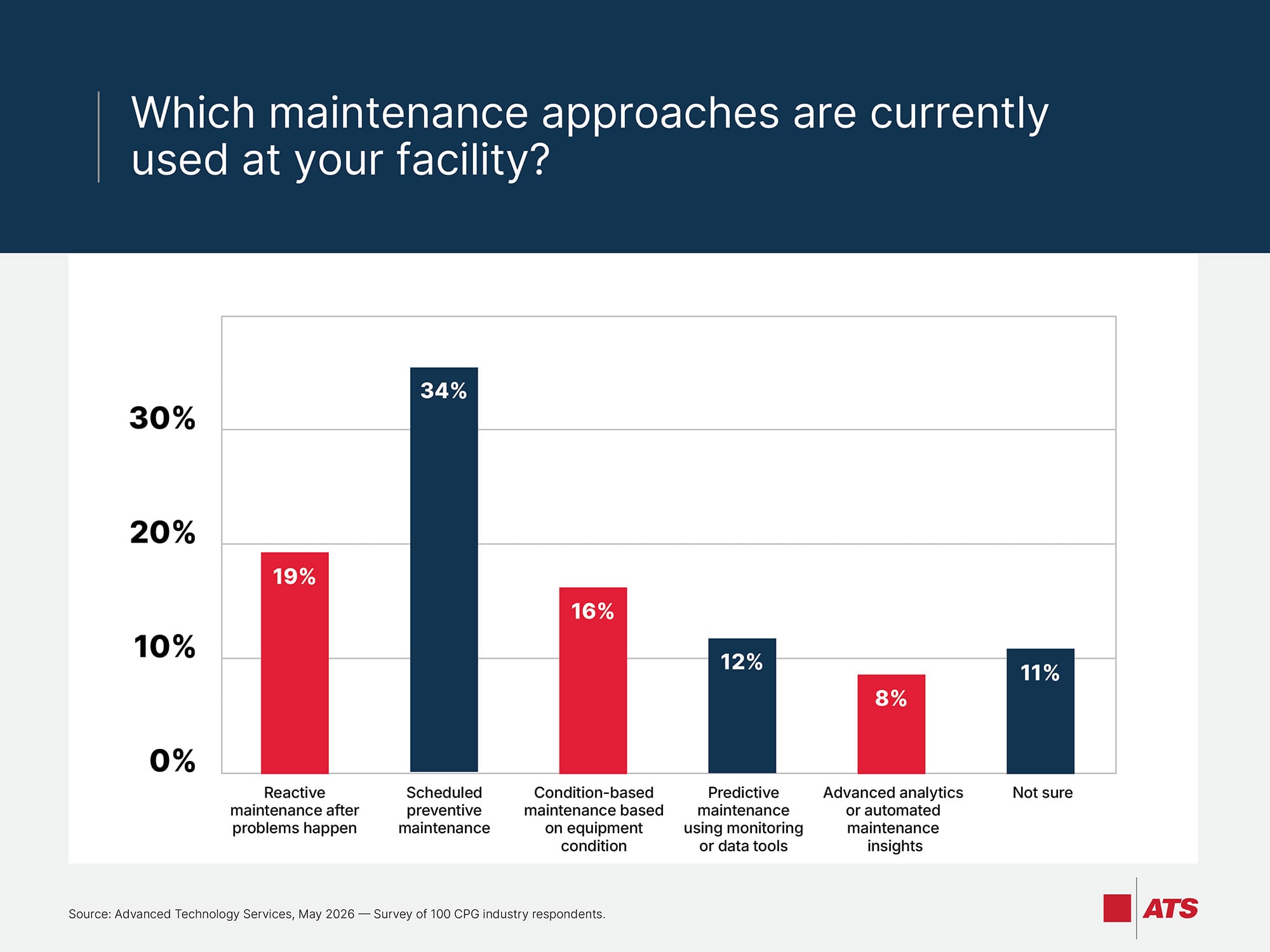
Scheduled preventive maintenance was the most widely reported approach, but reactive work also remains common. Condition-based and predictive methods are in use at some facilities, while advanced analytics are still emerging. This mix suggests many manufacturers are progressing toward proactive maintenance without having eliminated urgent work.
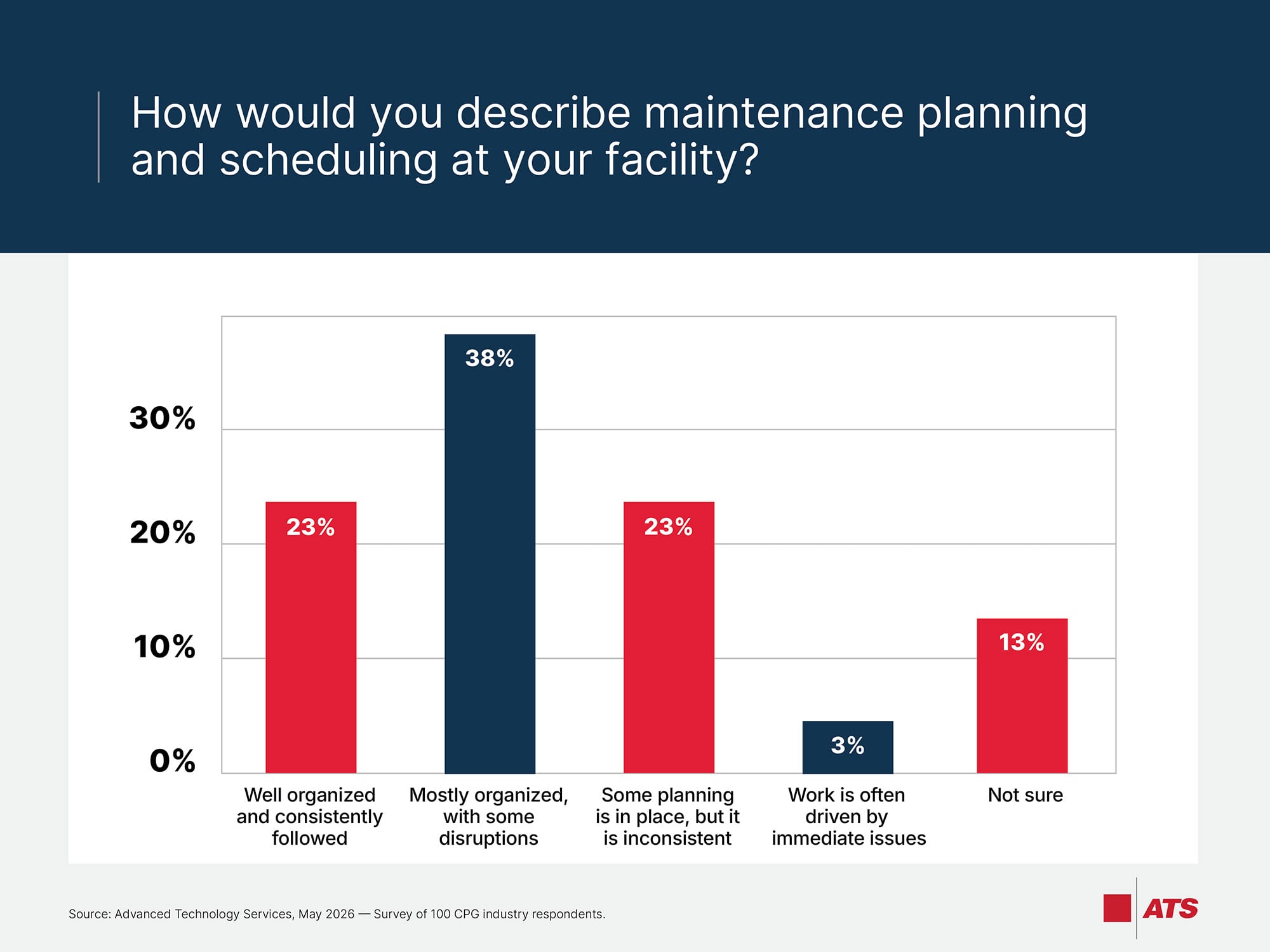
Most respondents described planning and scheduling as well or mostly organized, although disruptions remain common. Nearly one-quarter said planning exists but is inconsistent. The challenge is therefore not simply convincing facilities to plan; it is protecting planned work, managing urgent requests and improving schedule compliance.
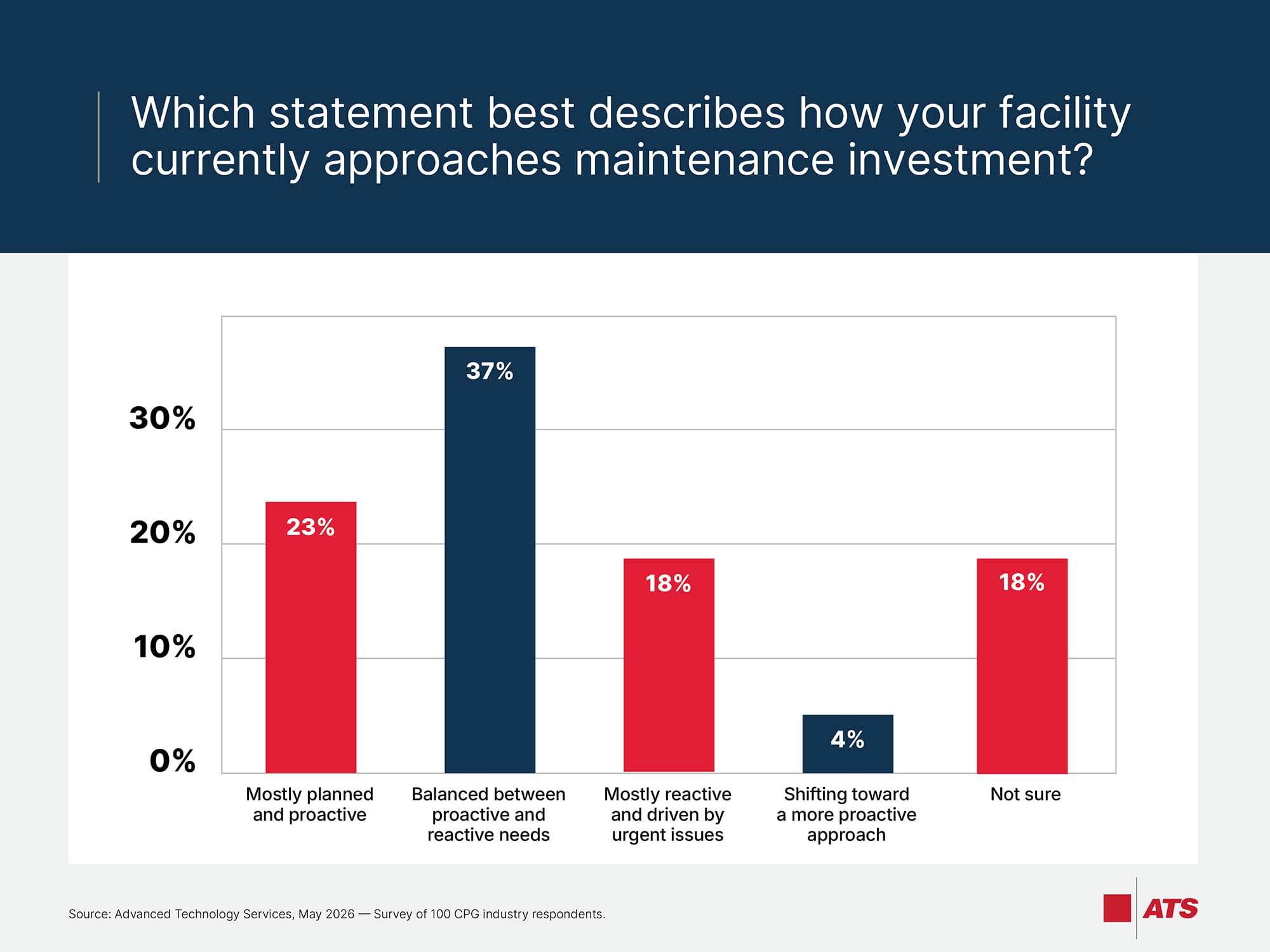
Maintenance investment reflects a similar middle state. Only 23% described their approach as mostly planned and proactive. A combined 55% said investment is either balanced between proactive and reactive needs or mostly driven by urgent issues.
Facilities may understand the value of proactive investment, but immediate needs still compete for budget. Proactive reliability spending should therefore be evaluated partly by its ability to prevent emergency work and protect production capacity.
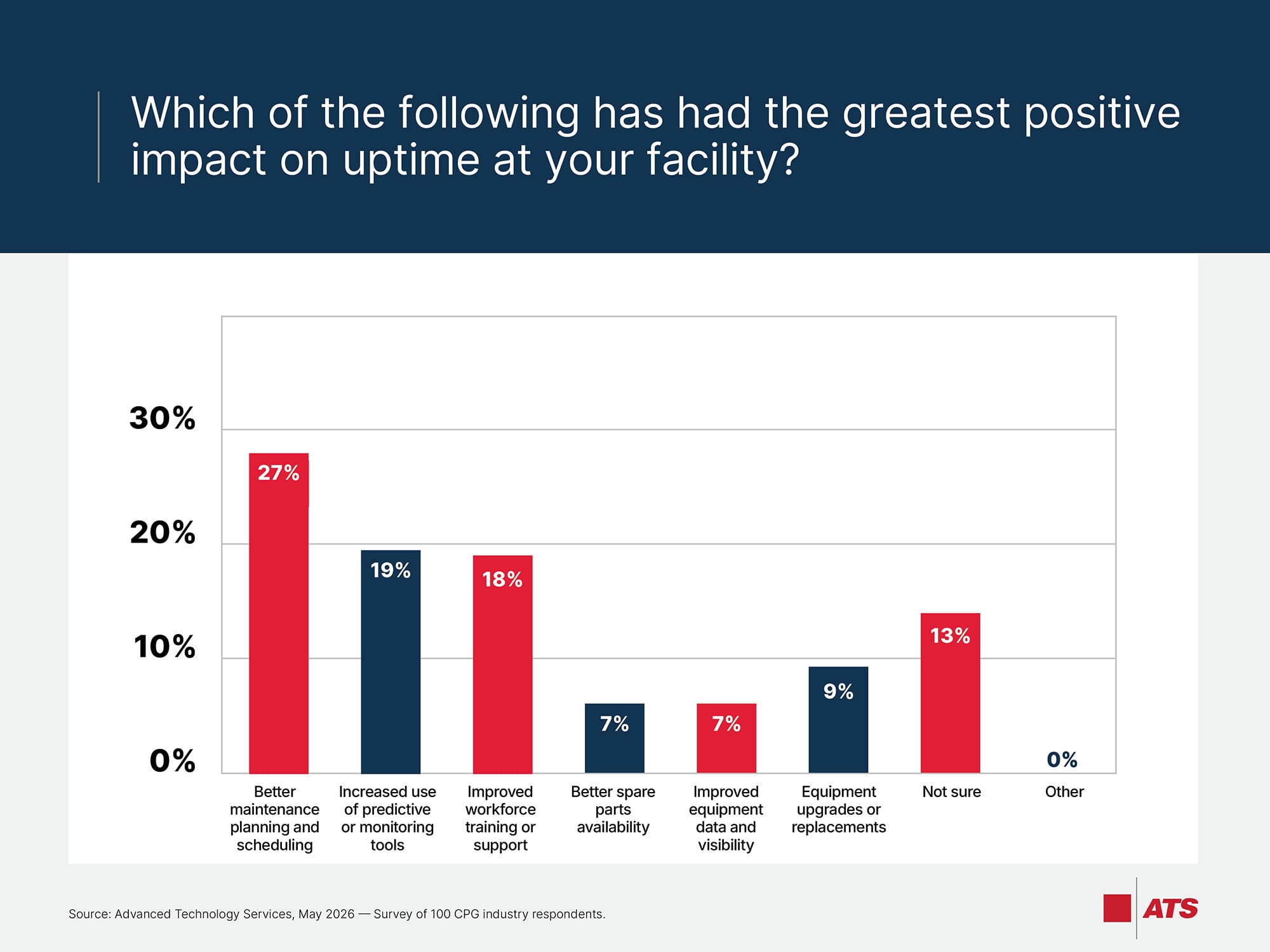
Respondents credited better planning and scheduling more often than other factors for improving uptime. Technology can provide better information, but planning determines what happens next. A sensor alert does not restore a line. Teams still need a defined response, the right skills, an available work window, accurate asset history, and necessary parts.
The value of that planning discipline extends well beyond the maintenance function.
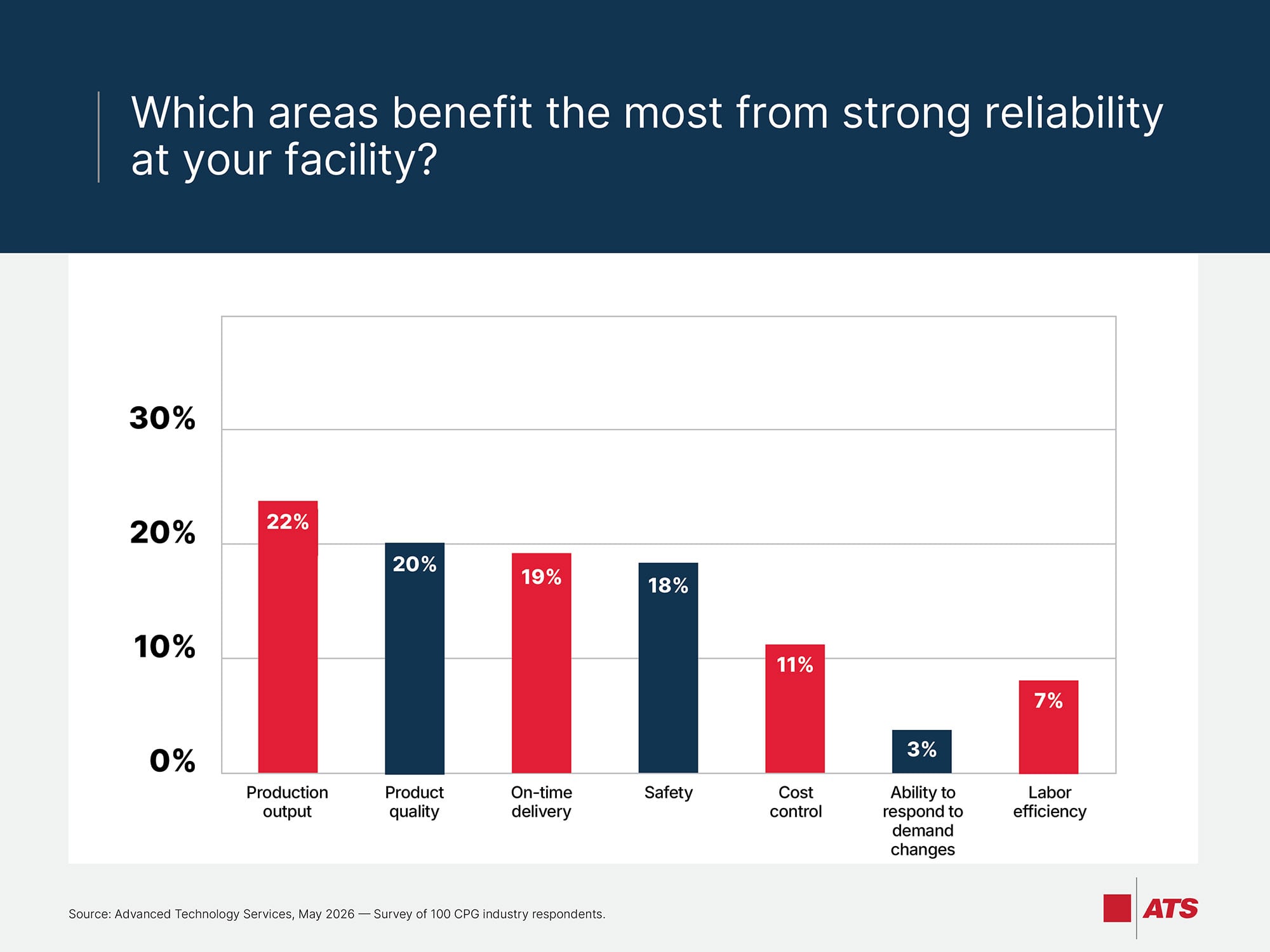
When respondents identified the areas that benefit most from strong reliability, production output, product quality, on-time delivery, and safety emerged as the leading priorities. Reliability supports the full operating promise: make enough product, make it correctly, ship it on time, and keep people safe.
Predictive maintenance is growing, but coverage is uneven
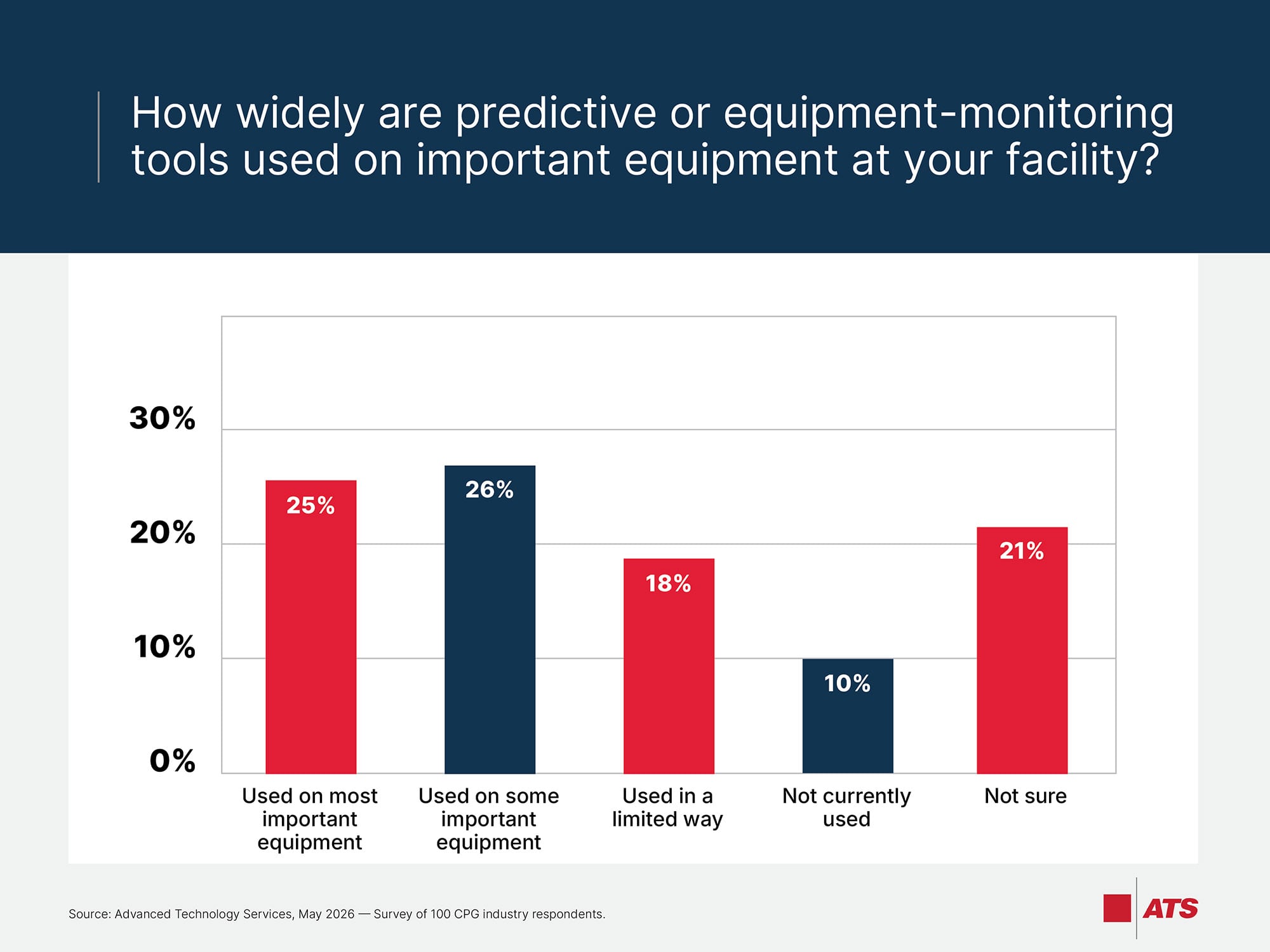
Predictive and equipment-monitoring tools have moved beyond the awareness stage, but adoption remains uneven. Having technology available is different from deploying it consistently across critical equipment and integrating its findings into maintenance decisions.
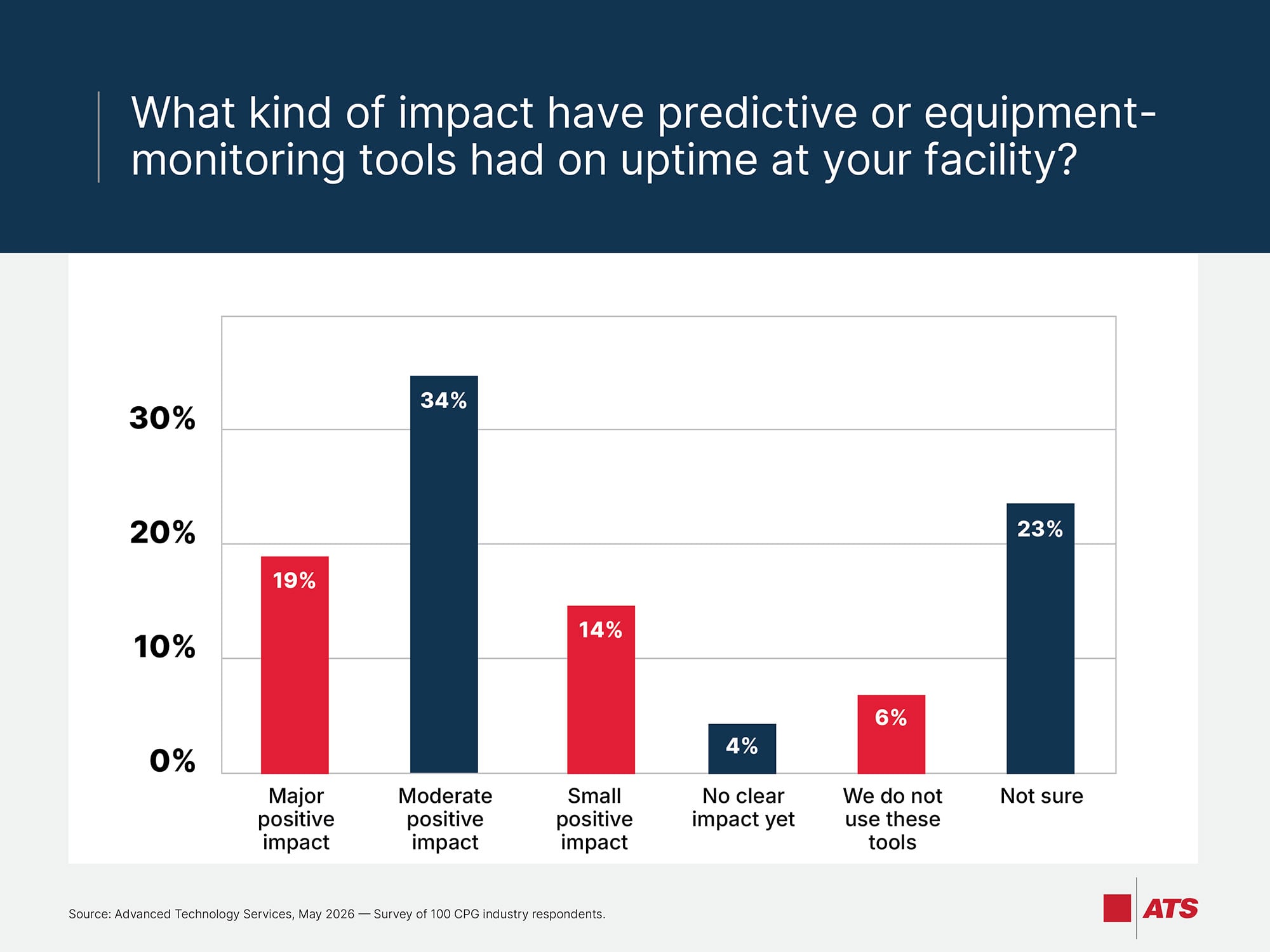
Respondents who could identify an effect were generally positive about the technology’s impact on uptime. The findings suggest adoption may be advancing faster than consistent visibility into results.
Manufacturers can address that gap by prioritizing assets according to production, quality, safety, and delivery risk, then connecting condition data to maintenance workflows. Monitoring should clarify what needs attention and what work should be scheduled. Reporting should show whether the program avoided failures, shortened repairs or protected production hours.
At ATS, we see predictive maintenance as part of a reliability system rather than a standalone technology purchase. It works best when equipment data, asset criticality, skilled analysis, and disciplined execution reinforce one another.