




The U.S. energy sector is changing as enterprises historically reliant on fossil and other finite fuels make the shift to renewable resources.
According to the U.S. Energy Information Administration, renewable sources account for just 8% of total primary energy production in the U.S., but they’re responsible for 21% of all electricity generation. Assessment of the U.S. clean energy supply chain, meanwhile, found that quarterly investment in clean energy manufacturing initiatives soared between Q3 2022 and Q1 2025, rising from $2.5 billion to $14.0 billion. While the clean power manufacturing industry currently contributes $18 billion to the GDP, the American Clean Power Association reports that it is on track to reach $86 billion in the next five years.
But what’s driving this shift? In part, companies see renewable energy as a pathway to improved environmental, social and governance (ESG) initiatives. Federal U.S. investments in renewable energy and infrastructure bills also play a role. For example, the Inflation Reduction Act (IRA) of 2022 earmarked $370 billion to help accelerate the energy transition to clean sources, while the CHIPS Act mandates that any companies applying for funding include details of their renewable energy use. In addition, the Infrastructure Investment and Jobs Act (IIJA) provided $62 billion to help support domestic manufacturing, clean energy technology companies and their workers, along with energy tax credits.
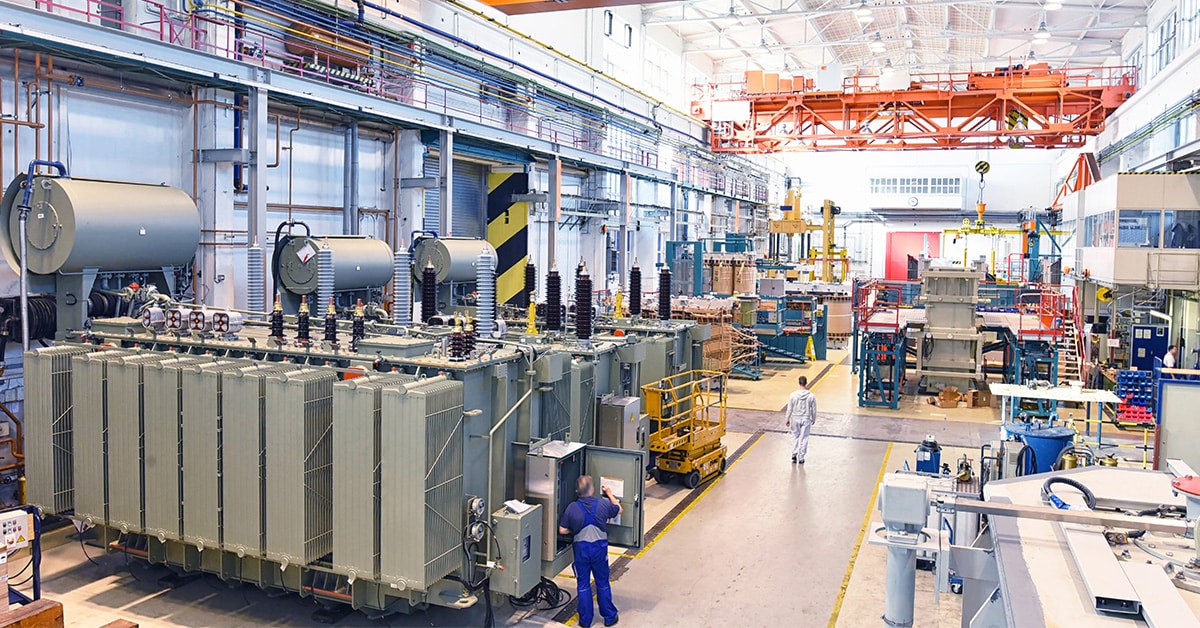
The result is a rapid uptick in the need for parts and components that support clean energy generation, including wiring, cabling, transformers, switchgear and power distribution equipment.
Read on for our analysis of how supply, demand and renewable manufacturing mandates intersect.
The data center surge: The hidden engine behind energy demand
Energy powers everything, from scientific research facilities to municipal utilities to residential power grids. But there’s also a hidden engine driving massive energy consumption: Data centers. Consider recent data from Boston Consulting Group (BCG), which predicts that the average size of a U.S. data center will reach 60 megawatts (MW) by 2028, up from 40 MW today. What’s more, a third of these facilities will top 200 MW.
The biggest driver of this increased capacity creation? Generative artificial intelligence (GenAI). In part, this demand is tied to training models. AI requires access to massive amounts of data, as well as the throughput to process this data in real time.
The use of public-facing GenAI, such as prompt creation, also plays a role. According to Deloitte research, a GenAI prompt requires 10 to 100 times more electricity than a standard Internet search. Combined with the need for high-performance computing frameworks that support both cloud and on-premises deployments, data centers are in demand and are demanding an ever-greater share of U.S. electricity. This both puts a strain on traditional grid capacity and sets the stage for more clean energy projects and the components that support them.
Clean energy manufacturing trends to watch
Customer demands and infrastructure investments are driving four key clean energy trends that manufacturers need to know:
- Electrification and grid modernization: To meet growing energy demands, many utility companies are upgrading their substations, transformers and distribution systems. This requires a commensurate increase in the production of power distribution parts and components.
- Domestic wire and cabling manufacturing expansion: U.S. producers are also scaling to meet the demand for growing data centers, expanding EV infrastructure and the increasing number of renewable power project installations. For downstream manufacturers, this drives a need for higher outputs, longer asset cycles and reduced downtime.
- Renewable energy and storage manufacturing: Increasing public and private investment means more solar panels, wind turbines, heat pumps and electric battery production projects are underway. This creates rising demand for forged metal parts, precisely machined components and complex electrical systems.
- The rise of clean technology manufacturing supply chains: As noted above, the IRA and IIJA offer incentives for American manufacturing buildouts. More plants, however, require more maintenance staff, more skilled technicians and more predictive technologies.
The operational challenge: Productivity pressure in power and clean energy manufacturing
Despite increased energy efficiency, demand may soon outstrip capacity. As noted by research firm McKinsey, many U.S. grid operators could face power shortages during peak summer demand by 2030. Issues with aging equipment and labor shortages also play a role in capacity shortfalls.
To reduce the risk of shortfalls, power producers are turning to clean energy sector manufacturers for the parts and components they need. But manufacturers face their own challenges in smooth operations, including:
- Recurring labor shortages: Labor shortages combined with rising production targets create resource strain for manufacturers. Left unchecked, this could lead to reduced performance or missed inventory quotas.
- Increasing complexity: As machines become more complex, automation becomes essential to ensure equipment operates within expected tolerances. This complexity also extends to quality. Parts must pass stringent checks and tests to ensure they are ready for integration with American clean power facilities.
- Unexpected downtime: Machine uptime is always a priority for manufacturers. In the new era of clean energy, however, unplanned downtime is more costly due to staff shortages, high demand cycles and increasing quality expectations.
The result? For clean energy manufacturers, uptime, throughput and equipment health are now more critical than ever. Even small amounts of unplanned downtime can lead to missed production targets and reduced profitability.
How maintenance supports growth in power distribution and clean energy manufacturing
Industrial maintenance plays a key role in clean energy manufacturing. By implementing policies and processes that prioritize the early detection and remediation of potential problems, companies can increase uptime and reduce the risk of component defects or reworks.
With many manufacturers already short-staffed, however, they’re often best served by outsourced maintenance solutions. Working with outsourcing experts offers multiple maintenance benefits, such as:
- Access to trained technicians: Outsourced experts can provide trained electrical, mechanical, robotics and automation technicians to help enhance machine health monitoring and predictive maintenance operations.
- Expertise with key equipment: Specialized machinery is essential for power distribution parts producers, metal forming facilities, machining operations and generator manufacturing plants. Outsourced staff provide the experience and expertise necessary to create everything from power distribution maintenance schedules that keep systems up and running to preventive maintenance schedules that reduce the risk of equipment failure.
- Flexible facilities staffing: As production demands shift, staffing requirements change too. With skilled labor in short supply, adding new lines or scaling output often creates gaps. Outsourced providers bridge these gaps with flexible staffing solutions that can be scaled up or down as needed.
Power distribution equipment and component manufacturing support
Energy creation and distribution are complex, multistage processes. As a result, manufacturers typically select and specialize in a component or equipment vertical. This allows them to fully apply their industry expertise and reduce the risk of multisystem failures.
It also means that energy manufacturers have different maintenance needs depending on their area of expertise.
For example, wire and cable plants require industrial maintenance strategies that help maintain equipment such as drawing machines, winders, extruders and testing tools. They must also develop strategies that reduce scrap and improve throughput to maximize overall equipment effectiveness (OEE).
Power distribution component manufacturing and assembly companies, meanwhile, often benefit from outsourced industrial maintenance partners that provide preventive and predictive strategies to help keep production lines stable.
When it comes to generator, turbine and heavy power equipment producers, there’s a growing need for maintenance operations that support machining centers, precision tools and electrical testing equipment used in large-scale production.
Ultimately, better maintenance processes underpin extended equipment life to help meet surging energy innovation and infrastructure demand.
Preventive and predictive maintenance, part rebuilds and MRO optimization to strengthen supply chain resilience
Supply chains are a common challenge for clean energy manufacturing capacity. While diversification has become standard practice and helps reduce the risk of sudden shortages, other issues persist. Consider increasing parts demand. As production needs ramp up, even the best suppliers may not be able to keep pace.
To strengthen you manufacturing supply chain, focus on three key pillars: preventative and predictive maintenance, parts rebuilds and refurbishments and MRO inventory optimization. Here’s how each contributes to resilience:
- Preventive and predictive maintenance: Scheduled and predictive parts repair reduces the risk of unplanned downtime. Consider a critical, high-volume piece of machinery producing power distribution components. Scheduled maintenance ensures that equipment values for temperature, pressure and vibration all fall within expectations, and also addresses the common impacts of wear and tear. Predictive maintenance, meanwhile, uses connected sensors and analytics software to pinpoint the root causes of common problems. For example, a steady temperature increase may be linked to improper lubrication processes or misaligned gear sets. While addressing the symptoms reduces the impact, addressing the root cause solves the issue.
- Parts rebuilds and refurbishment: Rebuilds and refurbishment offer a way to keep high-cost components in circulation without having to buy new equipment. These approaches also make it possible to extend the lifecycle of critical equipment by refurbishing key parts or rebuilding critical structures. Rebuilds and refurbishments can also help improve production performance to meet advancing energy delivery schedules.
- Maintenance, repair and operations (MRO) optimization: MRO inventory optimization improves storeroom layouts to enhance the availability of critical spare parts. This process also helps pinpoint which parts are most needed, which suppliers produce these parts and how much lead time is required to get parts on-site.
Preparing for the next phase of U.S. energy growth
Energy-driven manufacturing is on the rise as investments ramp up and AI-driven power consumption increases. To effectively navigate the next phase of growth in the energy sector, manufacturers must modernize maintenance, enhance workforce capabilities and prioritize MRO strategy.
With reliability-driven monitoring, proven maintenance strategies and skilled workforce support from ATS, wire, cable, power distribution and heavy equipment manufacturers are better prepared to meet evolving demand and stay competitive in the rapidly growing renewable energy market.
Ready to power up manufacturing and maintenance processes? Let’s talk.
References
American Clean Power Association. (2025, May 20). Clean energy manufacturing driving next chapter of U.S. economic prosperity. Clean Power. https://cleanpower.org/news/america-builds-power/
Barth, A., Tai, H., Kaladiouk, K., & Heath, L. (2025). Powering a new era of U.S. energy demand. McKinsey & Company. https://www.mckinsey.com/industries/public-sector/our-insights/powering-a-new-era-of-us-energy-demand
Clean Investment Monitor. (2025, April 24). The state of U.S. clean energy supply chains in 2025. Clean Investment Monitor. https://www.cleaninvestmentmonitor.org/reports/us-clean-energy-supply-chains-2025
Deloitte Romania. (2025, March 5). Deloitte study: the use of Gen AI will double global data centers’ electricity consumption by 2030.. Deloitte. https://www.deloitte.com/ro/en/about/press-room/studiu-deloitte-utilizarea-inteligentei-artificiale-generative-va-dubla-consumul-de-energie-electrica-al-centrelor-de-date-la-nivel-global-pana-2030.html
Lee, V., Seshadri, P., O’Niell, C., Choudhary, A., Holstege, B., & Deutscher, S. A. (2025, January 20). Breaking barriers to data center growth. Boston Consulting Group. https://www.bcg.com/publications/2025/breaking-barriers-data-center-growth
U.S. Energy Information Administration. (2024, May 7). U.S. total energy statistics. U.S. Energy Information Administration. https://www.eia.gov/energyexplained/us-energy-facts/data-and-statistics.php
U.S. Environmental Protection Agency. (2025, June 29). Summary of Inflation Reduction Act provisions related to renewable energy. EPA.gov. https://www.epa.gov/green-power-markets/summary-inflation-reduction-act-provisions-related-renewable-energy
U.S. Department of Energy. (2022, September). FECM infrastructure factsheet [PDF]. Energy.gov. https://www.energy.gov/sites/default/files/2022-09/FECM%20Infrastructure%20Factsheet-revised%209-27-22.pdf
U.S. Department of Energy. (2023, August 10). CHIPS and Science Act: A game changer in its first year. Energy.gov. https://www.energy.gov/articles/chips-and-science-act-game-changer-its-first-year