
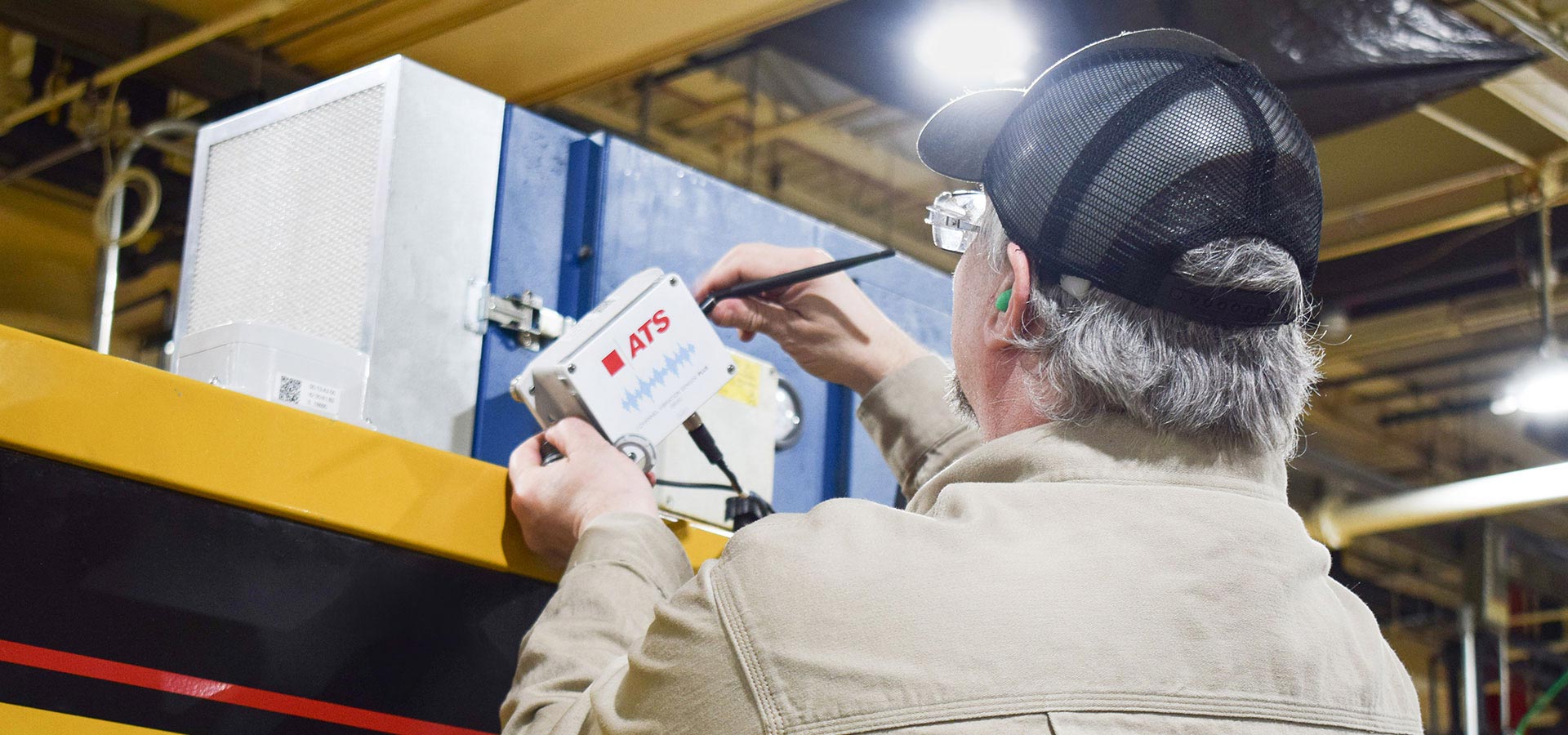




Multi-site manufacturers face unique maintenance challenges that go far beyond keeping equipment running at a single plant. Managing asset reliability across different manufacturing sites requires visibility into machine health, standardized maintenance practices, and the ability to turn equipment data into meaningful action. Choosing the right condition monitoring providers for multi-site operations can help organizations improve reliability, reduce downtime and support long-term operational success.
Manufacturers with facilities in multiple locations must manage equipment performance across different plants, maintenance teams, operating environments, and production requirements. Unlike a single-site operation, enterprise organizations need a condition monitoring system that delivers both site-level insights and enterprise-wide visibility.
An effective condition monitoring program enables maintenance and reliability leaders to compare asset health, identify emerging risks, and standardize maintenance best practices across every location. Rather than treating each facility independently, organizations can create a consistent approach to asset condition monitoring that improves decision-making and supports condition-based maintenance strategies.
Ultimately, remote condition monitoring helps improve uptime, reliability, and operational efficiency by providing centralized visibility into equipment performance, while allowing local teams to respond quickly to issues. Which monitoring options will work best will depend on your facility’s equipment types, environment, workflows, and failure risk.
Strong condition monitoring providers for multi-site operations, such as Advanced Technology Services (ATS), offer more than technology alone. ATS combines machine health expertise, predictive maintenance capabilities, skilled maintenance support, and work execution services that transform machine data into corrective action. See what’s recommended for your facility. Ask an ATS expert.
Multi-site manufacturing challenges
Implementing condition monitoring across multiple facilities is significantly more complex than deploying it at a single location. Every site introduces differences that can affect maintenance consistency and equipment reliability.
Common challenges
- Different equipment types
- Different maintenance teams
- Different Computerized Maintenance Management Systems (CMMS)
- Different Enterprise Asset Management (EAM) systems
- Inconsistent asset naming conventions
- Varied production schedules
- Different levels of maintenance maturity
- Regional labor constraints
- Inconsistent spare parts strategies
- Different safety and compliance requirements
These differences make it difficult to establish standardized maintenance practices across various locations.
Enterprise manufacturers also need visibility into questions such as:
- Which sites have the highest equipment risk?
- Which assets are generating repeat alerts?
- Which facilities respond to alerts the fastest?
- Where is downtime increasing?
- Where do maintenance staffing or spare parts gaps exist?
Without centralized remote condition monitoring, maintenance leaders often struggle to compare performance across different manufacturing sites or identify systemic reliability issues. Consistent monitoring at multiple sites creates a common framework for evaluating equipment health, prioritizing repairs, and improving maintenance execution, even when local teams, equipment and workflows differ.
Key capabilities to look for in a multi-site condition monitoring provider
When evaluating providers, manufacturers should look beyond hardware and software. The right partner should support enterprise-wide reliability while enabling local teams to execute maintenance effectively.
Enterprise-level visibility
Leadership teams need enterprise reporting without sacrificing the detailed information required by individual plants. Enterprise dashboards should provide visibility into:
- Asset health by site
- Open alerts
- Criticality levels
- Response status
- Recurring issues
- Downtime trends
- Maintenance risk
Site-level execution support
A condition monitoring system only creates value when alerts become inspections, work orders, or corrective maintenance. Providers should account for differences in staffing levels, technician expertise, and production schedules while helping sites execute maintenance consistently.
Scalable sensor and monitoring strategy
Typical implementation
- Pilot critical assets
- Validate alert quality
- Refine alarm thresholds
- Expand to similar assets
- Standardize deployment across sites
Monitoring methods
- Vibration for rotating equipment
- Temperature sensors for overheating
- Oil analysis for gearboxes and compressors
- Motor current monitoring for load changes
- Pressure and flow monitoring for fluid systems
What works best will depend on the specific equipment being monitored, the environment, workflows, and failure risk. See what’s recommended for your facility. Ask an ATS expert.
Standardized asset criticality framework
Providers should help manufacturers establish consistent asset criticality rankings across every location. A standardized framework ensures monitoring priorities remain consistent and reduces variation between plants.
Alert prioritization and triage
Large enterprise programs can generate high alert volumes, especially when monitoring expands across multiple sites and asset types. Alerts should be actionable rather than informational, helping maintenance teams focus on the issues that matter most.
Providers should classify alerts based on:
- Severity
- Asset criticality
- Failure likelihood
- Production impact
- Recommended response time
Integration with CMMS, EAM and workflows
Even if full software integration is not immediately available, there should be a documented process for recording alerts, maintenance actions and repair outcomes. Work order history helps improve future predictive analytics, monitoring accuracy and long-term reliability analysis.
Potential integrations
- CMMS
- EAM
- Enterprise Resource Planning (ERP)
- Maintenance, Repair, and Operations (MRO) inventory systems
- Production data systems
- Enterprise dashboards
MRO and spare parts alignment
Monitoring alerts only create value when maintenance teams have the necessary parts available. Enterprise manufacturers can also identify opportunities to standardize spare parts across similar equipment at multiple locations.
Providers should help connect monitored assets with:
- Critical spare parts
- Supplier lead times
- Min/max inventory levels
- Parts standardization
- Storeroom accuracy
- Obsolete part risk
Multi-Site Condition Monitoring Rollout Strategy
Rolling out condition monitoring systems across enterprise operations requires a structured implementation plan that minimizes inconsistency while allowing programs to scale effectively.
Step 1: Establish enterprise goals
Define whether the primary objective is reducing downtime, improving reliability, standardizing maintenance, reducing MRO risk, or increasing visibility.
Step 2: Select pilot sites and assets
Start with one or a few representative plants. Select high-impact assets with measurable failure modes to demonstrate program value.
Step 3: Standardize asset criticality scoring
Apply the same criticality framework across all participating sites to create consistency before expansion.
Step 4: Install sensors and establish baselines
Install appropriate sensors and establish consistent baseline readings to improve future alert accuracy.
Step 5: Define alert workflows
Clearly assign ownership, establish severity levels, define escalation procedures, and document response requirements.
Step 6: Validate results
Review alert accuracy, maintenance response times, downtime trends, technician feedback, and overall program effectiveness.
Step 7: Scale across similar assets and sites
Expand the program using lessons learned from pilot locations. Standardization becomes much easier after initial processes have been validated.
Step 8: Benchmark and improve
Compare reliability performance across different manufacturing sites, identify best practices, and continuously refine monitoring strategies.
What works for one organization may not work for another. The right rollout plan depends on asset criticality, available maintenance resources, site maturity, equipment types, operating environment, and failure risk.
How ATS supports multi-site condition monitoring
Successful enterprise condition monitoring requires much more than collecting equipment data. Organizations need standardized processes, clear alert ownership, MRO readiness, site-level execution, and enterprise-wide visibility. Condition monitoring providers for multi-site operations help manufacturers prioritize critical assets, monitor the right failure modes, standardize maintenance workflows, and convert alerts into corrective action that improves reliability.
ATS supports enterprise manufacturers by connecting condition monitoring directly to maintenance execution. Through advanced predictive maintenance technologies, reliability expertise, skilled maintenance teams, MRO planning, and structured work execution, ATS helps organizations standardize monitoring, prioritize equipment risk and act on alerts across multiple facilities.
Whether you’re implementing remote condition monitoring, expanding asset condition monitoring to new plants, or improving consistent monitoring at multiple sites, ATS provides the expertise needed to improve uptime and operational efficiency. The combination of machine data, predictive analytics, and proven maintenance execution helps manufacturers build sustainable reliability programs across every location.
Ready to choose a condition monitoring provider for multi-site operations? Talk to ATS about building a scalable machine health monitoring strategy that delivers measurable reliability improvements across every location. Ask an ATS expert.
