
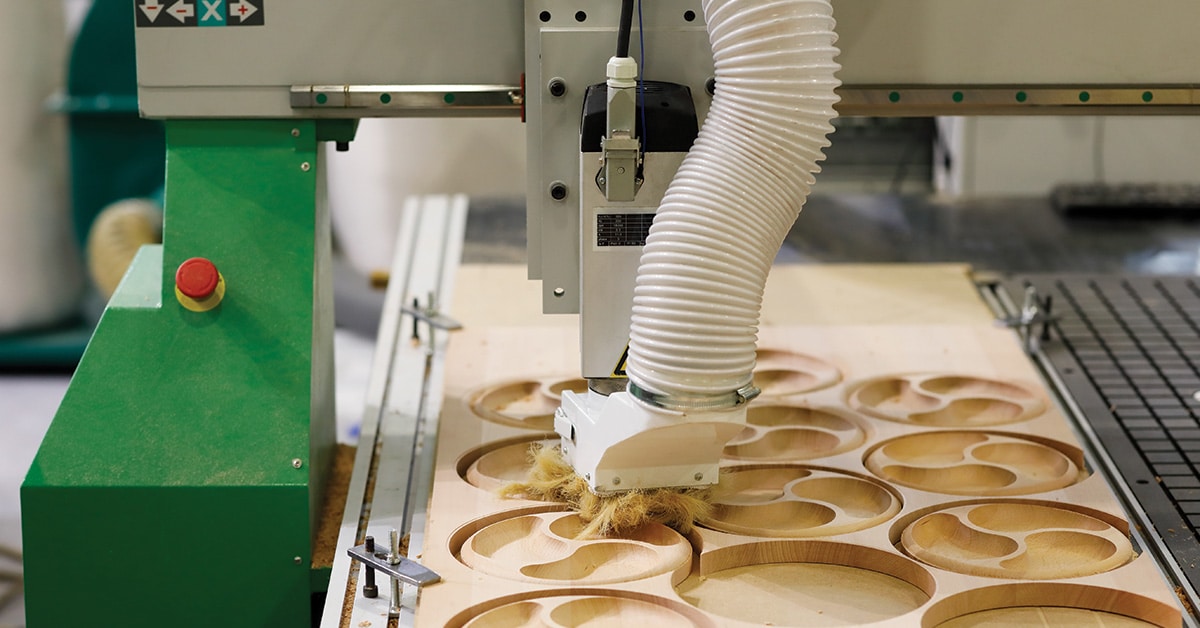




Industrial computer numerical control (CNC) routers are computer-controlled cutting machines designed for high-precision, automated manufacturing. They are typically used for cutting, drilling, and engraving materials, such as wood, plastic, foams, glass, and aluminum. These heavy-duty, fast-operating tools use a rotating spindle and X/Y/Z axis to create repeatable, detailed parts from digital designs, and often feature large cutting beds for sheet materials. Industrial CNC routers are essential for precision cutting, shaping, and machining across industries, such as woodworking, aerospace, plastics, and metal fabrication.
Even the most advanced CNC systems can suffer from reduced accuracy, increased downtime, and costly repairs without regular proper maintenance. A structured CNC router maintenance program helps manufacturers maintain tight tolerances, extend machine life, and avoid unplanned production interruptions.
This guide outlines regular maintenance practices, common failure points, and strategies to keep CNC routers operating at peak performance.
How CNC routers work in industrial manufacturing
The key components of a CNC router include the spindle, cutting tools, linear guides and rails, ball screws, drive motors, and CNC controller system. These components work together to translate digital designs into precise, automated cutting, routing, and drilling of materials.
CNC routing process
- Design created: To begin work, an operator will use computer aided design (CAD) software to create a digital representation of the final part to be made.
- Design converted: The design will be imported into computer aided manufacturing (CAM) software, which will translate the design into machine instructions.
- Material added: The operator will place the raw material into the router and lock it in place.
- Setting the router: The router will be loaded with the appropriate cutting tools into the spindle, and the CAM software will send the instructions to the CNC machine controller.
- Router cutting: The router will follow the instructions and cut the raw material to the design requested.
- Finished part: When the CNC router is finished the part is removed and inspected. Some light sanding or polishing may be needed.
Why CNC router maintenance is critical
The main risk of poor maintenance of a CNC router is loss of accuracy and cutting precision. Many routers are constantly cutting parts, some 24 hours a day. This creates tremendous stress and excessive heat on the equipment. Proper maintenance helps increase the serviceable life of CNC routers.
Risks of poor maintenance
- Loss of cutting precision.
- Increased scrap and rework.
- Machine vibration and chatter.
- Spindle failure risks.
- Unexpected downtime.
- Reduced tool life.
- Safety risks for operators.
Regular CNC router maintenance supports production by helping teams protect uptime, ensuring precision, and extending machine life. Consistent servicing prevents costly, unplanned downtime, reduces defect rates, increases material throughput, and keeps operational speeds high. This will ultimately lower costs and improve efficiency.
If you are experiencing accuracy issues or unexpected downtime, it may be worth reviewing your CNC equipment reliability strategy with Advanced Technology Services (ATS). We provide machine inspection and calibration for a wide range of equipment. We also offer preventive maintenance programs that can extend the life of your equipment.
Common CNC router maintenance issues
One of the most common CNC router maintenance issues is spindle wear and overheating. Constantly running a CNC machine will lead to dull, dirty bits and extreme heat that can damage the spindle. This can lead to poor cutting and parts not made to specifications.
Debris from continual cutting can also mix with machine lubrication, forming a paste that damages bearings and rails. Vibration from constantly running CNC routers will lead to bolts and fasteners coming loose. This will affect accuracy and safety. Vibration can also cause wire fray and electrical issues. CNC machine maintenance should also include recalibration from time to time to ensure cuts are accurate and precision is maintained.
Daily CNC router maintenance checklist
Simple daily maintenance checks will help CNC routers maintain accuracy, precision and repeatability.
Operators should regularly clean debris, ensure proper machinery lubrication, and inspect safety systems to prevent downtime and ensure accuracy.
Daily CNC router maintenance checklist
- Clean machine surfaces and work area.
- Remove dust, chips and debris.
- Inspect cutting tools.
- Check spindle operation.
- Verify lubrication levels.
- Inspect air supply, if applicable.
- Check emergency stops and safety systems.
- Monitor unusual sounds or vibration.
Preventive maintenance for CNC routers
A preventive maintenance program keeps a CNC router running as designed by establishing consistent CNC maintenance at defined intervals. This approach standardizes how maintenance work is performed, helping reduce unplanned downtime, extend equipment life, and limit safety risks tied to equipment failure.
Preventive maintenance tasks for CNC routers
- Lubrication of rails, bearings and ball screws.
- Spindle inspection and maintenance.
- Calibration checks, such as axis alignment and positioning accuracy.
- Electrical system inspection.
- Cooling system servicing.
- Replacement of worn components.
- Software and control updates.
CNC router spindle maintenance
Proper maintenance of a CNC router machine spindle is critical to prevent component wear, eliminate costly unplanned downtime, and maintain high-precision cutting accuracy. Regular maintenance, such as cleaning, lubrication with a mini grease gun, and inspection of the spindle motor, will extend the life of the spindle.
Proper maintenance can also help protect tool holders from corrosion, limit vibration, and reduce the risk of wear-related spindle problems caused by contamination or excess friction.
Signs of possible spindle failure include excessive noise, vibration and overheating. Temperature monitoring and proper warm-up procedures of the spindle are recommended. These best practices will help ensure proper upkeep for optimal performance.
Dust collection and cleanliness in CNC operations
Dust can cause several problems in CNC router operations. Dust and debris accumulation can affect the precision of the CNC router machine leading to poor cut quality and accuracy. Dust also causes accelerated wear on moving spare parts, damages bearings by absorbing lubricants, causes router bit wear, and leads to reduced precision or machine failure. It also creates serious safety hazards, including fire risks, poor air quality, and compromised accuracy, making consistent dust collection systems and regular maintenance essential for operation. For most operations, this work includes source dust collection, routine housekeeping, and regular inspection and cleaning of the dust collection system.
CNC router calibration and accuracy
Proper calibration will help the CNC router maintain precision and accuracy over time by eliminating sizing errors, reducing tool wear, and ensuring repeatability across parts by correcting backlash and setting axis motion precisely. Maintaining tight tolerances requires a rigid machine, strict thermal management, consistent tooling, and careful fixturing. Regular calibration, proper lubrication, low-runout tooling, and finishing passes that account for tool deflection can all help keep accuracy more consistent.
Using condition monitoring for CNC routers
Condition monitoring for CNC routers can involve using predictive maintenance tools, such as sensors and software to track machine health. This can include specifically monitoring vibration, spindle load, and temperature, in real-time. This will help organizations transition from reactive repairs to predictive maintenance. By analyzing data and using data-driven insights on tool wear and mechanical components, manufacturers can reduce unplanned downtime, increase tool life, and maintain, high-precision, automated operations.
If you are looking to monitor CNC router performance in real time, ATS can recommend several condition monitoring systems for your facility. We offer reliability-centered maintenance that will help keep your facility operations up and running at maximum efficiency.
Use cases: Where CNC router maintenance matters most
CNC router maintenance provides the most benefits to industries, such as aerospace, automotive, furniture manufacturing, and electronics, demanding high-speed precision, high-volume production, and complex material fabrication. Precision in cutting metal, plastics, composites, and wood is crucial as these industries cannot afford downtime that results in substantial costs as accuracy is critical for quality.
How ATS helps maintain CNC router performance
ATS can help support CNC equipment reliability by offering proactive, data-driven, and hands-on regular maintenance solutions designed to maximize uptime. Our services include Internet of Things (IoT) enabled machine health monitoring, predictive maintenance, condition monitoring techniques, and expert, on-site, or remote support. ATS can help prevent unplanned downtime, optimize performance, and extend the lifespan of critical CNC routers, equipment, and components.
Keeping CNC routers running at peak precision
CNC routers require consistent maintenance for accuracy and uptime. This includes spindle care, lubrication and cleanliness. Preventive and predictive maintenance will greatly reduce downtime, and monitoring systems will help improve early detection of issues. Strong maintenance programs protect production quality and efficiency. This is where a dedicated partner such as ATS can help.
If you are reviewing how maintenance is handled for CNC and other production equipment, ATS offers services that may support that effort, including preventive maintenance, calibration and workforce support. To learn more about those options and what may fit your facility, contact us.
