


In 2025, the American manufacturing industry produced and shipped more than 100 million metric tons of Portland and blended cement.
Given the far-ranging applications of this material—from buildings and foundations to bridge infrastructure, airport runways, reservoirs and pipes—the volume of material is no surprise. Where many cement and concrete batching plants encounter challenges is in ensuring production uptime.
The nature of cement manufacturing means that equipment such as rotary kilns is subject to extreme temperature and rotational stress, while transport and HVAC systems are at risk of sudden failure due to the ongoing presence of abrasive dust.
When these systems fail, the impact is twofold. First is the immediate loss of production capacity, which a rapid maintenance response can limit. Second, an unplanned kiln stop and restart puts the refractory lining through rapid temperature changes that can shorten its life and extend the outage. As a result, cement plants require proper maintenance programs that address issues before equipment failures occur, rather than reacting to them.
ATS supports industrial manufacturers with preventive maintenance, predictive maintenance, machine health monitoring, MRO support, reliability engineering, and skilled technician support.
The importance of maintenance in the cement industry
Cement production often depends on continuous or high-volume operations. As a result, even small variations in performance can have significant impacts on revenue. If these variations become failures, companies may experience bottlenecks in the production process that lead to wasted materials and expensive repairs.
Typical maintenance issues include:
Maintenance issue | Operational impact |
Conveyor failure | Material flow disruption and production delays |
Mill or crusher wear | Reduced throughput and higher energy use |
Kiln system issues | Major production interruption and quality risk |
Dust collector failure | Safety, environmental and compliance concerns |
Bearing or gearbox failure | Unplanned downtime and costly repairs |
Poor lubrication | Accelerated wear on rotating equipment |
MRO stockouts | Longer repair times and extended downtime |
Common equipment in cement plants that requires maintenance
Producing cement requires a variety of equipment capable of crushing, milling, heating, and transporting materials and finished products.
As a result, maintenance needs vary across equipment types. Here are some of the most common maintenance priorities.
Equipment type | Common maintenance priorities |
Crushers | Wear parts, bearings, vibration, alignment, and drive systems |
Raw mills and cement mills | Grinding components, lubrication, motors, gearboxes, and vibration |
Kilns | Refractory condition, alignment, seals, drives, burners, and temperature control |
Conveyors and bucket elevators | Belts, chains, bearings, pulleys, motors, and tracking |
Fans and blowers | Balance, bearings, vibration, airflow, and motor health |
Pumps and compressors | Seals, bearings, pressure, lubrication, and temperature |
Gearboxes | Oil condition, vibration, temperature, seals, and gear wear |
Dust collectors | Filters, fans, ductwork, differential pressure, and air leaks |
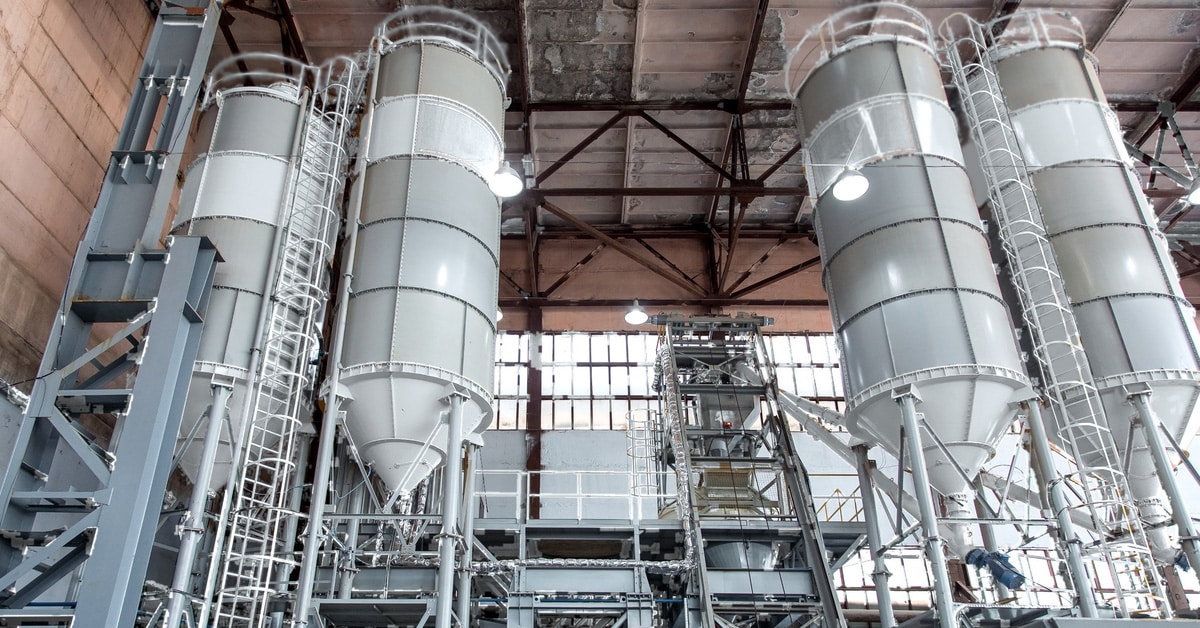
Silos and material handling systems | Flow aids, valves, sensors, and structural condition |
Packing and palletizing equipment | Sensors, motors, conveyors, wrapping systems, and alignment |
Not sure how to prioritize your cement plant maintenance processes? Consider these five factors:
1. Asset criticality: How critical is the asset to your operations? One way to answer this question is by considering bottlenecks. If the failure of the equipment results in a bottleneck for other production processes, it is a critical asset.
2. Failure history: Failure history also plays a role. If data analysis shows an increasing frequency and severity of failures, maintenance tasks should be completed as soon as possible.
3. Production impact: The bigger the production impact, the higher the equipment sits on maintenance priority lists. For example, while conveyors and elevators aren’t responsible for the creation of cement, companies can’t move, store or ship anything without these machines. Failure means significantly reduced production capacity.
4. Safety risk: Potential safety risks vary by equipment type. For example, if palletizing equipment stops working, staff could be at risk of pinch point or crush injuries. If a large-volume cement kiln suddenly fails, however, risks escalate to severe injury or loss of life.
5.Spare parts lead time: It’s also important to address spare parts lead time. Consider a specialized gearbox that requires a three-month lead time for parts. Because it appears to be in good working order, it is not a maintenance priority.
In actuality, a loose bearing in the gearbox has accelerated its wear and tear. Without warning, it fails, leaving companies with a production bottleneck and a three-month wait time.
The longer the lead time, the higher the priority for regular maintenance.
Preventive maintenance for cement manufacturing
The first line of defense against unplanned downtime is preventive maintenance. By creating an in-depth maintenance schedule, companies can stay ahead of cement equipment issues, reducing the need for reactive operations that may take days or weeks to complete.
There’s no single right schedule. Intervals should come from OEM guidance, operating conditions and each asset’s failure history. Here’s an example of how tasks can be grouped:
Frequency | Cement plant maintenance tasks |
Daily | Inspect conveyors, motors, dust buildup, abnormal noise, vibration, leaks, and temperatures |
Weekly | Check lubrication points, belts, chains, filters, guards, and electrical connections |
Monthly | Inspect gearboxes, bearings, fans, crushers, mills, dust collectors, and safety systems |
Quarterly | Conduct vibration analysis, thermal inspections, oil analysis, and deeper mechanical inspections |
Annually/Shutdown | Inspect kilns, refractory, major drives, structural components, critical spares, and major wear parts |
Manufacturers have two broad choices for creating and revising preventive maintenance schedules: do the heavy lifting in-house, or partner with an experienced preventive maintenance services company that offers industry-specific knowledge and expertise.
Predictive maintenance in cement manufacturing
Predictive maintenance helps companies detect and address potential problems before they occur. By analyzing current and historical equipment data, maintenance teams can track key trends and extrapolate likely outcomes.
To gather this data, manufacturers rely on sensor-based condition monitoring. Sensors are placed on or near critical components and equipment to track performance indicators such as vibration, temperature, sound, and pressure.
The same monitoring techniques underpin Industry 4.0, also known as smart manufacturing, where connected equipment feeds data into maintenance scheduling so teams can take a proactive maintenance approach to uptime.
Given the complexity of identifying optimal sensor placements and analyzing output data, many cement manufacturers turn to predictive maintenance providers that offer end-to-end services and support.
Potential condition monitoring methods for concrete mixing plants include:
Monitoring method | What it can detect |
Vibration analysis | Bearing wear, imbalance, misalignment, and looseness |
Thermal imaging | Overheating, friction and electrical problems |
Oil analysis | Contamination, lubricant breakdown and gear or bearing wear |
Ultrasonic monitoring | Air leaks, friction and lubrication issues |
Motor current monitoring | Overload, jams and abnormal mechanical resistance |
Pressure monitoring | Filter issues, pump problems and process instability |
Need earlier warning before critical cement plant equipment fails? Talk to ATS about predictive maintenance and machine health monitoring.
Real-world example: 1,600 hours of avoided downtime with data-driven maintenance
A building materials company experienced ongoing challenges related to unplanned downtime, technical talent shortages and complex IIoT technology implementation. In partnership with ATS, the organization took a data-driven maintenance approach to improve operations.
Identifying potential causes
First, ATS experts examined current processes to pinpoint possible causes, such as:
- Bearing wear
- Imbalance
- Misalignment
- Lubrication breakdown
- Dust contamination
- Motor overload
Building a maintenance response
Next, ATS teams evaluated operations and installed a targeted mix of sensors and monitoring points for 24/7 coverage. Using the data from these sensors, experts analyzed the results to identify and prioritize maintenance activities.
Delivering measurable outcomes
Within the first six months, the ATS approach achieved:
- $2.1 million in avoided losses
- 1,600+ hours of avoided downtime
- 2x return on investment
Become a reliability-centered cement plant
Cement plant efficiency and reliability depend on strong preventive maintenance, consistent condition monitoring, timely lubrication and dust control, MRO readiness, skilled maintenance execution, and documented safety procedures.
Achieving these goals requires an end-to-end maintenance strategy that incorporates asset criticality, equipment age, process risk, production demand, maintenance resources, and downtime costs.
ATS can evaluate your concrete plant maintenance program through the lens of uptime, safety, rotating equipment reliability, lubrication discipline, and spare parts readiness. By applying the right maintenance strategies to the right assets at the right time, cement plants can reduce unplanned downtime, extend equipment life and improve production performance.
Ready to reduce downtime and improve cement factory reliability? Talk to ATS about building a data-driven maintenance strategy.
References
U.S. Geological Survey. (2026, April). Cement in December 2025 (Mineral Industry Surveys). https://d9-wret.s3.us-west-2.amazonaws.com/assets/palladium/production/s3fs-public/media/files/mis-202512-cemen.pdf
