


Unexpected equipment failures, rising maintenance costs and aging infrastructure continue to challenge manufacturers and industrial facilities. While many organizations have implemented preventive maintenance programs, these approaches often rely on fixed schedules instead of actual equipment condition. As a result, assets may be serviced too frequently, not frequently enough, or after problems have already begun to affect production.
That’s where asset performance maintenance comes in. By combining real-time monitoring, data analytics and reliability-focused maintenance strategies, organizations can improve asset reliability, reduce downtime and make more informed maintenance decisions. When integrated with an organization’s existing systems and workflows, asset performance management (APM) helps maintenance teams prioritize work based on equipment health instead of assumptions.
Advanced Technology Services (ATS) can help your organization improve its asset performance maintenance. Which options will work best for your organization depends on your facility’s equipment types, operating environment, production goals, and failure risk. The right strategy is rarely one-size-fits-all. Read on to learn industry best practices in asset performance maintenance from ATS.
What is asset performance maintenance?
Asset performance maintenance is a proactive maintenance approach that uses equipment condition, operational data and reliability analysis to maximize asset performance throughout its lifecycle. Rather than relying solely on time-based maintenance schedules, it focuses on identifying developing issues before they become failures.
The objective is simple: improve asset reliability, reduce maintenance costs, extend equipment life, and increase production uptime. Organizations often confuse asset performance maintenance with Computerized Maintenance Management Systems (CMMS), but they serve different purposes. A CMMS primarily manages maintenance activities by tracking work orders, preventive maintenance schedules, labor, and inventory.
Asset performance management, on the other hand, analyzes asset health using operational data, sensor inputs, predictive models, and reliability engineering. In many facilities, the two systems work together. For example, an asset performance management platform may detect abnormal vibration in a motor, generate an alert and automatically create a work order inside the CMMS for inspection or repair.
This combination allows maintenance teams to move from reactive maintenance toward predictive maintenance, reducing unnecessary work while preventing unexpected failures.
Core components of asset performance maintenance
Successful asset performance maintenance programs combine multiple technologies and reliability practices into one coordinated strategy. Rather than relying on a single maintenance approach, organizations integrate condition monitoring, preventive maintenance, predictive analytics, and asset management processes to improve equipment reliability and reduce unplanned downtime.
Combining these practices helps facilities extend asset life, plan maintenance work and support safer operations.
While every facility has unique equipment, operational goals and maintenance requirements, most asset performance maintenance programs are built around the same foundational components. Together, these elements provide the data, insights and workflows needed to identify potential issues early, prioritize maintenance activities and maximize overall asset performance.
Asset health monitoring
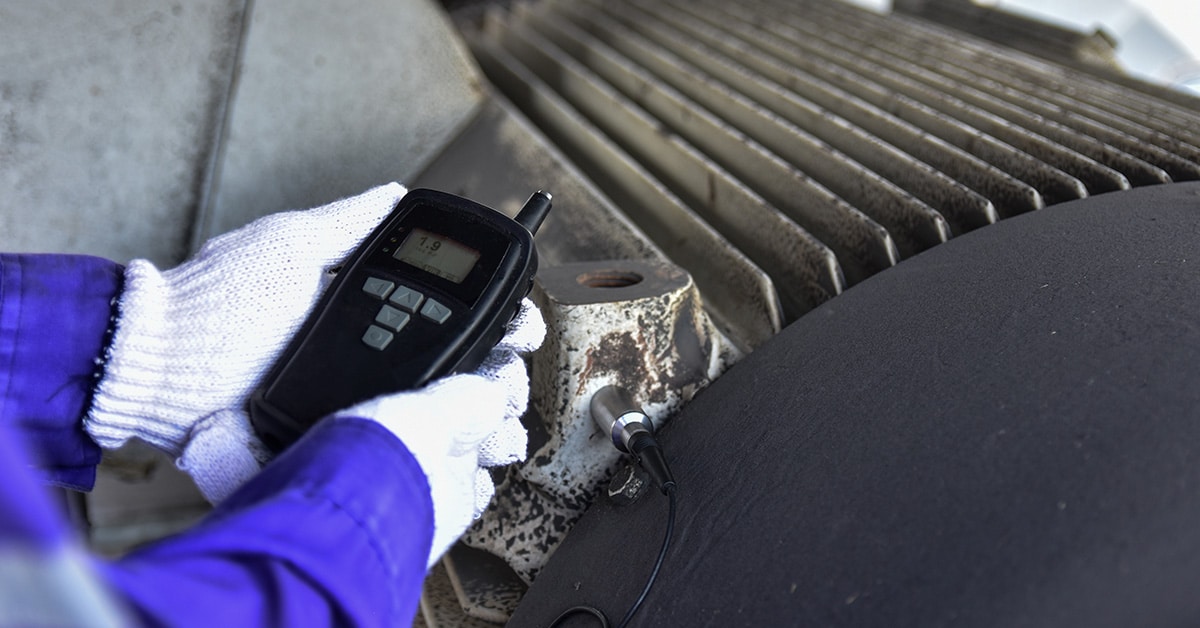
Asset health monitoring provides continuous visibility into equipment condition using sensors and connected devices. Instead of waiting for equipment to fail, maintenance teams monitor changes that often indicate developing problems long before production is affected.
Common measurements
- Vibration
- Temperature
- Pressure
- Oil quality
- Motor current
- Ultrasonic readings
- Energy consumption
- Rotational speed
Modern condition monitoring platforms establish acceptable operating ranges for each measurement. When equipment exceeds predefined failure thresholds, alerts notify maintenance personnel before damage becomes severe.
Asset data management
Collecting data is only valuable if it can be organized and used effectively. Many manufacturers struggle with fragmented information spread across sensors, Programmable Logic Controllers (PLCs), historians, Supervisory Control and Data Acquisition (SCADA) systems, CMMS platforms, and enterprise software. These disconnected systems make it difficult to understand overall equipment health. An effective asset performance management strategy begins by integrating data sources into a centralized view.
Best practices
- Building a standardized asset hierarchy
- Cleansing duplicate or inconsistent asset records
- Integrating operational technology (OT) and information technology (IT) systems
- Linking sensor readings to maintenance history
- Connecting inspection results with repair records
Advanced analytics and machine learning
Once reliable data is available, analytics can show which machines are trending toward failure.
Machine learning models identify patterns that maintenance personnel may never notice manually.
For example, predictive models can recognize subtle combinations of temperature increases, vibration changes and motor current fluctuations that historically preceded bearing failures.
Instead of simply predicting failures, newer asset performance management systems also support prescriptive analytics. Prescriptive analytics recommends the most effective maintenance action based on equipment condition, production schedules, available labor, and spare parts inventory. Facilities can also use predictive models to rank intervention priorities, so maintenance resources go first to assets with the greatest operational risk. In ATS’s model, the software drafts a recommendation and an ATS analyst vets and approves it before it reaches the plant.
Reliability-centered maintenance
Technology alone doesn’t improve reliability. Maintenance strategies must also align with how equipment actually fails. Reliability-Centered Maintenance (RCM) provides a structured process for determining the most effective maintenance approach for critical assets. High-risk equipment often benefits from detailed Failure Mode and Effects Analysis (FMEA) studies that identify potential failure modes before they affect production.
Maintenance teams can then map each failure mode to the most effective response, whether that involves inspection, lubrication, predictive maintenance, component replacement, or redesign. This structured approach helps reduce unnecessary maintenance while improving overall asset reliability.
Maintenance management integration
Even the most sophisticated monitoring system delivers limited value if maintenance actions remain disconnected from day-to-day workflows. For this reason, successful asset performance management initiatives integrate directly with existing CMMS or Enterprise Asset Management (EAM) software. Rather than replacing these systems, APM enhances them by providing better maintenance intelligence.
Implementing asset performance management
Implementing asset performance management requires more than installing sensors or purchasing software. Long-term success depends on a structured, data-driven strategy that aligns maintenance goals with business objectives. One of the best places to begin is with an asset criticality assessment.
Criticality assessments rank equipment based on factors such as production impact, safety risks, environmental consequences, repair costs, and replacement lead times. This process helps organizations determine where investments in predictive maintenance and monitoring technologies will deliver the greatest return. After identifying high-priority assets, many facilities benefit from launching a focused pilot program instead of attempting an enterprise-wide deployment. Starting small allows teams to validate technology, refine workflows and demonstrate measurable results before expanding.
Training is often overlooked but plays a significant role in long-term success. Maintenance teams need confidence not only in interpreting equipment health data but also in adjusting maintenance decisions based on those insights. Which implementation approach will work best depends on your organization’s digital maturity, workforce capabilities and existing maintenance practices.
Pilot design and scale
A successful pilot establishes the foundation for enterprise-wide asset performance management. Rather than selecting only the most problematic equipment, organizations should choose representative assets that reflect broader operational conditions. Throughout the pilot, document lessons learned, update maintenance procedures, and refine alert thresholds. These insights make enterprise rollout significantly smoother while helping maintenance teams adopt new workflows with confidence.
Improve asset utilization and extend asset lifespan
Lower maintenance costs are only one benefit of asset performance management. Equally important is maximizing the value of existing equipment throughout its useful life.
Analyze operating envelopes
Equipment often operates outside its intended design parameters without maintenance teams realizing it. Monitoring load, temperature, speed, pressure, and other operating variables helps identify conditions that accelerate wear. By optimizing operating envelopes, organizations can reduce mechanical stress while improving production efficiency and asset reliability.
Schedule proactive component replacement
Waiting until components fail can increase repair costs and damage equipment. Using equipment condition and historical failure trends, maintenance teams can proactively replace bearings, seals, belts, and other components during planned downtime. This reduces emergency repairs and extends overall equipment life.
Perform lifecycle cost analysis
Eventually every organization faces the repair-versus-replace decision. Lifecycle cost analysis considers maintenance expenses, downtime costs, production impact, energy efficiency, and remaining useful life to determine the most economical option. Instead of focusing only on repair cost, organizations evaluate the total cost of ownership over the asset’s remaining life.
What will work best for your organization will depend on your facility’s equipment age, replacement availability, operational requirements, and long-term business objectives. Organizations with limited internal maintenance resources may also benefit from partnering with experienced reliability specialists, such as ATS, to expand predictive maintenance and asset optimization programs. Talk to an ATS reliability expert.
Advanced use cases: prescriptive maintenance and AI
As industrial facilities continue to digitize operations, AI is expanding what’s possible with asset performance maintenance. While predictive maintenance identifies when equipment is likely to fail, AI-driven tools increasingly recommend the best response before problems escalate.
Digital twins
Digital twins create virtual models of physical assets using real-time operating data. These models allow engineers to simulate equipment performance under different operating conditions, evaluate maintenance strategies and predict future degradation without interrupting production. Digital twins can be especially valuable for complex equipment, including turbines, compressors, production lines, and critical manufacturing systems.
AI-powered anomaly detection
Traditional alarm systems often depend on fixed thresholds. AI-based anomaly detection identifies subtle changes in equipment behavior that may not trigger conventional alarms but still indicate developing issues. Rather than relying on a single measurement, machine learning evaluates relationships across hundreds or even thousands of variables. This allows maintenance teams to detect problems earlier and prioritize inspections before failures occur.
Prescriptive maintenance campaigns
Prescriptive maintenance goes beyond prediction by recommending specific maintenance actions. For example, an AI platform may recommend delaying one repair until a planned outage while prioritizing another asset that presents greater operational risk. Organizations can also coordinate multiple repairs across production areas to reduce repeated shutdowns and improve resource utilization. Which AI capabilities are appropriate for your facility will depend on the maturity of your maintenance program, available operational data, and business priorities.
Maintenance management metrics and KPIs
Every successful asset performance management program measures results using standardized performance indicators. Tracking KPIs allows organizations to evaluate maintenance effectiveness, identify improvement opportunities and demonstrate return on investment.
Common metrics
- Mean Time Between Failures (MTBF) to measure equipment reliability.
- Mean Time to Repair (MTTR) to evaluate maintenance response efficiency.
- Asset availability to measure operational readiness.
- Maintenance costs per asset to identify high-cost equipment.
- Overall Equipment Effectiveness (OEE) to evaluate production performance.
- Planned versus unplanned maintenance ratio.
- Preventive maintenance compliance.
- Spare parts inventory turnover.
Next steps and roadmap for adoption
1. Conduct a readiness assessment
Begin by engaging maintenance, operations, engineering, IT, and leadership stakeholders. Evaluate existing maintenance practices, available operational data, current technologies, workforce readiness, and business objectives.
2. Define pilot scope and KPIs
Identify critical assets where improved reliability will have the greatest operational impact. Establish measurable KPIs such as MTBF, MTTR, asset availability, maintenance cost per asset, unplanned downtime, and OEE.
3. Establish governance
Define ownership for asset data, maintenance workflows, reporting, cybersecurity, and continuous improvement activities. Strong governance helps maintain data quality while ensuring consistent decision-making across the organization.
4. Expand through phased deployment
Rather than attempting an enterprise-wide rollout immediately, expand implementation in phases using lessons learned from the pilot. Each deployment should refine maintenance strategies, update analytics models, and improve technician adoption.
5. Commit to continuous improvement
Equipment conditions, production demands and business priorities continually evolve. Successful organizations regularly review KPIs, update maintenance strategies, retrain personnel, and incorporate new technologies as they become available. Continuous improvement keeps asset performance management delivering value long after initial implementation.
Get additional support
Modern manufacturers face increasing pressure to reduce downtime, control maintenance costs and maximize the value of aging equipment. A proactive asset performance maintenance strategy helps organizations achieve these goals by combining real-time monitoring, advanced analytics, reliability engineering, and predictive maintenance into a single, data-driven approach.
What options will work best depends on your facility’s equipment, operating environment, maintenance maturity, and production objectives. By starting with an asset criticality assessment, launching a focused pilot, and continuously improving based on measurable KPIs, organizations can build an asset maintenance program that supports long-term operational success.
If you are ready to improve equipment reliability and reduce maintenance costs talk with an ATS expert to discuss your goals, evaluate your current maintenance program and see what’s recommended for your facility.
